
Table of Contents
- Quick Summary: Key Takeaways for Cat Parents
- 1. Direct Clinical Answer: Why Does My Cat Drool When Purring?
- 2. The “Happy Drool”: Parasympathetic Overdrive & Kittenhood Recall
- 3. Silent Dental Agony: Periodontal Disease, Gingivitis, and FORLs
- 4. Oral Obstructions: Linear Foreign Bodies & Chewed Household Hazards
- 5. Systemic Illness: Chronic Kidney Disease, Uremia & Acid Reflux
- 6. Chemical & Plant Irritation: Toxic Houseplants and Cleaners
- 7. Clinical Triage Matrix: Blissful Drool vs. Dangerous Dental Emergency
- 8. Dr. Ahmed’s Step-by-Step Home Oral Examination Protocol
- 9. Schema-Optimized Frequently Asked Questions (FAQ)
- 10. Professional Veterinary Disclaimer
🩺 Dr. Ahmed’s Urgent Clinical Summary
- Direct Answer: In most cases, a cat drooling while purring during gentle petting is a harmless physiological reaction called “happy drooling,” driven by profound parasympathetic relaxation and emotional bonding.
- The Biological Mechanism: Extreme relaxation causes voluntary facial muscles to loosen; the cat becomes so entranced by petting that they simply “forget” to perform the automatic swallowing reflex.
- The Dental Threat: If drooling occurs outside of affectionate cuddle sessions, smells foul, or is accompanied by blood, pawing at the mouth, or dropping kibble, it is an unequivocal indicator of severe feline dental disease or resorptive lesions.
- First Diagnostic Step: Smell their breath, check the color of their saliva, examine their gums for bright red inflammation, and consult your veterinarian for an oral exam if drooling becomes persistent.
1. Direct Clinical Answer: Why Does My Cat Drool When Purring?
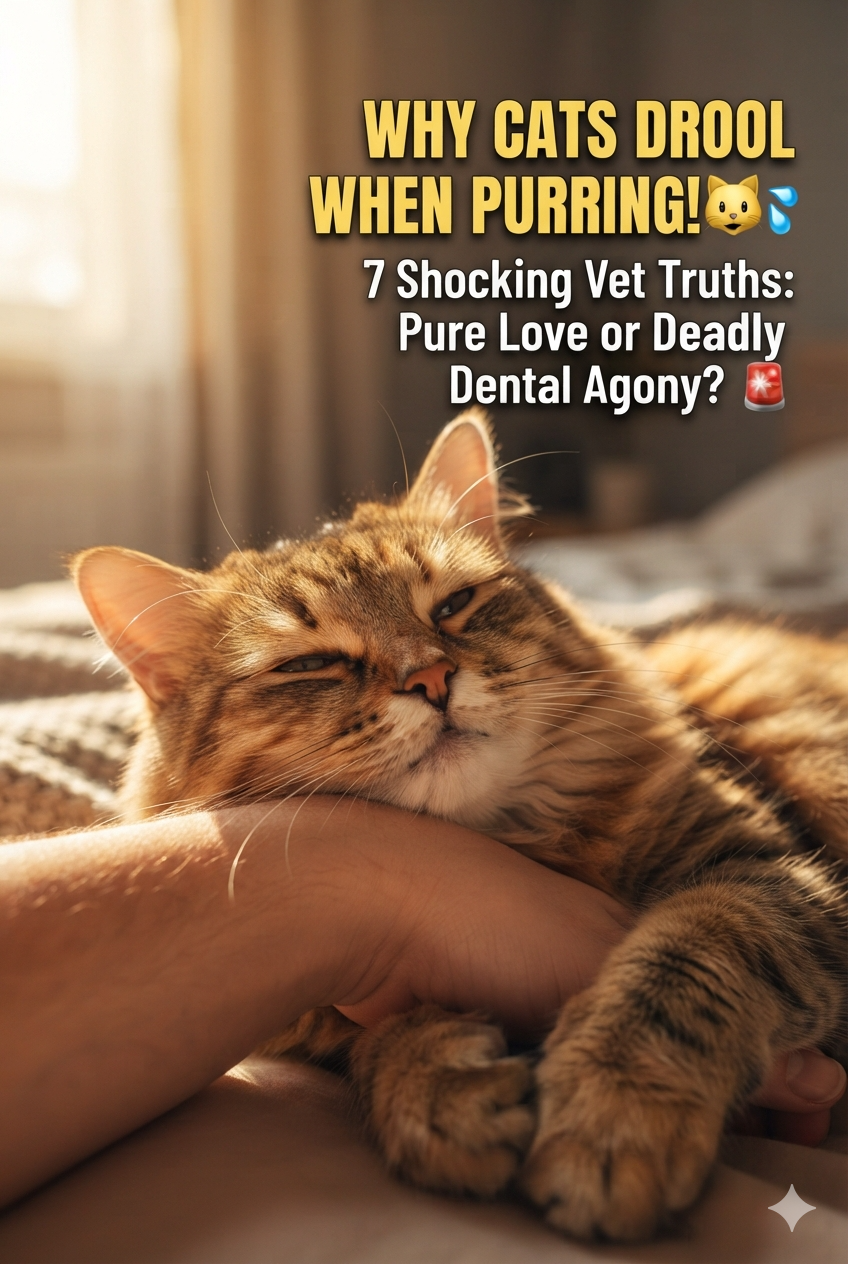
Cats drool when purring primarily because profound emotional relaxation and intense affection trigger the parasympathetic nervous system, causing facial muscles to relax and temporarily suspending the voluntary swallowing reflex. In clinical feline veterinary medicine, pet parents frequently enter my exam room looking bewildered, describing how their cat purrs rhythmically on their lap while wet drops of saliva soak their trousers or drip from their chin onto the sofa.
Colloquially known among veterinarians and behaviorists as the “Happy Drool,” this reaction is often a wonderful badge of honor. It proves that your feline companion feels completely secure, peaceful, and emotionally bonded in your presence. The sensation of being petted stimulates an involuntary autonomic response that mimics the blissful, trance-like state experienced during early neonatal nursing.
However, clinical vigilance is essential. While intermittent, clear drool that occurs exclusively during moments of intense physical affection is completely benign, sudden-onset, chronic, or foul-smelling drooling is a major red flag for severe underlying medical pathology. Conditions such as feline resorptive dental lesions (FORLs), acute oral ulcerations from plant toxins, foreign objects lodged in the pharynx, and end-stage renal disease frequently manifest as hypersalivation. In this comprehensive veterinary guide, we will unpack the fascinating neuroscience behind affectionate drooling, differentiate behavioral bliss from physical pathology, and provide a clear home oral screening framework.
2. The “Happy Drool”: Parasympathetic Overdrive & Kittenhood Recall
To understand why pure contentment produces watery saliva, we must examine the autonomic nervous system of the domestic cat. The feline autonomic nervous system is divided into two opposing branches: the sympathetic division (which governs the rapid “fight-or-flight” survival response) and the parasympathetic division (which directs the “rest-and-digest” or feed-and-breed state).
When you stroke your cat’s favorite anatomical sweet spots—specifically the temporal scent glands between their ears, under their chin, or along the base of their spine—sensory cutaneous mechanoreceptors fire rapidly. These tactile sensory inputs send cascades of electrical signals up the spinal cord to the brain stem, triggering a massive surge of oxytocin and beta-endorphins while simultaneously dampening systemic cortisol and adrenaline.
This overwhelming parasympathetic activation causes systemic muscular vasodilation and profound physical relaxation. Salivary glands are innervated directly by parasympathetic cranial nerves (the facial and glossopharyngeal nerves). As the cat enters an euphoric, trance-like state of affection, salivary secretions naturally increase. Simultaneously, the muscles supporting the lower jaw and pharynx relax completely, and the cat becomes so neurologically focused on the pleasure of being petted that they literally forget to trigger their normal, unconscious deglutition (swallowing) reflex. Saliva pools in the oral cavity and drips out past relaxed lips.
Furthermore, feline behavioral ethologists have observed that happy drooling is frequently accompanied by rhythmic front-paw kneading (often called “making biscuits”). Kneading is an innate neonatal nursing behavior that kittens use to stimulate milk ejection from their mother’s mammary glands. When an adult cat kneads and drools on your lap, their brain is regressing into that primal state of complete maternal comfort and milk-associated bliss.
If your cat also displays curious sleeping positions during these deep bonding moments, such as curling right around your crown, read our behavioral guide on why cats sleep on human heads and pillows to explore feline attachment psychology.
3. Silent Dental Agony: Periodontal Disease, Gingivitis, and FORLs
While the happy drool is entirely harmless, clinical veterinarians must emphasize a sobering reality: over 70% of cats over the age of three suffer from active, painful dental and periodontal disease. Because cats are solitary predators hardwired to mask physical vulnerability, oral pain rarely manifests as obvious crying; instead, it manifests as chronic ptyalism (hypersalivation).
The most excruciating and prevalent oral condition in feline practice is Feline Tooth Resorptive Lesions (FORLs). In FORLs, specialized odontoclast cells mistakenly attack and dissolve the cat’s own tooth structure, starting at the gum line and eating through the enamel into the intensely sensitive internal pulp chamber. The exposed dental pulp contains raw nerve fibers; every time saliva, cold air, or tongue movement touches the resorbing tooth, a blinding electric jolt of pain shoots through the cat’s jaw.
In response to this chronic mechanical and nerve irritation, the feline oral mucosa produces copious amounts of saliva in a biological attempt to lubricate and soothe the inflamed tissue. Simultaneously, severe gingivitis and advanced calculus build-up introduce aggressive anaerobic bacterial colonies into periodontal pockets. If your cat’s drool has an offensive, rotting odor, contains pinkish or reddish streaks of blood, or if the cat “chatters” their jaw when you touch their cheeks, dental disease is the definitive diagnosis requiring urgent professional veterinary scaling, radiography, and surgical extraction.
Does your cat sometimes produce strange coughing or throat-clearing sounds after grooming or waking up? Review our clinical diagnostic manual on why cats make a hacking sound without producing a hairball to differentiate between hairball irritation and oral or respiratory discomfort.

4. Oral Obstructions: Linear Foreign Bodies & Chewed Household Hazards
Another acute medical trigger for excessive drooling is the physical presence of a foreign object trapped inside the oral cavity or pharynx. Felines possess backward-facing, hook-shaped keratinized papillae on their tongues designed to groom fur and scrape meat from bones; unfortunately, these papillae make it virtually impossible for a cat to spit out string, thread, or hair ribbons once they begin swallowing.
The classic emergency scenario involves a linear foreign body. A cat playing with a needle and thread, yarn, or holiday tinsel swallows the strand, which frequently wraps tightly around the base of the tongue while the remainder trails down into the esophagus. The tension under the tongue cuts into soft mucosal tissue, sparking intense localized swelling, constant gagging, and profuse, frothy drooling.
Similarly, curious cats that chew on dried poultry bones, sharp wooden twigs, or small plastic fragments can get sharp splinters wedged crosswise between their upper carnassial teeth or lodged directly into the roof of the hard palate. The trapped foreign body creates an immediate physical obstruction that prevents normal swallowing, resulting in thick saliva pouring from the sides of the mouth. If your cat begins drooling suddenly and frantically paws at their mouth with their front claws, suspect an acute oral obstruction immediately.
If you enjoy sharing home-cooked meat treats with your feline companion, ensure you understand the critical dangers of cooked bones by reading our definitive veterinary guide on why cooked chicken bones are hazardous to cats.
5. Systemic Illness: Chronic Kidney Disease, Uremia & Acid Reflux
Drooling does not originate solely from mouth pathology; the feline central nervous system stimulates intense salivation whenever the body experiences systemic metabolic nausea. In internal veterinary medicine, unexplained drooling in middle-aged to senior cats is a classic warning bell for Chronic Kidney Disease (CKD).
When feline renal nephrons progressively degenerate, the kidneys lose the biological capacity to filter metabolic nitrogenous waste products from the bloodstream. Concentrations of blood urea nitrogen (BUN) and creatinine skyrocket, a toxic clinical condition known as uremia. Uremic toxins circulate throughout the systemic vascular network and break down into caustic ammonia within the oral cavity.
This localized ammonia toxicity causes painful, sloughing uremic ulcers to form along the tip of the tongue, the hard palate, and the inner cheek linings. The resulting combination of severe uremic chemical gastritis (nausea) and burning tongue ulceration makes swallowing agonizing, leading to relentless, ropy drooling. According to clinical feline health bulletins from the Cornell Feline Health Center, senior cats presenting with sudden drooling, unquenchable thirst (polydipsia), and progressive weight loss require immediate comprehensive serum biochemistry profiling and urinalysis.
Does your cat also wake up with sudden nausea and vomit clear, yellowish fluid? Explore our clinical triage manual on why cats vomit clear liquid and bile to separate renal-induced gastritis from dietary sensitivities.

6. Chemical & Plant Irritation: Toxic Houseplants and Cleaners
Felines are naturally inquisitive investigative creatures, exploring novel household objects by sniffing, licking, and chewing. Ingesting or even licking common indoor houseplants is a primary cause of acute chemical ptyalism in domestic cats.
Many popular household ornamental plants—including Dieffenbachia (Dumb Cane), Philodendron, Monstera Deliciosa, and Pothos—contain microscopic, needle-sharp crystals of insoluble calcium oxalate packaged in specialized plant cells called idioblasts. When a curious cat bites into a stem or leaf, these microscopic mechanical needles forcibly shoot into the sensitive mucosal tissues of the tongue, gums, and pharynx.
The resulting chemical trauma induces instantaneous, excruciating oral pain, massive swelling of the lips and tongue, frantic head shaking, and profuse, continuous streams of thick, clear drool. Furthermore, licking topical chemical flea preventatives formulated for dogs (permethrins) or licking surfaces freshly cleaned with caustic quaternary ammonium disinfectants causes severe oral chemical ulceration and profound hypersalivation requiring immediate toxicological decontamination.
According to clinical toxicology alerts from the American Veterinary Medical Association (AVMA), true lilies (such as Easter lilies, Tiger lilies, and Daylilies) cause catastrophic acute renal failure in cats from even microscopic ingestions of pollen, often presenting with early nausea drooling within two hours of exposure.
For more toxic food awareness and emergency home protocols regarding dangerous household foods and dairy, review our companion clinical guide on why dairy and cheese products are hazardous to domestic cats.
7. Clinical Triage Matrix: Blissful Drool vs. Dangerous Dental Emergency
| Clinical Feature | Normal Behavioral “Happy Drool” | Pathological Medical Drooling | Recommended Clinical Action |
|---|---|---|---|
| Timing & Trigger | Occurs exclusively during active petting, kneading, or purring cuddles. | Occurs continuously at rest, while sleeping, or when attempting to eat kibble. | Happy drool requires zero medical intervention; continuous drool demands professional veterinary examination. |
| Saliva Consistency & Odor | Crystal clear, watery, odorless; small single droplets from mouth. | Thick, ropy, discolored, foul-smelling, or blood-tinged pinkish fluid. | Foul odor indicates advanced anaerobic periodontal infection or necrotic uremic ulceration. |
| Accompanying Behaviors | Soft kneading paws, slow rhythmic purr, relaxed half-closed eyes, head-bunting. | Pawing at mouth, dropping food from bowl, jaw chattering, hiding, lethargy. | Pawing at mouth indicates acute mechanical obstruction or severe resorptive tooth root agony. |
| Post-Cuddle Behavior | Stops immediately when petting ceases; cat swallows and grooms normally. | Saliva continues dripping; chin and front paws become chronically wet and matted. | Chronic wet fur around the chin causes secondary bacterial dermatitis; schedule veterinary diagnostics. |
8. Dr. Ahmed’s Step-by-Step Home Oral Examination Protocol
If you are uncertain whether your purring companion’s drool is an innocent sign of affection or an early indicator of dental decay, you can conduct a gentle, stress-free preliminary visual examination at home. Never force a struggling cat’s jaws open; proceed with calm, deliberate clinical steps:
- The Olfactory Scent Test: Gently lean close to your cat’s muzzle when they are resting calmly. Normal feline breath has a neutral or mild fishy odor. If you detect an intensely foul, rotting, metallic, or sharp ammonia smell, active bacterial infection or renal uremia is present.
- The Lip-Curl Inspection: Place your thumb softly on the cat’s upper whisker pad and gently lift the lip upward. Inspect the outer surface of the large upper canine tooth and the premolars behind it. Healthy feline gums must be a uniform, pale bubblegum pink. If you observe a fiery red line along the tooth margins (marginal gingivitis) or bright red fleshy tissue growing over the enamel (a classic sign of a resorptive lesion), the cat is in pain.
- Check Saliva Color on Clean Gauze: Take a clean, white tissue or cotton pad and gently dab the drool from your cat’s chin. Examine the pad under bright light. Happy drool is 100% transparent and water-like. If the pad shows yellowish pus, brownish discolored mucus, or pink blood streaks, schedule a veterinary dental evaluation immediately.
- Monitor Eating Dynamics: Offer a small handful of crunchy dry kibble. Observe closely: does your cat chew smoothly on both sides of their mouth? Or do they tilt their head awkwardly, chew exclusively on one side, drop kibble pieces onto the floor, or swallow pieces whole with a painful gulp? Hesitant eating is definitive proof of dental distress.
9. Schema-Optimized Frequently Asked Questions (FAQ)
Is it normal for a kitten to drool while purring and nursing on a blanket?
Yes, absolutely. In young kittens, suckling on soft fleece blankets while kneading and purring is a deep instinctual reflection of maternal nursing. The salivary glands activate in biological anticipation of milk, and extreme parasympathetic relaxation causes excess saliva to drip from relaxed lips. As long as the kitten is energetic and eating well, this is completely normal.
Can motion sickness or car rides cause a cat to drool excessively?
Yes. Felines are highly prone to motion-induced nausea and travel anxiety. During vehicle transport, vestibular sensory confusion in the inner ear stimulates the vomiting center in the brain stem, triggering profuse, thick drooling, frantic meowing, and rapid panting. Discuss veterinary anti-nausea medications (like maropitant) with your vet before long trips.
Why did my cat suddenly start drooling after receiving topical flea drops?
If your cat accidentally groomed or licked liquid spot-on flea medication from their fur or a housemate’s coat, the intensely bitter chemical taste stimulates an immediate, violent salivary reaction. The cat will foam profusely at the mouth, drool thick bubbles, and shake their head frantically. Flush their mouth gently with small amounts of water or tuna spring water and contact your veterinarian immediately.
How can I stop my cat from drooling all over my clothes when cuddling?
Because happy drooling is an involuntary autonomic neurological response, you cannot and should not train or discipline a cat to stop. It is a profound expression of love and safety. Simply keep a dedicated soft hand towel or small fleece blanket on your lap during cuddle sessions to catch the moisture comfortably.
Professional Veterinary Disclaimer: The clinical behavioral observations, oral pathology frameworks, and physiological evaluations detailed in this comprehensive guide are authored by Dr. Ahmed, a licensed veterinarian, strictly for educational and informational purposes. This content does not constitute formal veterinary clinical examination, personalized dental diagnosis, or surgical treatment. If your cat exhibits continuous drooling, foul breath, oral bleeding, or loss of appetite, schedule an immediate professional examination with your trusted primary veterinarian.