
Table of Contents
- Quick Summary: Key Takeaways for Pet Parents
- 1. Direct Clinical Answer: Why Is My Dog’s Nose Dry and Warm?
- 2. Anatomy of the Rhinarium: Why Healthy Canine Noses Are Usually Wet
- 3. Debunking the Ancient Myth: Why a Dry Nose Does NOT Equal Fever
- 4. Normal Daily Fluctuations: Deep Sleep, Weather, and Heating Vents
- 5. True Medical Dangers: Systemic Dehydration & Severe Hyperthermia
- 6. Skin & Autoimmune Pathology: Nasal Hyperkeratosis and Lupus
- 7. Clinical Canine Nose Decision Matrix: Normal Shifts vs. Medical Emergencies
- 8. Dr. Ahmed’s Home Clinical Assessment: Taking Canine Temperature Accurately
- 9. Schema-Optimized Frequently Asked Questions (FAQ)
- 10. Professional Veterinary Disclaimer
🩺 Dr. Ahmed’s Urgent Clinical Summary
- Direct Answer: A dry, warm nose in a dog is frequently 100% normal and harmless, commonly occurring after waking up from deep sleep, lying near indoor heating vents, or mild physical exertion.
- The Myth Shattered: A dog’s nose temperature and moisture level are biologically unreliable indicators of systemic body temperature; a dog with a cold, wet nose can have a lethal fever, while a dog with a warm, dry nose can be perfectly healthy.
- True Diagnostic Metric: The only scientifically valid way to determine if a dog has a clinical fever or hypothermia is by measuring their internal core temperature using a calibrated pediatric rectal or digital thermometer.
- When to Panic: Seek immediate veterinary care if nasal dryness is accompanied by crusting, deep cracking, bleeding, thick green/yellow discharge, extreme lethargy, or persistent vomiting.
1. Direct Clinical Answer: Why Is My Dog’s Nose Dry and Warm?
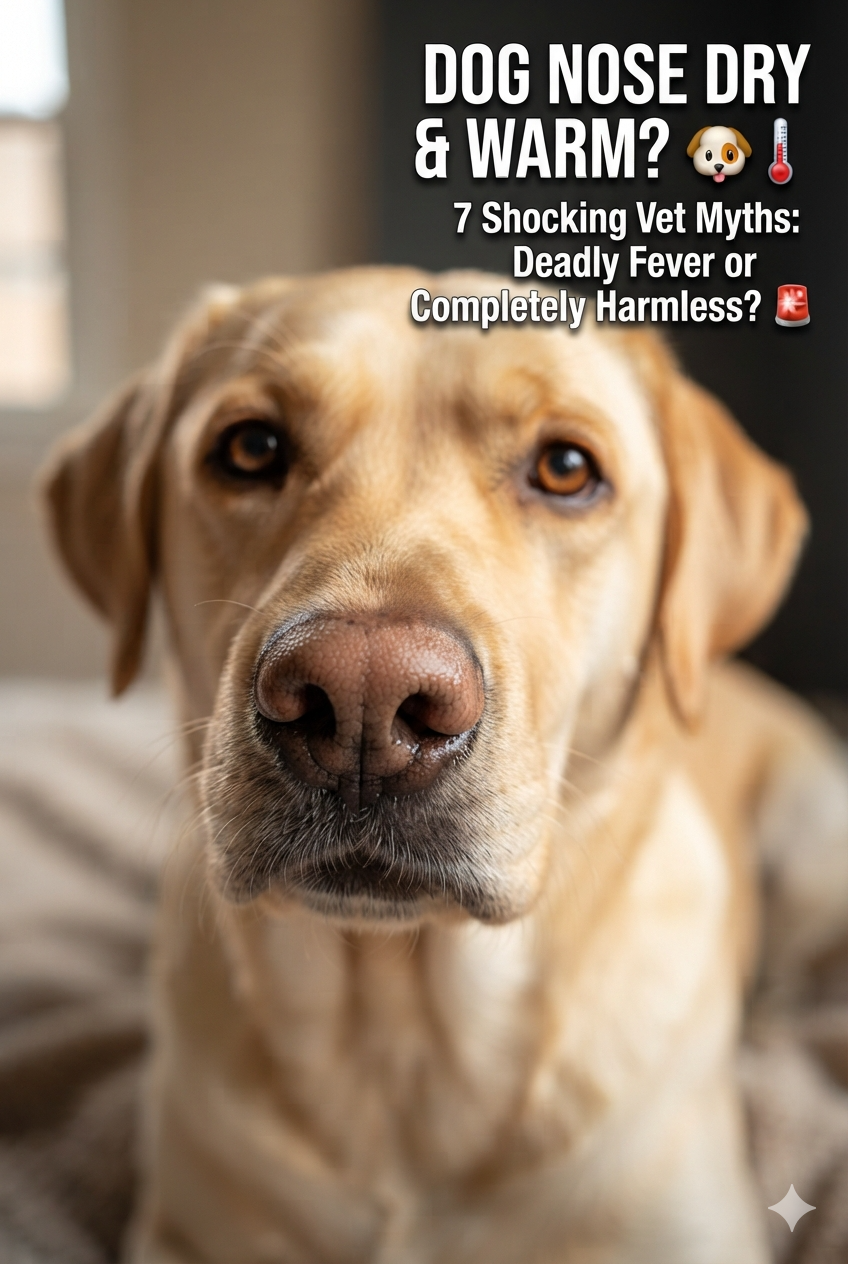
A dog’s nose is often dry and warm simply because they recently woke up from a deep nap, spent time in a dry heated room, or naturally stopped licking their nasal planum for a few hours. In clinical veterinary practice, I receive panicked phone calls from dedicated pet parents every single week who touch their dog’s snout, feel warmth and dryness, and immediately assume their beloved companion is suffering from a life-threatening fever or infectious disease.
The belief that a healthy dog must always possess a cold, dripping-wet nose is perhaps the oldest, most persistent folklore myth in the entire history of domestic pet care. In reality, canine nasal moisture fluctuates dramatically throughout a normal 24-hour physiological cycle based on ambient humidity, hydration, sleep cycles, and physical activity levels.
However, while a temporary warm, dry nose is usually a completely benign variation, persistent nasal dryness accompanied by physical tissue changes—such as thickening, crusting, ulceration, or systemic lethargy—can be an early clinical indicator of underlying medical pathology. Conditions such as clinical dehydration, nasal hyperkeratosis, solar dermatitis (sunburn), and autoimmune skin disorders require targeted veterinary intervention. In this definitive veterinary guide, we will dismantle the centuries-old fever myth, explore the remarkable biological mechanics of the canine rhinarium, and teach you how to accurately evaluate your dog’s true vital signs at home.

2. Anatomy of the Rhinarium: Why Healthy Canine Noses Are Usually Wet
To understand why a dog’s nose becomes dry, we must first appreciate the extraordinary anatomical architecture that keeps it wet under standard conditions. The hairless, leathery, pigmented surface of a canine snout is known anatomically as the rhinarium or nasal planum.
A dog’s nose is not wet simply because water magically leaks from their body; moisture is actively maintained through two sophisticated biological mechanisms:
- The Lateral Nasal Gland (Gland of Steno): Located deep inside the maxillary sinus behind the nasal cavity, this specialized serous gland continuously secretes a clear, watery, electrolyte-rich fluid. This fluid travels through microscopic ducts and exits directly onto the surface of the rhinarium, coating the intricate cobblestone skin texture with a thin liquid film.
- Frequent Behavioral Licking: Dogs possess an exceptionally long, agile tongue. Throughout their waking hours, canines unconsciously extend their tongue to lick their nose dozens of times per hour, redistributing glandular secretions and oral saliva evenly across the entire nasal surface.
This persistent layer of moisture serves two vital evolutionary purposes. First, it acts as a high-performance chemical solvent for scent molecules. Airborne odorants dissolve in the liquid film, allowing them to bind efficiently to sensory olfactory receptors inside the nasal cavity and the vomeronasal organ. Second, because dogs lack functional eccrine sweat glands across their hairy bodies, the continuous evaporation of moisture from the cold rhinarium provides localized evaporative cooling, helping regulate cranial capillary temperatures.
Does your dog also display an intense, rhythmic obsession with licking bare human skin or hands during these resting moments? Review our specialized behavioral guide on why dogs lick human hands constantly to decode their sensory and electrolyte-seeking habits.
3. Debunking the Ancient Myth: Why a Dry Nose Does NOT Equal Fever
Where did the widespread myth that a dry, warm nose indicates a fever originate? Historically, prior to modern veterinary diagnostic laboratories and digital thermometers, the most devastating infectious disease in domestic canines was Canine Distemper Virus (CDV). Severe distemper infections frequently caused a combination of spiking systemic fevers and severe hyperkeratosis of the nose and paw pads (a condition historically termed “hard pad disease”). Early dog owners observed that dying, feverish dogs had dry, thickened, crusty snouts, cementing the false assumption that nose dryness directly equals fever.
In modern veterinary clinical science, this assumption has been thoroughly dismantled. A dog’s rhinarium can feel distinctly hot, dry, and leathery while their internal core body temperature is completely normal at a healthy 101.5°F (38.6°C). Conversely, a critically ill dog suffering from septic shock or advanced heatstroke with a lethal internal core temperature of 106°F (41.1°C) can present with a dripping-wet, ice-cold nose if they happen to lick their snout or drink water moments before the examination.
According to clinical veterinary diagnostic standards published by the American Veterinary Medical Association (AVMA), touching your dog’s nose provides zero clinically reliable diagnostic data regarding systemic fever, infection, or internal organ health. Relying on nose moisture to diagnose disease wastes precious time and delays life-saving medical care.
Is your dog also exhibiting heavy open-mouth panting or sudden uncontrollable trembling alongside a warm snout? Review our emergency triage protocol on why dogs shiver and pant restlessly to distinguish innocent environmental warming from acute physical pain or poisoning.

4. Normal Daily Fluctuations: Deep Sleep, Weather, and Heating Vents
In more than 90% of instances where an owner discovers a warm, dry nose, the cause is entirely benign, physiological, and temporary. The three most common harmless triggers include:
- The Deep Sleep Factor: While a dog is awake, they lick their nose unconsciously every few minutes. However, during deep slow-wave and rapid eye movement (REM) sleep, that behavioral licking ceases completely. Furthermore, basal metabolic tear and glandular fluid production naturally slow during rest. When a dog wakes up from a long, sound sleep, their nose will almost invariably feel dry, warm, and slightly rough. Within ten to fifteen minutes of waking up, moving around, and drinking water, their normal tongue-licking routine restores the cool moisture barrier.
- Direct Thermal & Environmental Exposure: Canines naturally seek out warmth and coziness. Dogs that love curling up near wood-burning fireplaces, resting directly over floor heating vents in winter, or sunbathing on warm outdoor patio concrete will experience rapid surface evaporation. The radiant heat dries out the surface moisture on the rhinarium, making the leathery tissue feel warm to the touch.
- Age-Related Dryness in Senior Canines: As dogs age into their golden years, the microscopic serous glands that line the nasal mucosa undergo progressive cellular atrophy, producing less daily lubricating fluid. Many senior dogs naturally develop drier, rougher snouts that require simple topical canine-safe moisturizers.
Does your dog exhibit unusual nighttime pacing, circling, or heavy breathing when waking up from these warm naps? Review our midnight triage guide on why dogs pace and pant restlessly at night to evaluate orthopedic arthritis and canine cognitive dysfunction.
5. True Medical Dangers: Systemic Dehydration & Severe Hyperthermia
While a dry nose alone is not a disease, it can be a secondary clinical symptom when combined with broader systemic illness. The most critical systemic condition associated with persistent nasal dryness is clinical dehydration.
When a dog suffers from severe fluid loss—caused by persistent vomiting, severe osmotic diarrhea, high outdoor temperatures, or unmanaged kidney disease—the canine body initiates acute water-conservation protocols. The autonomic nervous system constricts peripheral capillary vessels and drastically reduces fluid secretion to non-vital external structures, including the lateral nasal gland and salivary glands, to preserve circulating blood volume for the heart, brain, and kidneys.
A dehydrated dog will present with a cracked, dry snout, but they will also display unmistakable systemic clinical signs: dry, tacky, or sticky gums (instead of wet, slippery oral mucosa), sunken eyes, extreme lethargy, and a loss of skin turgor. When you gently pinch the loose skin over your dog’s shoulders into a tent and release it, healthy hydrated skin snaps back into place instantaneously; in a clinically dehydrated dog, the skin tent remains standing or flattens out very slowly over several seconds.
According to emergency veterinary guidelines from the American Kennel Club (AKC), clinical dehydration combined with vomiting or heat exposure requires immediate intravenous fluid resuscitation to prevent acute prerenal kidney failure and cardiovascular collapse.
Does your dog suffer from sudden digestive upset or loud rumbling noises before becoming dehydrated? Explore our clinical gastroenterology manual on dog stomach gurgling and food refusal to identify gastrointestinal inflammation early.

6. Skin & Autoimmune Pathology: Nasal Hyperkeratosis and Lupus
When the dryness is not temporary and the leathery skin of the snout begins physically changing in appearance and texture, veterinarians investigate specific dermatological and immune-mediated pathologies.
The most common chronic condition is Nasal Hyperkeratosis. Hyperkeratosis is an idiopathic dermatological disorder where the dog’s body overproduces keratin—the tough, fibrous structural protein that forms hair, nails, and outer skin. Instead of shedding dead skin cells smoothly, excess keratin accumulates across the dorsal bridge of the nose. The snout develops a dry, rough, crusty, and horn-like appearance, resembling coarse dried tree bark. Severe hyperkeratosis can develop deep, painful fissures and cracks that bleed and harbor secondary bacterial and yeast infections.
Hyperkeratosis is particularly prevalent in brachycephalic (flat-faced) breeds such as French Bulldogs, English Bulldogs, and Pugs because their unique craniofacial anatomy makes it physically difficult for their tongues to reach the top of their snouts to lick and hydrate the tissue. It is also frequently observed in Golden Retrievers, Labradors, and Cocker Spaniels.
Less common but significantly more severe are autoimmune dermatological conditions, predominantly Discoid Lupus Erythematosus (DLE) and Pemphigus foliaceus. In DLE, the dog’s own immune system mistakenly attacks the basal cell layer of the rhinarium. The normal pebbled “cobblestone” texture of the nose completely smooths out, the dark pigment fades into an inflamed slate-gray, pink, or bluish hue, and deep ulcerations, crusts, and scabs develop, particularly upon exposure to ultraviolet (UV) sunlight.
If you care for a flat-faced dog breed prone to nasal crusting and nighttime respiratory struggles, read our specialized anatomical guide on why French Bulldogs face severe breathing and facial health crises.
7. Clinical Canine Nose Decision Matrix: Normal Shifts vs. Medical Emergencies
| Nasal Presentation & Context | Urgency Level | Most Probable Underlying Cause | Recommended Clinical Action |
|---|---|---|---|
| Dry/warm upon waking from sleep; returns to wet/cool within 20 mins | Completely Normal / Zero Risk | Absence of licking during sleep; mild indoor air evaporation. | Zero treatment required. Provide fresh drinking water; observe normal self-licking resume. |
| Chronically dry, rough, crusty horn-like growth on top of nose; no fever | Mild / Chronic Maintenance | Canine Nasal Hyperkeratosis (Excessive keratin production). | Apply canine-safe organic nose balms (shea butter/coconut oil); avoid human lotions containing toxic zinc oxide. |
| Dry/warm nose accompanied by sticky gums, sunken eyes, skin tenting | HIGH: Acute Dehydration | Severe fluid loss from vomiting, diarrhea, heat exhaustion, or renal disease. | Prompt veterinary evaluation; intravenous or subcutaneous fluid therapy required to prevent kidney injury. |
| Loss of cobblestone texture, ulcerated raw bleeding sores, pigment loss | HIGH: Autoimmune Disease | Discoid Lupus Erythematosus (DLE) or Pemphigus foliaceus. | Schedule veterinary dermatological biopsy; minimize sun exposure; start topical immunosuppressive therapy. |
| Dry/warm nose with thick green/yellow discharge, sneezing, apathy | HIGH: Respiratory Infection | Severe bacterial rhinitis, fungal infection (Aspergillosis), or nasal foreign body. | Schedule veterinary examination for nasal cytology, rhinoscopy, and targeted antibiotics or antifungals. |
8. Dr. Ahmed’s Home Clinical Assessment: Taking Canine Temperature Accurately
If you touch your dog’s nose, find it warm, and feel genuine anxiety that your companion might be ill, stop touching their snout. Instead, conduct an objective, clinically validated home assessment of their true vital signs using this four-step veterinary protocol:
- The Oral Mucosa & Gum Hydration Check: Lift your dog’s upper lip. A healthy, well-hydrated dog possesses gums that are bright bubblegum pink and wet and slippery to the touch (like clean glass coated with water). If the gums feel tacky, sticky, or bone dry, your dog is experiencing significant fluid deficit. If the gums appear pale white, gray, or dark muddy red, immediate emergency medical attention is required.
- Check Behavior and Appetite: A warm nose in a dog that is happily wagging their tail, eagerly eating their dinner, and playing with toys is entirely meaningless. However, if nasal dryness is accompanied by complete food refusal (anorexia), profound lethargy, or hiding in dark rooms, systemic illness is present.
- Measure True Internal Core Body Temperature: This is the golden standard of clinical medicine. You cannot measure canine body temperature through the nose, ears, or paws. Use a dedicated pediatric digital thermometer lubricated with water-soluble petroleum jelly (Vaseline). Gently insert the lubricated tip approximately one inch into the dog’s rectum, hold it steady until the electronic beep sounds, and read the display.
- Normal Canine Temperature: 100.5°F to 102.5°F (38.1°C to 39.2°C).
- Mild Elevation / Stress: 102.6°F to 103.5°F (often induced by mild excitement or heat).
- True Clinical Fever: 103.6°F (39.8°C) or higher — warrants prompt veterinary medical evaluation.
- Critical Emergency Fever: 105.0°F (40.5°C) or higher — acute risk of cellular organ damage; transport immediately to emergency clinic!
- Never Administer Human Fever Medications: If you verify a true clinical fever with a rectal thermometer, never give human medications such as acetaminophen (Tylenol), ibuprofen (Advil), or aspirin. Human antipyretics cause acute liver necrosis, fatal gastric perforation, and renal shutdown in canines. Use cool wet towels on their paws and seek professional veterinary care.
9. Schema-Optimized Frequently Asked Questions (FAQ)
Can I put human Neosporin, Vaseline, or hand lotion on my dog’s dry nose?
Human skin lotions and sunscreens should never be applied to a dog’s nose. Dogs instinctively lick whatever is placed on their snout, and human lotions frequently contain toxic zinc oxide, synthetic fragrances, or hydrocortisone that can cause severe gastrointestinal irritation and zinc toxicosis. While plain 100% petroleum jelly (Vaseline) is non-toxic in microscopic amounts, it is poorly absorbed; use 100% pure organic virgin coconut oil, pure shea butter, or specialized veterinary nose balms instead.
Why does my dog’s nose turn from black to pink in the winter?
This completely harmless phenomenon is known as ‘Snow Nose’ or winter nose. It occurs due to seasonal breakdown of tyrosinase—a temperature-sensitive enzyme responsible for melanin pigment production in the nasal planum. During colder months with reduced sunlight hours, the dark black pigment in the center of the nose fades to a soft pink or light brown, naturally returning to dark black in the spring and summer.
Can dogs get sunburned on their nose?
Yes, absolutely. Dogs with pink, non-pigmented, or light-colored noses, as well as thin-coated breeds (such as Pit Bulls, Boxers, and Dalmatians), are highly vulnerable to solar dermatitis (sunburn). Chronic UV sun exposure on unpigmented nasal tissue can cause red inflammation, peeling skin, and dramatically elevates the risk of malignant cutaneous squamous cell carcinoma. Apply pet-safe, non-zinc veterinary sunscreens before outdoor sunbathing.
Is a wet nose always a sign of good health in dogs?
No, not necessarily. While a wet nose is standard for active dogs, excessive, dripping clear nasal discharge or thick, colored mucus (yellow or green) can indicate severe upper respiratory tract infections, canine influenza, dental root abscesses that have ruptured into the nasal cavity, or foreign objects like foxtail grass awns lodged in the nasal passages.
Professional Veterinary Disclaimer: The physiological evaluations, dermatological insights, and clinical assessment frameworks presented in this comprehensive guide are authored by Dr. Ahmed, a licensed veterinarian, strictly for educational and informational purposes. This content does not constitute formal veterinary examination, personalized medical diagnosis, or clinical emergency treatment. If your dog exhibits persistent nasal ulcerations, bleeding, thick colored discharge, or systemic fever accompanied by lethargy, consult your trusted primary veterinarian immediately.