15 Quietest Dog Breeds for Apartment Living (Low Noise & Small Spaces)

15 Quietest Dog Breeds for Apartment Living (Low Noise & Small Spaces)

Finding the quietest dog breeds for apartment living is a top priority for urban pet parents who want to avoid noise complaints…

I have lost count of how many calls I’ve received from panicked dog owners who just received a “noise complaint” from their landlord. It’s a gut-wrenching feeling—knowing that your beloved companion’s voice is putting your living situation at risk. Most of us live in busy cities where shared walls are the norm, and in that environment, a vocal dog isn’t just a nuisance; it’s a liability. But here is the thing: barking is often a genetic trait, not just a behavioral one. While every dog can be trained, some are simply built for the quiet, vertical life of an apartment. If you are searching for the best dog breeds for small apartments that don’t bark, you aren’t just looking for a small dog; you are looking for a specific, low-arousal temperament that values peace as much as you do.

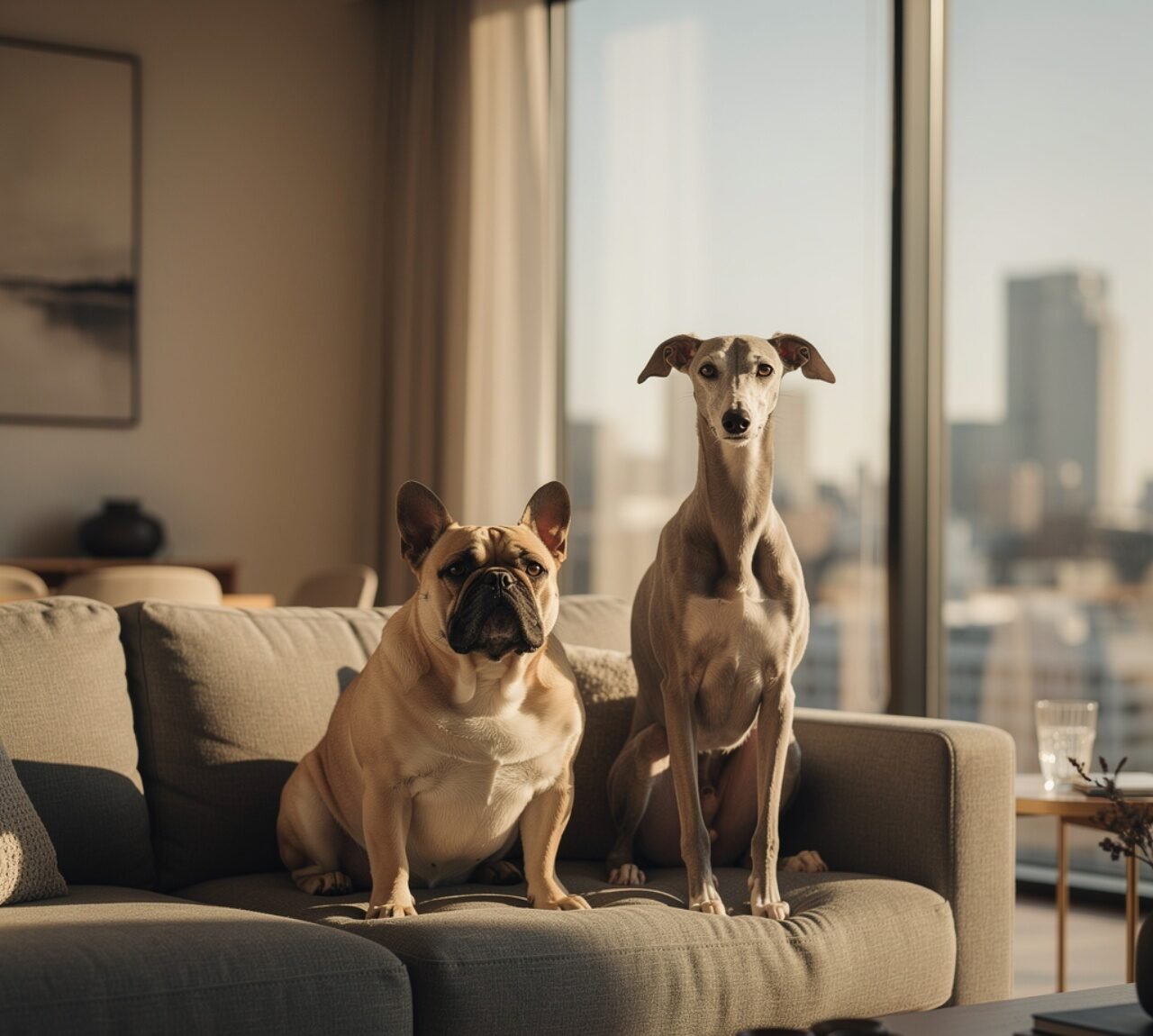
The short answer is that no dog is 100% silent, but breeds like the French Bulldog, the elegant Greyhound, and the unique Basenji are world-renowned for their quiet nature. In this deep-dive guide, we are going to explore the biological and historical reasons why some breeds are less reactive, provide a definitive list of the top 15 quietest apartment dogs, and share professional training secrets to keep your home as silent as a library. Whether you’re a first-time owner or a seasoned city dweller, choosing from these quiet dog breeds for apartments is the smartest move you can make for your sanity and your neighbor’s peace. Let’s decode the world of silent canine companions together.

What Makes These the Quietest Dog Breeds for Apartment Living?

There is a common misconception that “small apartment” equals “small dog.” As a behavior specialist, I can tell you that some of the worst apartment dogs are tiny terriers with massive voices and endless energy. To find the best small apartment dogs, you need to look at three critical factors: size, energy levels, and—most importantly—vocalization frequency.

Size is actually the least important factor. What matters more is “indoor manners.” A dog suitable for apartment life is one that understands that indoors is for relaxing, and outdoors is for working. This is why many giant breeds, like the Great Dane or Bullmastiff, are actually surprisingly great in small spaces—they are “couch potatoes” by nature. A high-energy dog in a cramped space becomes a “pressure cooker” of frustration, which eventually manifests as destructive behavior or nuisance barking. When you look for low noise dog breeds, you are essentially looking for a dog with a high threshold for stimulation. They shouldn’t feel the need to alert you every time the elevator dings or a neighbor coughs in the hallway.

Dr. Ahmed’s Note: “I always ask my clients to imagine their home as a library. If your dog can’t handle a library environment, they aren’t right for an apartment with thin walls. Mental stimulation is the secret to silence—a tired brain is a quiet brain.”

Why Some Dog Breeds Bark Less Than Others

Barking was a trait humans actively bred *into* dogs for thousands of years. Guard dogs and herding dogs were selected for their ability to alert the pack (us) to changes in the environment. If a wolf-dog didn’t bark when a predator approached, it wasn’t useful. However, quiet dog breeds for apartments often come from lineages that had different jobs.

For example, sighthounds like Greyhounds were bred to hunt by vision, not sound. Vocalizing would actually alert their prey, so they were bred to be silent. Companion breeds for royalty were bred to sit quietly on laps during long court sessions. There is also the “biological hardware” to consider. Some dogs have a lower “reactivity threshold.” This means their nervous system doesn’t register a hallway footstep as a 5-alarm fire. Understanding this genetic background is vital when choosing dogs that don’t bark much. If you are already managing a multi-pet home, you know that stress is contagious; a loud dog can even be the reason why is my calm cat suddenly aggressive because constant barking creates a high-cortisol environment for everyone.

15 Independent Dog Breeds for Busy Owners (Stay Home Alone Guide)

15 Independent Dog Breeds for Busy Owners (Stay Home Alone Guide)

Finding the right independent dog breeds for busy owners can be a life-changer. If you’ve been searching for a companion that doesn’t mind a quiet house while you’re at work…

I have sat in my consultation room with hundreds of pet owners who all share the same heavy burden: “workday guilt.” You know the feeling. You’re picking up your car keys, heading to the office for an eight-hour shift, and your dog is staring at you with those heartbreaking “don’t leave me” eyes. It’s a struggle that defines modern pet ownership. However, as a specialist who has spent years studying canine behavior, I can tell you that the secret to a happy home isn’t just about how much time you spend there; it’s about choosing the right partner for your lifestyle.

The short answer is that while no dog should be left in total isolation indefinitely, certain dog breeds that can stay alone at home are biologically and temperamentally wired to handle solitude better than others. Some dogs are like Velcro—they need to be attached to your hip to function. Others are more like “roommates”; they love you, but they also appreciate their nap time while you’re out earning the kibble money. In this deep-dive guide, we are going to explore the psychology of independent dogs, rank the best breeds for various living situations, and discuss the practical steps you can take to ensure your dog thrives while you’re at work.

The Psychology of Independence: Why Some Dogs Cope Better

To truly understand which dog breeds that can stay alone at home will suit your life, we first have to look at the ancestral roots of the dog. Dogs are pack animals, yes, but the “pack” isn’t a monolith. Some breeds were developed to work side-by-side with humans every second—think of the herding dog following the shepherd’s whistle. For these dogs, your absence feels like a loss of purpose.

On the other end of the spectrum, we have the guardians and the independent hunters. These dogs were often left to make their own decisions or guard a flock over large distances without constant human intervention. In my experience, these dogs possess an “emotional resilience” that allows them to self-soothe. They don’t look to you for every cue on how to feel. If the door closes and you’re gone, an independent breed essentially shrugs its shoulders and goes back to sleep. They are the “introverts” of the canine world.

It’s also worth noting that “independence” doesn’t mean “aloofness.” A dog can be incredibly affectionate when you are home but perfectly content when you are gone. This is the ideal balance for a modern professional. If you have other pets, understanding these traits is even more vital, especially if you’ve noticed an indoor cat suddenly aggressive toward a dog that is constantly seeking attention during the day.

Key Traits to Look for in a “9-to-5” Dog

When people ask me for a recommendation, I tell them to ignore the “cute” factor for a moment and look at three specific pillars of temperament. These pillars determine if a dog will be a peaceful resident or a destructive tenant while you’re away.

1. Energy Levels and the “Off-Switch”

A dog with a “high idle” is a disaster for a busy owner. If a dog has a natural motor that is always running, that energy will turn into destructive behavior (like chewing your baseboards) within two hours of boredom. You want a dog that is a “sprinter”—energetic for 30 minutes in the morning but capable of a 6-hour “power nap” afterward. Many dog breeds that can stay alone at home share this sprinting energy profile.

2. Barking Tendencies

If you live in an apartment, this is non-negotiable. Many independent breeds are quiet, but some are “alert barkers.” A dog that stays alone but barks at every hallway footstep will get you an eviction notice. Finding quiet dog breeds for apartments is often the first step for urban professionals. You want a dog with a high “stimulus threshold”—meaning it takes a lot to get them excited enough to make noise.

3. Prey Drive and Boredom Threshold

Some dogs are constantly “on.” They are scanning the room for a fly to catch or a squirrel outside the window. A dog with a low boredom threshold will create its own fun—and you usually won’t like what that “fun” looks like (think shredded pillows). The best breeds for solitude are those that can effectively “turn off” their brain when nothing is happening.

Small Dog Breeds That Can Stay Alone at Home

If you live in a smaller space and need a compact companion that doesn’t mind a quiet house, these are my top-tier picks. They prove that size doesn’t always dictate energy.

The French Bulldog

The “Frenchie” has become the poster child for city living for a reason. They are heavy-boned, relatively lazy, and have very low exercise requirements. In my observations, a French Bulldog spends about 80% of its day in a horizontal position. They are not prone to frantic pacing. However, they do have health risks you should be aware of. If your Frenchie ever seems to be struggling with digestion after a day of being alone, you might want to look at how to settle a dog’s upset stomach for quick relief tips.

The Maltese

While many small dogs suffer from “Small Dog Syndrome” (constant yapping and neediness), the Maltese is surprisingly sturdy mentally. If they are socialized early, they are quite happy to lounge on the back of a sofa and watch the world go by. They are among the most popular dog breeds that can stay alone at home because they don’t require vast amounts of physical exercise to remain calm. They are essentially the “aristocrats” of the dog world—they know how to wait with dignity.

The Boston Terrier

Known as the “American Gentleman,” the Boston Terrier is polite and adaptable. They are intelligent enough to use puzzle toys while you’re gone, and they generally lack the high-strung anxiety of other terrier breeds. They are great for owners who can squeeze in a brisk walk before the morning commute.


Medium to Large Breeds for Independent Living

Sometimes, a bigger dog is actually a better choice for someone who works. Large breeds often have slower metabolisms and lower “rest” energy than their tiny cousins.

The Basset Hound

If you can handle the drool and the occasional “aroo,” the Basset Hound is the king of the work-day dog. They are notoriously difficult to wake up once they’ve found a comfortable spot. Their independence is legendary—sometimes bordering on stubbornness—but that same trait means they don’t need you to hold their paw all day. They are the ultimate “low-arousal” dog.

The Greyhound

This is the most misunderstood breed on the list. People see a racing dog and think “high energy.” In reality, Greyhounds are the world’s fastest couch potatoes. They are sprinters. Once they’ve had a 20-minute walk, they are done for the day. They are famously quiet, making them one of the best dog breeds for small apartments that don’t bark. Their thin skin makes them like a warm house, but keep an eye out for small scabs on dog skin if they spend too much time on hard floors without a bed.

The Bullmastiff

If you have the floor space, the Bullmastiff is a gentle giant that takes its job of “guarding the house” very seriously by sleeping in front of the door. They aren’t pacing dogs. They are watchful and calm, and they possess a natural confidence that prevents them from panicking when the pack leader is away. They are a massive presence, but a very quiet one.

The “Velcro” Breeds: Dogs You Should Avoid If You Work Long Hours

It’s just as important to know which dogs cannot handle being alone. Choosing one of these while working a 60-hour week is a recipe for heartbreak for both you and the dog. These breeds were built for “High-Volume Interaction.”

  • Border Collies: These are the smartest dogs on earth. If you don’t give them a job, they will invent one. That job will usually be “unweaving the carpet” or “systematically destroying the kitchen cabinets.”
  • Vizslas: Often called “Velcro Vizslas,” they were bred to never leave their hunter’s side. In isolation, they often suffer from severe physiological distress.
  • Siberian Huskies: These are vocal, high-energy pack animals. A lonely Husky is a howling, destructive Husky that will likely alienate every neighbor you have.
  • Australian Shepherds: Like the Border Collie, they have a “work-brain.” If they aren’t herding something, they are worrying about something.

The Age Factor: Puppyhood vs. The Golden Years

Here is a hard truth: breed doesn’t matter if the dog is eight weeks old. No puppy can stay alone for eight hours. Biologically, they cannot hold their bladders that long, and psychologically, they are in a critical developmental window where isolation can cause permanent emotional damage. If you are a busy professional, I strongly suggest you look for an adult dog (3+ years old).

When you adopt an adult, you are bypassing the “shark phase” and the “potty training phase.” You can see their true personality. Most rescues can tell you exactly which of their residents are dog breeds that can stay alone at home. If you absolutely must have a puppy, you need a serious plan. You might need to learn how to work from home with a puppy for the first few months to ensure they transition into a confident adult. Senior dogs are also a fantastic option; they spend most of their time sleeping anyway!

Setting Up Your Home for a Successful Solitude

Even the most independent dog needs a “job” or a “safe haven.” Don’t just leave them in a silent, empty house. Preparation is the bridge between a bored dog and a content one.

The Scent Trick

Leave a t-shirt you’ve recently worn in your dog’s bed. Your scent lowers their cortisol (stress hormone) levels. It’s like a digital hug that lasts all day. To them, the smell of “Mom” or “Dad” means everything is okay.

Visual and Auditory Enrichment

Use a “white noise” machine or a “dog-specific” music playlist to drown out the sounds of neighbors or the mail carrier. If your dog is a “window watcher,” make sure they have a comfortable perch. However, if your dog barks at everything they see, it’s actually better to close the blinds to reduce their “barrier frustration.”

The “Treasure Hunt”

Before you leave, hide 10-15 high-value treats around the living room. This engages their “seeking” system. By the time they find the last treat, their brain is tired, and they are ready for a nap. Mental work is 10x more exhausting for a dog than a simple walk.

High-Tech Solutions for Remote Monitoring

We are living in the golden age of pet technology. You can now stay connected to your dog from your desk at the office, which significantly reduces “owner anxiety.”

  • Interactive Cameras: Devices like the Furbo allow you to see, talk to, and even toss treats to your dog. It turns your absence into an interactive experience.
  • Smart Toys: There are now “smart bones” and balls that roll and move on a timer to keep your dog’s mind engaged for 15-minute bursts during your afternoon meetings.
  • GPS and Activity Trackers: If you’re worried your dog is pacing all day, a collar tracker can show you their activity levels. If the “rest” score is high, you can breathe a sigh of relief.

Recognizing the Signs of Separation Anxiety

It is vital to distinguish between a dog that is “bored” and a dog that is “suffering.” Even the best dog breeds that can stay alone at home can develop separation anxiety if they aren’t properly transitioned. Separation anxiety is a panic disorder, not a behavior problem.

Look for these “Red Flags”:

  1. Destruction specifically around exits: If your dog is chewing the door frame or scratching the carpet by the front door, they are trying to “escape” to find you.
  2. Excessive salivation: If you come home and your dog’s chest is wet or there are puddles of drool, they have been in a state of high physiological stress.
  3. Inappropriate elimination: If a potty-trained dog has accidents only when you are gone, it’s fear-based, not “revenge.”
  4. Self-mutilation: Licking paws or flanks until they are raw or bloody is a sign of OCD-like stress.

If you see these signs, you need to consult a veterinarian or a certified behaviorist. This isn’t a “bad dog” issue; it’s a mental health crisis. You might need to look at how to calm an aggressive dog safely if the anxiety leads to defensive lashing out.

Common Mistakes Busy Owners Make

I see these mistakes every day, and they almost always come from a place of love. Let’s make sure you aren’t accidentally making the solitude harder for your dog.

1. The “Big Goodbye”: If you hug and kiss your dog and tell them “I’ll miss you so much” for five minutes before leaving, you are spiking their anxiety. You are telling them that your departure is a HUGE deal. Be boring. Say “See ya later” and walk out.

2. The “Weekend Catch-up”: Owners often try to “make up” for a busy week by taking their dog on a 5-hour hike on Saturday. If the dog isn’t fit for that, it can cause physical injury and massive cortisol spikes. Keep exercise consistent rather than explosive.

3. Ignoring the Morning Walk: You might be tired, but that 30-minute morning walk is the only thing that ensures your dog will sleep for the first 4 hours of your shift. Don’t skip it.

Frequently Asked Questions

1. How long is “too long” to leave a dog alone?
For most adult dogs, 8 to 10 hours is the absolute maximum, and only if they have been exercised before you leave. If you are consistently away for 12+ hours, you must hire a dog walker or use a doggy daycare.

2. Can I get a second dog to keep the first one company?
Only if you want a second dog. If the first dog has separation anxiety, they will often just “teach” the second dog to be anxious as well. Two bored dogs can do twice the damage of one.

3. Does crating help a dog stay alone?
For some dogs, the crate is a “den” of safety. For others, it’s a cage that increases panic. If your dog isn’t destructive, a “puppy-proofed” room or a dog-pen is usually a more humane option for long workdays.

4. Are there “quiet” dog breeds that don’t bark at all?
No dog is 100% silent, but the Basenji is known as the “barkless dog.” They make a yodel-like sound instead. If you need a low-noise roommate, look at Greyhounds, Whippets, or Borzois.

Final Thoughts: Quality Over Quantity

At the end of the day, the bond you share with your dog is measured by the quality of the time you spend together, not just the number of hours. If you choose one of these dog breeds that can stay alone at home, give them 30 minutes of focused interaction in the morning and another hour of love and play in the evening, they will be perfectly content.

Remember, a dog’s greatest gift is their ability to live in the moment. When you are home, be truly home. Put down the phone, stop the work emails, and be the person your dog thinks you are. If you found this guide helpful, I’d love to hear your stories! Join our community on our Facebook page to share photos of your independent pups and get daily advice on pet health and behavior. You aren’t just a “busy owner”—you are a dedicated pet parent doing the research to make their life better.

20 Quiet Dog Breeds That Don’t Bark (Perfect for Apartments & Families)

20 Quiet Dog Breeds That Don’t Bark (Perfect for Apartments & Families)

Choosing a new canine companion is a journey filled with excitement, but for many of us living in close quarters, the fear of “nuisance barking” can be a major stressor. I have spent years helping pet parents navigate the challenges of urban living, and the most common request I hear is: “I need a dog that won’t alert the entire block every time a leaf blows past the window.” While it is a biological myth that any dog is 100% silent, there are specific quiet dog breeds that don’t bark as their primary form of communication.

The short answer is that breeds like the Basenji, French Bulldog, and the surprisingly Zen-like Greyhound are genetically predisposed to a quieter lifestyle. These quiet dog breeds that don’t bark typically have a higher “stimulus threshold,” meaning they require much more than a knock at the door to trigger a vocal explosion. In this deep-dive guide, we will explore 20 of the most peaceful breeds on the planet, the science behind their silence, and professional tips to ensure your home remains a sanctuary. Whether you are a first-time owner or looking for a family addition, finding the right match from this list of quiet dog breeds that don’t bark will transform your living experience. Let’s find your quiet soulmate.

Quiet Dog Breeds That Don’t Bark

What Are Quiet Dog Breeds?

When we talk about quiet dog breeds that don’t bark, we aren’t suggesting that these dogs lack a voice. Every dog has the physical capability to vocalize if the situation demands it. However, in the canine world, “quiet” refers to a dog’s tendency to choose other forms of communication—like body language, leaning, or soft whines—over traditional, repetitive barking.

In my clinical experience, a quiet breed is one that is emotionally stable and low-arousal. They don’t view the mailman as a threat or the sound of the elevator as an invasion. They are the “stoics” of the dog world. It is important to manage your expectations: even a Basenji might let out a sound if they are in pain or extremely frustrated. But compared to a Beagle or a Terrier, the quiet dog breeds that don’t bark on this list are the equivalent of a library whisperer. They offer a level of peace that is hard to find in more reactive breeds.

Why Some Dogs Bark Less Than Others

Why is a Siberian Husky so vocal while a Borzoi is practically a silent film star? It comes down to three main factors: genetics, history, and the threshold of reactivity. Barking was a trait actively selected for by humans for thousands of years. Guard dogs and herding dogs were essentially biological “alarm systems.” If a wolf-dog didn’t bark to warn the tribe of an intruder, it wasn’t performing its job.

However, quiet dog breeds that don’t bark were often bred for silent hunting (like sighthounds) or as companions for royalty. Some dogs have a nervous system that is “tightly wound,” reacting instantly to sensory input. Quiet breeds usually have a wider “calm zone.” They process information before they react. This is a biological gift that makes them much easier to manage. If you are also managing a multi-pet household, understanding these triggers is vital, as a loud dog can often be the reason why is my calm cat suddenly aggressive due to constant noise-related stress.

15 Best Dog Breeds for Small Apartments That Don’t Bark (Quiet & Low Maintenance)

15 Best Dog Breeds for Small Apartments That Don’t Bark (Quiet & Low Maintenance)

Living in a city apartment with a dog is a dream for many, but it can quickly turn into a stressful situation if your furry friend decides to announce every hallway footstep to the entire building. I have sat with dozens of distraught owners who received noise complaints from neighbors, often fearing they might have to give up their pet. The truth is, some dogs are simply built for the quiet, vertical life of the city. If you are looking for the 15 best dog breeds for small apartments that don’t bark, you aren’t just looking for a small dog; you are looking for a specific, low-arousal temperament.

The short answer is that while no dog is 100% silent, certain breeds like the French Bulldog, Cavalier King Charles Spaniel, and even the large but lazy Greyhound are among the quietest roommates you can find. These quiet dog breeds for apartments tend to have a calm nature, meaning they don’t react to every small noise with a vocal explosion. In this comprehensive guide, we will explore the genetic and behavioral reasons why some dogs that don’t bark much are better for city life, provide a detailed list of the top 15 breeds, and give you professional tips on how to keep the peace in your building. Let’s find your perfect silent companion.

What Makes a Dog Suitable for Small Apartments?

When people think of “apartment dogs,” they usually think of tiny dogs. But as a specialist, I can tell you that size is often the least important factor. I’ve seen Great Danes that were perfect apartment dwellers and Jack Russell Terriers that were absolute disasters. A truly suitable match for the best small apartment dogs needs to pass the three-pillar test: size, energy level, and noise level.

First, size matters only in terms of navigability. Can the dog turn around in your hallway without knocking over a vase? Second, energy level is critical. A high-energy dog in a small space will become frustrated, which leads to destructive behavior and more barking. Finally, the noise level is the deal-breaker. A low noise dog breed is the difference between a happy home and an eviction notice. Finding the 15 best dog breeds for small apartments that don’t bark means finding a dog that treats your home as a place for rest, not a place for high-intensity work.

Dr. Ahmed’s Note: “I always tell my clients that a tired dog is a quiet dog. Even if you choose a low-noise breed, ensuring they have mental stimulation is key. You can check my guide on how to encourage independent play in cats for ideas that work surprisingly well for small dogs too!”

Dog Breeds That Can Stay Alone at Home: 15 Best Picks for Busy Owners

Dog Breeds That Can Stay Alone at Home: 15 Best Picks for Busy Owners

I have spent countless hours in my consultation room with guilt-ridden pet parents. They love their dogs, but they also have careers, meetings, and lives that require them to be away from home for several hours a day. The question is always the same: “Is it cruel to leave my dog alone?” My answer as a pet care specialist is simple: It depends entirely on the dog’s DNA and your preparation. While no dog thrives on 24-hour isolation, certain dog breeds that can stay alone at home are biologically wired for independence and low-arousal behavior.

The reality is that not all dogs were bred for constant companionship. While some are “Velcro dogs” that suffer in your absence, others are more like dignified roommates who value their nap time while you are out earning the kibble money. In this deep-dive guide, we are going to explore the 15 specific dog breeds that can stay alone at home, the science behind their calm temperaments, and exactly how to set up your home so your dog remains happy while you’re at work. If you’ve been searching for the best dog breeds for busy owners, you are about to find your perfect match. Let’s look at the biological traits and practical tips that make these dog breeds that can stay alone at home so successful for modern lifestyles.

dog breeds that can stay alone at home

What Makes a Dog Good at Staying Alone?

To understand why some dogs cope better with solitude, we have to look beyond their cute faces and into their evolutionary history. A dog’s ability to stay home alone depends on three main pillars: temperament, independence levels, and energy cycles. When searching for dog breeds that can stay alone at home, identifying these three pillars is essential for success.

The “Low-Arousal” Temperament

Some breeds are naturally “low-arousal,” meaning they don’t get easily startled or over-excited by silence or small noises outside. According to research published by the American Kennel Club (AKC), these dogs have a higher threshold for boredom. While a working breed might see a quiet house as a “problem to be solved” (which usually results in a chewed-up sofa), an independent breed sees it as an opportunity to recharge. This is a key trait for those seeking dog breeds that can stay alone at home.

Independence vs. Pack Drive

Dogs like the Golden Retriever were bred to work alongside humans constantly. Their “pack drive” is off the charts. Conversely, dog breeds that can stay alone at home are often developed for guarding or solitary hunting and are used to making their own decisions. They love their owners, but they don’t need to be “physically touching” them to feel secure. This emotional resilience prevents the destructive separation anxiety that many owners fear. If your dog is currently lashing out, check our guide on why is my calm cat suddenly aggressive as similar stress patterns can affect multi-pet households.

Expert Observation: “Independence is a muscle. Even the most solitary dog breeds that can stay alone at home need to be taught that ‘Human Leaving = Safety.’ Never make a big deal out of your departures or arrivals if you want a calm dog.”

The Science of Pet Love: 10 Hard Truths Every Owner Should Know.

The Science of Pet Love: 10 Hard Truths Every Owner Should Know.

Every pet owner asks: “Does my dog actually love me?”
While we believe in pure devotion, evolutionary biology reveals a
chilling reality. Is your bond real, or a 15,000-year-old
biological scam?

From “Puppy Eyes” being a brain hack to the dark truth about feline
loyalty, we are exposing the secrets science doesn’t want you to know.
Prepare to be shocked.


1. The “Stockholm Syndrome” of Man’s Best Friend

We love to call dogs loyal, but evolutionary biologists have a darker take. Dogs didn’t choose to love humans because of our charming personalities; they evolved to be “professional beggars.” 15,000 years ago, the wolves that were less aggressive and more submissive to humans got the leftovers. Over time, we didn’t domesticate them—they essentially “conned” their way into our camps for a steady food supply.

Today, your dog’s “loyalty” is a highly refined version of this survival contract. They don’t love *you*—they love the *security* you provide. They are biologically programmed to mirror your emotions to ensure the resources keep flowing. If you’ve ever had to settle a dog’s upset stomach after they scavenged through your trash, you weren’t “parenting”; you were being exploited by a scavenger who knows exactly which buttons to push to get a bowl of premium kibble. This is the ultimate “Stockholm Syndrome,” where the hostage (the human) falls in love with the captor (the pet) who controls their resources.


While providing security is the core of this survival contract, smart owners translate this bond into long-term protection. Investing in a comprehensive pet insurance policy ensures that when your dog faces a medical crisis, the cost of a specialized veterinary surgeon isn’t a barrier. Providing for their health via emergency pet coverage is, in many ways, the most practical expression of the security they crave.


Medical Causes of Cat Aggression: A Deep Dive into Pain and Illness in Felines

Medical Causes of Cat Aggression: A Deep Dive into Pain and Illness in Felines

When a normally affectionate cat suddenly starts hissing, swatting, or biting, the emotional toll on the owner is immense. We tend to view our pets through a human lens, wondering if they are “mad” at us or if they have suddenly developed a “mean” personality. However, as someone who has spent years observing feline behavior in both clinical and home settings, I can tell you that cats are rarely malicious. Instead, they are masters of concealment. In the wild, showing pain is a death sentence; it signals vulnerability to predators and competitors. In your living room, this evolutionary trait means your cat will hide a pulsing toothache or the grinding pain of arthritis until they simply cannot take it anymore. At that point, aggression becomes their only defensive tool. Understanding the **medical causes of cat aggression** is not just about fixing a behavior—it’s about relieving suffering.

If you’ve been asking yourself why is my calm cat suddenly aggressive, you must pause before reaching for a training manual or a spray bottle. Aggression that appears “out of nowhere” is almost always a physiological cry for help. A cat that lashes out when touched is often trying to protect a hurting part of their body from further discomfort. In this comprehensive guide, we are going to explore the various medical triggers that turn sweet cats sour, from silent joint decay to complex hormonal imbalances. By the end of this article, you will know exactly what physical signs to look for and why your vet’s diagnostic plan is the most important step in restoring your cat’s gentle nature.

1. Dental Disease: The Silent Agony of the Mouth

In my experience, dental pain is the single most overlooked **medical cause of cat aggression**. Cats suffer from a unique and agonizing condition called Feline Oral Resorptive Lesions (FORL), where the body literally begins to dissolve the tooth from the inside out, exposing the highly sensitive nerve endings. Imagine having an open nerve in your tooth and then having someone playfully scruff your head or try to pet your cheek. The pain is electric, sharp, and terrifying for a cat.

This pain often leads to what we call “head shyness.” The cat will flinch when you reach for them, or they may hiss at their food bowl because they associate eating with agony. If you notice your cat dropping food, drooling excessively, or pawing at their mouth, the aggression is a secondary symptom of a major dental crisis. A simple cleaning or an extraction can often take a cat from “aggressive” to “cuddly” in just a few days of recovery. Have you noticed your cat only biting when you pet near their jaw? That is a huge red flag for oral pain.

2. Arthritis and Joint Pain: Why Movement Hurts

We often think of arthritis as a “dog problem,” but recent studies suggest that up to 90% of cats over the age of 12 have some form of degenerative joint disease. Because cats are so light and agile, they hide their limp much better than dogs do. Instead of limping, they simply stop moving as much. They stop jumping onto the high counter, they stop grooming their back, and they become aggressive when picked up.

Arthritis makes a cat feel vulnerable. If they know their hips hurt, and they see a child or another pet approaching them quickly, they will preemptively hiss or swat to keep the “threat” away. They are creating a buffer zone of safety. If you’ve been monitoring cat aggression warning signs, look for a “hunched” posture or a tail that thumps whenever the cat has to change positions. Providing orthopedic beds and joint supplements can help, but ruling out chronic pain is essential for their mood stabilization.

Expert Observation: “I once saw a cat that was considered ‘unadoptable’ due to aggression. After a week of pain medication for a spinal injury, he became the sweetest lap cat in the shelter. Pain changes the brain’s chemistry.”

3. Hyperthyroidism: Understanding “Thyroid Rage”

When an older cat suddenly develops a “manic” energy—pacing at night, eating everything in sight, and attacking for no reason—we immediately look at the thyroid gland. Hyperthyroidism is a common **medical cause of cat aggression** where an overactive thyroid floods the body with hormones. This speeds up the heart rate, raises blood pressure, and puts the cat’s nervous system into a state of permanent “fight or flight.”

In the veterinary community, we sometimes call this “thyroid rage.” The cat isn’t choosing to be angry; their body is literally vibrating with excess energy and irritation. Everything feels louder, brighter, and more annoying to them. If your senior cat is losing weight despite a massive appetite and has become aggressive, a simple blood test can confirm this condition. Once the hormone levels are managed via medication or radioactive iodine therapy, the “rage” usually vanishes.

4. Urinary and Renal Distress: Bladder Pain and Toxins

Urinary issues are physically excruciating for felines. Whether it’s a bacterial infection (UTI) or sterile cystitis caused by stress, the bladder wall becomes inflamed and raw. Every movement can cause a sharp, stinging pain in the lower abdomen. If you pet a cat near their tail or flanks while they have a bladder issue, they may turn and bite with shocking speed.

Furthermore, as kidney function declines in older cats, metabolic toxins can build up in the bloodstream (uremia). These toxins can cause nausea, headaches, and a general feeling of malaise. A cat that feels constantly nauseated is not going to have much patience for petting or play. This is also why you might find your cat sleeping in the litter box; they are seeking comfort in a familiar place while their body feels like it’s failing them.

5. Feline Hyperesthesia Syndrome: The Rolling Skin Disease

If you have ever seen your cat’s skin “ripple” or “roll” along their back, followed by a sudden burst of frantic grooming or a seemingly unprovoked attack on their own tail, you may be seeing Feline Hyperesthesia Syndrome (FHS). This is a complex neurological and dermatological condition where the cat’s skin becomes hypersensitive to the point of pain.

For a cat with FHS, a gentle stroke along the spine can feel like an electric shock. They may suddenly hiss and bite at the air or your hand because their nervous system is misfiring. This is one of the most frustrating **medical causes of cat aggression** for owners because it looks so bizarre. Managing FHS often involves a combination of environmental enrichment, stress reduction, and sometimes anti-seizure or anti-anxiety medications to calm the overactive nerves.

Cat looking startled and aggressive


6. Neurological Glitches: Brain Tumors and Seizures

Sometimes the “aggression” isn’t a reaction to external stimuli, but a direct result of changes in the brain’s physical structure. Brain tumors, inflammatory diseases like FIP (Feline Infectious Peritonitis), or even lead poisoning can affect the part of the brain that governs impulse control and mood.

Neurological aggression often feels “different” to an owner. The cat may have a glazed look in their eyes, or they may attack a wall before turning on you. Some cats suffer from “partial seizures” where they remain conscious but lose control over their emotional responses for a few minutes. If the aggression is accompanied by circling, head pressing, or vision changes, it is a medical emergency that requires immediate veterinary imaging.

7. Sensory Loss: The Aggression of the Startled Cat

As cats age, they often lose their hearing and vision, much like humans do. A cat that can no longer hear you approaching or see your hand coming toward them is a cat that is constantly being “snuck up on.” If you startle a sleeping cat who is deaf and blind, their instinctual “startle reflex” is to use their claws.

This isn’t intentional aggression; it is a defensive reaction to being shocked. Owners of senior cats should learn to stomp their feet on the floor when entering a room so the cat can feel the vibrations, or use scent markers to help the cat navigate. If you find your senior friend becoming “grumpy,” consider that they might simply be living in a world of silence and shadows.

8. Gastrointestinal Issues: The Gut-Brain Connection

We are learning more every day about the connection between the gut and the brain. Chronic inflammation in the intestines (IBD) or food sensitivities can cause constant, low-level abdominal pain and nausea. Have you ever been “hangry” or had a stomach bug that made you want to be left alone? Cats experience this too. If their gut is constantly inflamed, they will be less tolerant of handling and more prone to irritability. Managing their diet is often the first step in calming their temperament.

Frequently Asked Questions

Can a cat become aggressive from a simple flea bite?
Yes. For cats with Flea Allergy Dermatitis, the itch is so intense it causes a state of high stress and “petting-induced” aggression as the skin is already raw and sensitive.

What is the most common medical cause of aggression in kittens?
Usually, it is related to parasites or teething pain, though play-aggression is more common at that age. However, ear mites can cause significant pain and irritability in kittens.

Will my cat’s personality return to normal after treatment?
In the vast majority of cases, yes. Once the underlying pain or hormonal imbalance is resolved, the behavioral aggression typically fades away within a few weeks.

Should I try behavioral training while my cat is ill?
No. Training an animal that is in physical pain is ineffective and can actually damage your bond. Focus on medical recovery first.

Final Thoughts

If your cat is lashing out, please don’t take it personally. They aren’t trying to hurt you; they are trying to survive a body that feels like it’s under attack from the inside. Ruling out the **medical causes of cat aggression** is the most loving, responsible thing you can do as a pet parent. By working closely with your vet and paying attention to subtle changes in their grooming, eating, and movement, you can give your cat the relief they deserve. For more advice on navigating the complexities of feline health, join our community on our Facebook page. We are here to help you and your kitty find the peace you both deserve.

Read also :Why Is My Calm Cat Suddenly Aggressive

How to Work from Home with a Puppy: A Realistic Survival Guide and Schedule

How to Work from Home with a Puppy: A Realistic Survival Guide and Schedule

Raising a young dog while keeping up with a full-time job is a unique form of chaos that only a few brave souls truly understand. If you’ve been wondering how to work from home with a puppy without losing your mind—or your job—you’re in the right place. I remember my very first attempt at this balance; I was in the middle of a high-stakes consulting call when my 11-week-old puppy decided that my internet cable looked like a delicious chew toy. It was a stressful world of frantic “mute” buttons and constant distractions.

The hard truth is that you cannot simply “wing it.” If you try to let your puppy roam free while you attend Zoom meetings, you will fail at both being a professional and being a pet parent. Success requires a strategic rhythm that mimics their natural biological needs. This guide is a battle-tested blueprint on how to work from home with a puppy, utilizing structured “enforced naps,” mental stimulation, and a schedule that gives you blocks of deep focus. Let’s dive into how you can turn your home office from a disaster zone into a productive sanctuary for both you and your new best friend.

1. Understanding Puppy Biology While Working

Before you can master how to work from home with a puppy, you must understand their internal clock. At 11 to 12 weeks, a puppy is essentially a toddler with razor-sharp teeth. They have a physical bladder limit of about 2 to 3 hours, but their mental “focus” limit is much shorter—usually around 15 minutes of active play before they need a change of pace.

The biggest mistake remote workers make is assuming that a puppy should be awake and playing nearby just because you are home. This leads to an overtired, “cranky” puppy who bites harder and barks more. Much like human infants, when puppies get overstimulated, they don’t just fall asleep; they become destructive. Your job as a professional is to be the manager of their energy, ensuring they stay in a calm state so you can stay in a productive one.

Dr. Ahmed’s Note: “Just like a cat sleeping in litter box might be a sign of environmental stress, a puppy who won’t stop crying in your office is often overwhelmed by your ‘work energy.’ Creating a quiet space is vital for their development.”


2. Creating the Perfect WFH Office Ecosystem

You cannot concentrate on a spreadsheet if you are constantly scanning the floor for accidents. Mastering how to work from home with a puppy requires a “contained” environment. You need to setup a puppy-proof ecosystem that allows the dog to be near you without being “on” you.

The Puppy Pen vs. The Crate

A puppy pen (x-pen) is your most valuable WFH tool. It offers enough room for them to stretch and play with a chew toy, but prevents them from shredding your office chair. If they are in their pen, they learn that ‘office time’ is ‘settle time.’ If you find your puppy is unusually reactive to sounds during your calls, it’s worth checking if they have minor skin irritations like small scabs on dog, as physical discomfort often leads to increased vocalization and stress.

3. The Secret Weapon: Enforced Naps

If you take only one thing from this guide on how to work from home with a puppy, let it be this: 1 hour up, 2 hours down. Puppies need 18-20 hours of sleep per day. Without your help, they will only sleep about 10, leaving them (and you) exhausted. By enforcing naps in a crate or a quiet room, you create “Deep Work” windows for yourself. This is the only way to get through a 2-hour meeting without interruption.

4. The Ultimate Hour-by-Hour WFH Schedule

Consistency is the only way to succeed. Here is a realistic how to work from home with a puppy schedule that balances your 9-to-5 needs with their biological ones.

Time Puppy Phase Your Work Mode
7:00 – 8:30 AM Wake up, Potty, High Play, Training Morning Prep, Brief Email Check
8:30 – 10:30 AM Enforced Nap (Crate/Room) Deep Work Block #1 (Concentrated Tasks)
10:30 – 11:15 AM Potty, 5-min Training, Solo Play in Pen Administrative Tasks, Quick Calls
11:15 – 1:15 PM Enforced Nap Deep Work Block #2 / Staff Meetings
1:15 – 2:15 PM LUNCH: Potty, Walk, Lunch, Play Your Lunch Break (Offline)
2:15 – 4:30 PM Enforced Nap Deep Work Block #3 / Focus Time
4:30 – 5:30 PM Potty, Low-energy play, Settle training Wrapping up, Planning for Tomorrow


5. Survival Hacks for Zoom Calls and Presentations

Meetings are the high-stress moments of how to work from home with a puppy. To survive them, you need a “High-Value” toy reserve. This means a specific chew, like a frozen Kong or a lick mat, that the puppy *only* gets when you are on a call. They will soon associate your “meeting voice” with their favorite treats. Also, always check your mute button habit; a sudden bark at the mailman shouldn’t ruin your presentation.

6. Tiring Out a Smart Puppy’s Brain

A smart puppy is a bored puppy, and a bored puppy is an interrupter. To effectively learn how to work from home with a puppy, you must focus on mental exhaustion. Using snuffle mats, frozen toys, and short “training sprints” between emails will tire them out much faster than a long walk. A mentally tired dog will sleep through your afternoon reporting session, giving you the silence you need.

7. Preventing “Velcro Dog” Syndrome

One danger of working from home is that your puppy never learns to be alone. If you are always in the same room, they can develop severe separation anxiety. Practice “fake departures” daily. Put on your coat, grab your keys, and go sit in another room or your car for 20 minutes. They must learn that you leaving is normal and that you always return.

8. Mistakes Every Remote Worker Makes

  • The “Short-Order Cook” Syndrome: Stopping work every time the puppy whines. Wait for 10 seconds of silence before rewarding them with attention.
  • Skipping the Morning Play: If you don’t drain their energy at 7:00 AM, they will explode at 10:00 AM.
  • Overlooking Health: If your puppy is suddenly grumpy or aggressive, they might be in pain. Review behaviors like why is my calm cat suddenly aggressive to see how pain changes pet personalities.

Frequently Asked Questions

Is it okay to work from home with a puppy in the same room?
Yes, but use a pen or a tether so they don’t chew your furniture or cables.

What if my puppy barks during a call?
Ignore it if they don’t need to go potty. Responding to the bark only trains them to bark more for attention.

Should I get a second dog to keep them busy?
No, this usually doubles the work and the noise during your calls!

The Final Verdict

Knowing how to work from home with a puppy is about structure, not just luck. By following a strict 1-hour up, 2-hour down rhythm, you are raising a confident adult dog while maintaining your professional edge. It won’t be perfect every day—there will be accidents and loud barks—but with consistency, you’ll find the harmony you’re looking for. For more tips on living with your pets, join our community on our Facebook page. You’ve got this!


Small Scabs on Dog: Is it Allergies, Bug Bites, or Infection?

Small Scabs on Dog: Is it Allergies, Bug Bites, or Infection?

If you have ever been petting your dog and felt a tiny, crusty bump under their fur, you know that immediate spike of anxiety. Your fingers stop, you part the hair, and there it is: a small scabs on dog skin. Is it a tick? Did they get bitten by a spider? Or is this the start of a mysterious skin disease? I have sat with hundreds of pet owners who feel this exact same way. In my years of working with dogs, I’ve learned that while a single scab might be nothing more than a healing scratch from a rogue blackberry bush, a collection of “pimple-sized” dry wounds is usually a message from the skin that something internal or environmental is out of balance.

The short answer is that small scabs on a dog are most commonly caused by one of three things: Flea Allergy Dermatitis (FAD), a secondary bacterial infection like folliculitis, or environmental allergies. However, the way those scabs look—whether they are circular, flaky, red, or crusty—tells a story about the underlying cause. We aren’t just looking at a scab; we are looking at a symptom. In this guide, we are going to dive deep into the world of canine dermatology to help you identify what those spots are, how to provide immediate relief, and when you absolutely need to involve your veterinarian. Let’s decode your dog’s skin together.


1. Visual Triage: What Do the Scabs Look Like?

Before we jump into the “why,” we need to look at the “what.” Skin reactions in dogs are diverse. I always ask owners to describe the texture of the small scabs on dog. Is it a “pimple” that popped? Is it a dry, flaky patch? Or is it a hard, dark crust? This visual triage is the first step in our detective work.

If the scab looks like a tiny red dot that has dried into a brown flake, we often lean toward bug bites or fleas. If the scab is surrounded by a ring of peeling skin (which we call an epidermal collarette), that is a classic sign of a bacterial infection. On the other hand, if the skin looks “moth-eaten” with patches of hair loss accompanying the scabs, we start thinking about parasites like mites. By identifying the visual pattern, you can narrow down the list of suspects significantly before your vet visit.

2. Flea Allergy Dermatitis: The One-Bite Rule

You might say, “But I don’t see any fleas!” I hear this every single day. The reality is that for a dog with Flea Allergy Dermatitis (FAD), it only takes one single bite to trigger a systemic reaction. It isn’t the flea itself that causes the scabs; it is an allergic reaction to the flea’s saliva. Think of it as a severe allergic reaction rather than just an infestation.

When a sensitive dog is bitten, their immune system goes into overdrive. This causes intense itching, primarily at the base of the tail, the neck, and the inner thighs. The dog scratches, bites, and licks the area until the skin breaks. Those tiny “pimple-sized” wounds then dry up and form the small scabs on dog you are feeling. Even if your dog is on a preventative, a “breakthrough” bite can happen. If you’ve been seeing these spots for weeks, it’s worth doing a “flea comb” test on a wet white paper towel to look for flea dirt.

Can Dogs Eat Broccoli Stems? Raw vs. Cooked Safety

Can dogs eat broccoli stems

We have all been there. It is dinner prep time. You are standing at the cutting board, chopping up a head of fresh broccoli for a stir-fry or a healthy side dish. You cut off the fluffy green florets, and you are left with the thick, pale, woody stalks.

You turn toward the trash can to throw them away, but you are intercepted. Your dog is standing there, tail wagging rhythmically, eyes locked on that broccoli stem like it is a giant, green, crunchy bone.

You hesitate. It is a vegetable, so it must be safe, right? But it is also hard as a rock. Will they choke on it? Will it cause a stomach ache? Is it toxic?

You search: “Can dogs eat broccoli stems?”

As a canine nutritionist, I love vegetables for dogs. They add bulk, hydration, and vitamins without packing on the pounds. But broccoli is a tricky one. It belongs to the Brassica family (like cauliflower and cabbage), which means while it is incredibly healthy, it comes with some… smelly side effects and specific mechanical risks.

In this massive, vet-approved guide, we will answer the question once and for all. We will look at the choking risks of the stalk, the difference between raw and cooked digestion, why peeling the skin is crucial, and why feeding too much can turn your living room into a “gas chamber.”

🥦 The Quick Verdict: Stems vs. Florets

Yes, dogs can eat broccoli stems, but preparation is vital.

  • Nutritional Value: Excellent source of Fiber, Vitamin K, and Vitamin C.
  • The Danger: The stalks are a major Choking Hazard if swallowed whole.
  • The Side Effect: High amounts cause severe gas (flatulence).
  • The Golden Rule: Peel the tough skin and cut into coin-sized pieces.

The Health Benefits: Why Broccoli Rocks

Broccoli is a superfood for humans, and many of those benefits transfer directly to our canine companions. When you ask “can dogs eat broccoli stems,” you are asking about a low-calorie treat that packs a serious nutritional punch.

1. Fiber for Gut Health

The stems are packed with insoluble fiber. This helps keep your dog’s digestion regular. If you have a dog that is always hungry (like a Labrador or Beagle) but needs to lose weight, adding steamed broccoli stems to their bowl can help them feel “full” and satisfied without adding fattening calories.

2. Vitamin K (Bone Density)

Broccoli is rich in Vitamin K, which is known for improving bone density and, more importantly, helping blood clot properly. It is a great boost for active, growing dogs or seniors with fragile bones.

3. Cleaner Teeth (Nature’s Floss)

If served raw (and safely sized), the fibrous texture of the stem acts like a gentle abrasive. As your dog gnaws on the tough fiber, it can help mechanically scrub away surface plaque on their back molars. Think of it as a natural, edible dental chew.

Fresh broccoli stems ready for dog food prep


The Major Risks: What You Need to Know

Before you hand over that stalk, you need to know the risks. Broccoli is not risk-free, and size matters.

1. The Choking Hazard (The “Gulpers”)

This is the biggest danger with stems. Broccoli stalks are very dense and hard. If you have a dog that “inhales” food without chewing (you know who they are), a large chunk of broccoli stem can get lodged in their esophagus.

The Fix: Never give a whole stalk to a dog. Slice it into thin rounds (like coins) or small cubes. If you have a small dog, steam it until it is soft to prevent blockage.

2. Gastric Irritation (Isothiocyanates)

Here is the science part. Broccoli florets (the top green part) contain a compound called Isothiocyanates. While this compound fights cancer in small doses, in large doses, it is a severe gastric irritant for dogs.

If a dog eats too much broccoli (more than 10% of their daily diet), this compound can cause nausea, vomiting, and severe diarrhea.

The Good News: The stems actually contain LESS of this compound than the florets! So, structurally, the stems are safer for the stomach than the tops, provided they are chewed well.

3. The Gas Factor (Flatulence)

Let’s be real. Broccoli causes gas. It contains complex sugars (Raffinose) that dogs cannot fully break down in the stomach. These sugars travel to the large intestine, where bacteria ferment them.

The result? Gas.

If you feed your dog a lot of broccoli stems, be prepared to clear the room later. The gas can be potent. If your dog already has a sensitive stomach, skip the broccoli and choose green beans instead.


Raw vs. Cooked: The Great Debate

When asking “can dogs eat broccoli stems,” the preparation method changes the safety profile entirely.

Raw Broccoli Stems

Pros: Preserves all the vitamins (heat destroys some Vitamin C). Great crunch factor for teeth.

Cons: Very hard to digest. Tough to chew. Higher risk of intestinal blockage if swallowed in chunks.

Verdict: Only for large dogs with strong teeth, and ONLY if cut into very small pieces.

Cooked (Steamed) Broccoli Stems

Pros: Softens the fiber, making it easy to digest. Removes the choking risk almost entirely. Breaks down some of the gas-causing sugars.

Cons: Loses a tiny bit of vitamin content (but still healthy).

Verdict: The BEST and SAFEST way to serve it. Steam it for 5-7 minutes until you can pierce it with a fork. Do not use butter, salt, oil, or garlic.


How to Prepare Broccoli Stems for Dogs (Step-by-Step)

Don’t just throw the woody end on the floor. Treat it like a meal ingredient to ensure safety.

Step 1: The Wash

Rinse the stems thoroughly. Broccoli heads can trap dirt and pesticides.

Step 2: The Peel (Crucial Step)

Have you ever noticed that the outside of a broccoli stem is stringy and tough? That outer layer is very hard for dogs to digest.

Tip: Use a vegetable peeler to shave off the tough green skin. Underneath, you will find the “Broccoli Marrow”—a lighter, crisper, and sweeter part of the stem. This is the gold!

Step 3: The Cut

Slice the peeled stem into coin-sized rounds. If you have a tiny dog, chop those rounds into quarters.

Step 4: The Cook (Optional)

Steam or boil plain water. No salt. Let them cool completely before serving.

Dog waiting for healthy vegetable treat


Frequently Asked Questions (FAQ)

Q: Can dogs eat cauliflower stems too?
A: Yes! Cauliflower is basically broccoli’s pale cousin. The same rules apply: it causes gas, so feed in moderation, and cooking it is preferred to prevent choking.

Q: My dog ate a huge piece of raw stem. What do I do?
A: Don’t panic immediately. If they swallowed it and aren’t choking (coughing/wheezing), it will likely digest slowly. Watch them for signs of obstruction over the next 24 hours: vomiting, trying to poop but can’t, or a painful belly. If you see these signs, go to the vet.

Q: Can I give my dog broccoli with cheese sauce?
A: No. While humans love broccoli and cheddar, cheese sauce is high in fat, salt, and lactose. It can cause Pancreatitis or diarrhea. Keep the veggies plain.

Q: Is broccoli safe for puppies?
A: In tiny amounts, yes. But puppy digestive systems are very sensitive. The high fiber might cause diarrhea, which is dangerous for a puppy (dehydration risk). Stick to easier treats like carrots or sweet potatoes for babies until they are older.

Q: Can dogs eat frozen broccoli?
A: Yes! Frozen broccoli florets or stems are great. They are usually pre-blanched (cooked slightly), so they are safe. You can give them frozen as a crunchy summer treat, or thaw them out.

Final Thoughts

So, can dogs eat broccoli stems? Yes, they are a fantastic, eco-friendly way to reduce food waste and give your dog a vitamin boost.

The secret is in the prep. Peel the tough skin, chop them small, and preferably steam them. Your dog will love the crunch, and you’ll love knowing you’re adding healthy fiber to their diet without spending a fortune on fancy treats.

Just remember: Moderation. A few pieces are a treat. A whole bowl is a recipe for a very smelly evening.

Looking for more veggie ideas? Check out our article on Apple Skins and other safe snacks in the comprehensive Nutrition section.