
Table of Contents
- Quick Summary: Key Takeaways for Curious Cat Parents
- 1. Direct Clinical Answer: Why Does My Cat Sleep on My Head?
- 2. Thermal Biology: The Human Scalp as an Evolutionary Heat Radiator
- 3. Defensive Tactics: Elevated Vantage Points & Involuntary Limb Movement
- 4. Scent Blending & Facial Pheromones: The Science of Allomarking
🩺 Dr. Ahmed’s Clinical & Behavioral Summary
- Direct Answer: Cats sleep on human heads predominantly for thermodynamic warmth, security from restless limbs, familiar reassuring scent profiles, and territorial social bonding.
- The Heat Trap: The human head and scalp radiate continuous body heat throughout the night without being shifted beneath heavy bed blankets.
- Survival Mechanics: Resting near a trusted human’s head provides an elevated, secure vantage point that satisfies wild feline self-preservation instincts.
- Safe Boundaries: If head-sleeping triggers nighttime allergies or sleep deprivation, gradual desensitization using a heated orthopedic side-bed resolves the behavior without emotional stress.
1. Direct Clinical Answer: Why Does My Cat Sleep on My Head?
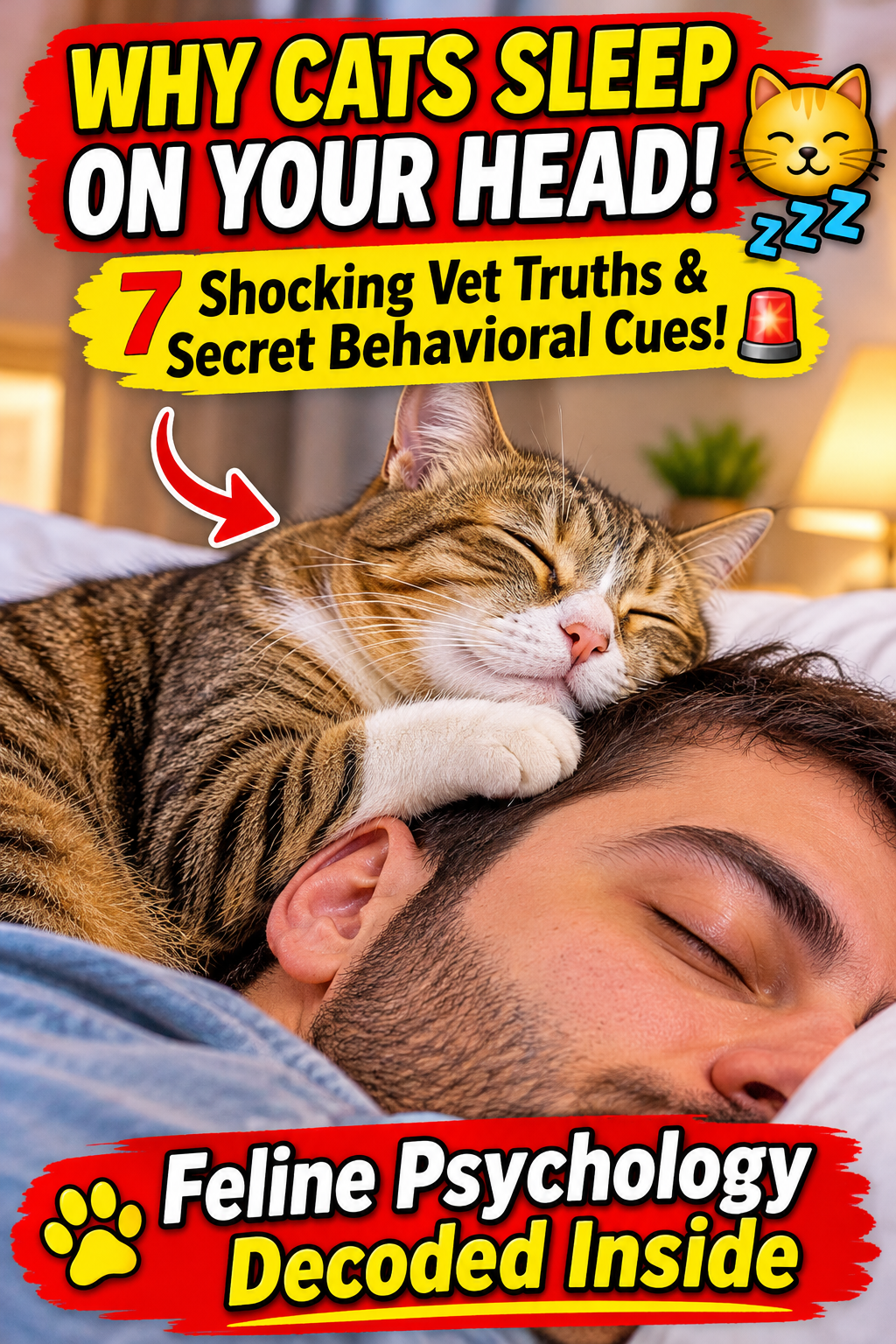
Cats sleep on your head or pillow because the human scalp is the warmest, most stable part of your body at night, emitting constant heat and familiar scent pheromones without restless tossing and turning. In my years of clinical feline practice and behavioral consultations, cat parents constantly express amusement and mild exhaustion when their purring feline curls tightly around their crown, presses against their forehead, or completely drapes across their pillow like a furry nightcap.
While this peculiar sleeping habit can occasionally disrupt a human’s deep sleep cycle or leave you with a mouthful of loose fur, it is actually one of the highest behavioral compliments a domestic feline can bestow upon a human caregiver. Cats are solitary, territorial predators by nature; choosing to sleep in close physical proximity to an individual’s face indicates profound emotional trust, physiological security, and territorial acceptance.
However, head-sleeping is rarely driven by a single simple whim. It is a sophisticated combination of feline thermodynamic biology, survival instincts inherited from wild desert ancestors, olfactory scent-blending rituals, and emotional attachment. In this comprehensive veterinary guide, we will unpack the fascinating neuroscience and evolutionary biology behind this endearing nocturnal habit, examine underlying anxiety triggers, and provide actionable tips to establish healthy sleeping boundaries without damaging your bond.
2. Thermal Biology: The Human Scalp as an Evolutionary Heat Radiator
To understand why your head is prime real estate in your cat’s nocturnal world, we must examine feline physiological thermoregulation. The domestic house cat (Felis catus) is a direct descendant of the African wildcat (Felis lybica), a small desert-dwelling predator whose evolutionary biology was forged under extreme arid temperature swings.
Because of this desert heritage, the normal feline basal body temperature runs significantly higher than human body temperature, typically registering between 100.5°F and 102.5°F (38.1°C to 39.2°C). Maintaining this elevated baseline core temperature requires substantial metabolic energy. Throughout waking daylight hours, cats actively seek out external thermal sinks—such as direct patches of sunlight, warm laptop keyboards, or baseboard heating vents—to absorb ambient heat rather than burning internal calories through metabolic thermogenesis.
When the sun sets and ambient room temperatures drop, human beings retreat beneath thick blankets. As you fall into deep rapid eye movement (REM) sleep, your body moves relatively little, but your head remains completely exposed above the duvet. The human scalp possesses a dense, superficial capillary vascular network that radiates continuous, radiant body heat into the surrounding air. To a heat-seeking feline whose body temperature drops naturally during sleep, your exposed head and warm pillow function as an organic, self-regulating heating pad that conserves vital metabolic energy all night long.
If your feline companion also exhibits unusual, rapid muscle quivering or sudden twitching while curled up on your pillow, explore our clinical diagnostic guide on why cats twitch while sleeping (REM dreams vs. seizures) to ensure their sleep cycles are completely healthy.
3. Defensive Tactics: Elevated Vantage Points & Involuntary Limb Movement
Beyond the undeniable luxury of radiant warmth, feline sleep positioning is governed by ancient evolutionary self-preservation mechanisms. In nature, sleep is the most physically vulnerable state any small mammalian predator can experience. Even thousands of years of comfortable indoor domestication have not extinguished the wild feline instinct to guard against unexpected threats.
Your head rests naturally at the highest physical elevation of the bed, supported by a firm, raised pillow. In feline behavioral psychology, elevated surfaces represent safety, control, and tactical superiority. From atop your pillow, a cat maintains an unobstructed panoramic view of the entire bedroom, the doorway, and any moving shadows. They can monitor household territory with minimal physical effort, satisfying their biological requirement for vigilance.
Furthermore, cats are highly perceptive creatures that quickly learn the mechanical movement patterns of human bodies. The average adult human tosses, turns, shifts positions, and kicks their legs dozens of times throughout a typical night. A cat sleeping down near your feet, knees, or hips is at constant risk of being trapped under heavy blankets, bumped, or accidentally kicked off the mattress by an involuntary human leg twitch. Conversely, human heads remain remarkably stable and stationary during sleep, providing your cat with an undisturbed, disruption-free sleeping sanctuary.
According to clinical behavioral research from the Cornell Feline Health Center, cats actively choose sleeping locations that minimize involuntary physical disruption, prioritizing elevated, stationary micro-zones that guarantee a swift, unobstructed escape route if startled awake.

4. Scent Blending & Facial Pheromones: The Science of Allomarking
Felines perceive and navigate their domestic environment primarily through a complex, invisible landscape of chemical olfactory markers. Scent represents the definitive currency of feline safety, familiarity, and social hierarchy.
Domestic cats possess specialized sebaceous scent glands concentrated across specific anatomical zones—most notably around their cheeks (temporal glands), chin (submandibular glands), forehead, and base of the tail. When cats live in bonded social groups or wild feral colonies, they engage in a mutual grooming and scent-depositing ritual known in ethology as allomarking. By rubbing their cheeks and crowns against each other (bunting), they blend individual biological scents into a unified “communal colony scent” that identifies all group members as safe and trusted family.
Your head, hair, and face carry your most concentrated, recognizable personal biological scent signature. Human hair follicles actively trap and retain natural scalp sebum oils, perspiration pheromones, and daily personal scents. When your cat curls around your head, kneads your hair, or rubs their forehead against your temples, they are actively participating in cross-species allomarking. They are blending their comforting facial pheromones with your personal scent profile, effectively claiming you as an integral member of their bonded family pack.
Does your cat sometimes combine this intense scent-seeking affection with subtle, gentle nibbling on your fingers or ears? Review our clinical veterinary breakdown on why cats bite gently (love bites explained) to differentiate between social grooming and tactile overstimulation.
5. Acoustic Reassurance: Rhythmic Breathing & Soothing Heartbeats
Beyond visual vantage points and radiant scalp heat, human heads provide a steady stream of rhythmic, bio-acoustic feedback that felines find profoundly comforting. In early neonatal kittenhood, vulnerable newborn kittens spend their initial weeks piled tightly against their mother’s warm abdomen and chest, lulled into peaceful sleep by the continuous, rhythmic resonance of the maternal heartbeat and slow diaphragmatic breathing.
When an adult domestic cat curls against your neck, forehead, or cheek, their sensitive auditory apparatus is positioned directly adjacent to your carotid arteries and respiratory airways. The slow, rhythmic sound of human nocturnal inhalation and exhalation acts as natural white noise that mimics that foundational maternal security. This auditory resonance triggers the release of soothing endorphins within the feline brain stem, lowering systemic stress levels and guiding the cat smoothly into deep, restorative slow-wave sleep.
In fact, many cats will synchronize their own purring frequency to match their owner’s resting respiration. This acoustic synchronization creates a shared parasympathetic biofeedback loop that stabilizes both human and feline heart rates. In feline behavioral medicine, this habit is frequently observed in cats that were bottle-fed as orphans or separated from their biological mothers prior to eight weeks of age, as they instinctively view their primary human caregiver as a surrogate maternal anchor throughout adulthood.
If your feline companion also exhibits intense, continuous purring when frightened by household noises or sudden changes, read our specialized behavioral breakdown on why cats purr when scared or stressed to decode their internal emotional coping systems.

6. The Silent Emotional Anchor: Separation Anxiety & Insecurity
While head-sleeping is frequently an expression of deep affection and physical comfort, clinical veterinarians always assess the patient’s broader emotional context. In modern feline behavior, excessive clinginess during nighttime hours can be a subtle, non-verbal manifestation of feline separation anxiety or environmental insecurity.
Domestic cats thrive on environmental predictability and strict daily routines. If you work long hours away from home, frequently travel for business, or recently introduced a new human baby, roommate, or energetic puppy into the household, your cat may experience chronic emotional under-stimulation during the day. When night falls and you finally settle into bed, the cat views bedtime as their exclusive window of uninterrupted access to their favorite human.
By sleeping directly on your head, pillow, or face, an insecure cat physically prevents you from leaving unnoticed. If you attempt to roll over, stand up to use the bathroom, or slip out of bed, your movement immediately alerts the cat, allowing them to maintain continuous physical proximity. In multi-cat households where subtle inter-cat territorial friction exists, resting on the primary human’s pillow is also a strategic move: the elevated sleeping spot claims exclusive access to the household’s most valuable emotional resource while deterring rival felines from approaching.
Does your cat also display unpredictable midnight vocalizations or nocturnal aggression when territorial tension rises? Review our behavioral triage guide on why cats attack unprovoked at night to identify fear triggers and nocturnal territorial stress.
7. Medical Reality: Allergies, Hygiene, and Sleep Hygiene Trade-Offs
While sharing a pillow with your purring companion is emotionally heartwarming, veterinary clinicians and human sleep specialists must evaluate the biological realities of inter-species co-sleeping. Sharing your head space with a pet presents specific physiological considerations that pet parents should weigh objectively.
The primary concern involves human respiratory health and feline allergen exposure. The major feline allergen is not cat hair itself, but a microscopic, sticky glycoprotein known as Fel d 1, which is synthesized in feline salivary, sebaceous, and perianal glands. Throughout the day, cats meticulously coat their fur with saliva during grooming routines. When your cat curls around your head, microscopic dried salivary dander flakes off directly onto your pillowcase, entering your nasal airways throughout eight hours of sleep. For individuals with mild asthma or seasonal allergic rhinitis, direct pillow contact can trigger chronic morning sinus congestion, itchy eyes, and fragmented sleep architecture.
Furthermore, indoor cats utilize litter boxes multiple times a day, walking across clay, silica, or clumping substrates that harbor microscopic traces of bacteria such as Toxoplasma gondii, Bartonella henselae, or residual litter dust. When a cat steps out of the litter box and walks directly onto your pillowcase, those microscopic particles transfer onto surfaces where you rest your face and lips. According to public health guidelines from the American Veterinary Medical Association (AVMA), maintaining strict parasite control, routine coat brushing, and frequent pillowcase laundering is essential if you choose to co-sleep with your feline.
Notice unusual morning coughing or hacking sounds from your cat after they groom themselves on your bed? Review our clinical diagnostic guide on why cats make a hacking sound without producing a hairball to differentiate between hairball irritation and feline respiratory asthma.
8. Feline Sleeping Positions: Emotional & Medical Meaning Matrix
Where your cat chooses to position their body relative to yours each night reveals fascinating insights into their perceived security, physical health, and emotional attachment. Use this clinical reference matrix to decode your cat’s nightly sleep preferences:
| Bed Position & Posture | Primary Motivation | Trust Level & Psychological State | Veterinarian’s Behavioral Verdict |
|---|---|---|---|
| Directly on the Head / Pillow | Thermodynamic Warmth & Scent Bonding | Maximum Trust; views owner as safe maternal anchor and thermal source. | Completely normal affectionate behavior; ensure clean bedding and maintain flea prevention. |
| Curled Tightly on the Chest | Heartbeat Auditory Comfort & Security | High Trust; seeks acoustic rhythmic reassurance and close physical contact. | Common in early-weaned or rescued cats; provides reciprocal stress relief and lowered heart rates. |
| At the Foot of the Bed | Independence & Rapid Escape Access | Moderate Trust; desires companion proximity without sacrificing personal autonomy. | Ideal strategic position for independent or timid cats; avoids human kicking movements easily. |
| Tucked Under the Bed Blankets | Cave-Like Sensory Shielding & Warmth | High Trust with Need for Emotional Security; reduces outside noise. | Safe for healthy adults; avoid heavy weighted duvets for small kittens due to suffocation risks. |
9. Dr. Ahmed’s Gentle Relocation Protocol: Reclaiming Your Pillow Safely
While having your purring feline wrapped around your head can feel deeply comforting, for light sleepers, individuals with respiratory allergies, or restless sleepers, sharing a pillow every night quickly becomes unsustainable. Attempting to physically shove your cat off the pillow or shouting at them in the dark will only erode their sense of trust, inducing acute nocturnal anxiety that frequently leads to vocal crying or destructive carpet scratching at your bedroom door.
In feline behavioral therapy, we never eliminate a natural comfort-seeking habit without providing an equally luxurious, biologically satisfying alternative. To gently transition your cat off your pillow while preserving your affectionate bond, execute this proven four-step veterinary relocation protocol:
- Establish a Dedicated Heated Bed Sanctuary: Your cat chooses your head primarily for thermal warmth and elevation. Replicate these exact conditions by placing an orthopedic, high-sided cat bed on a sturdy nightstand or elevated dresser positioned directly adjacent to your side of the bed. Line the bed with an automated, low-voltage, pet-safe thermal heating pad calibrated to match feline body temperature (approximately 101°F / 38.5°C).
- Infuse Familiar Scent Profiles: Do not place a brand-new, sterile-smelling bed next to your mattress; felines are naturally suspicious of unfamiliar chemical odors. Place an unwashed cotton T-shirt or pillowcase that you have slept on for several nights directly inside the new heated bed. This provides the exact same concentrated personal scent signature that originally attracted your cat to your head.
- Deploy Synthetic Calming Pheromones: Lightly mist the perimeter of the side-bed with synthetic feline facial pheromones (such as Feliway Classic) fifteen minutes prior to bedtime, or plug in a diffuser nearby. Synthetic facial pheromones chemically reassure the feline brain that the new sleeping zone is an established, secure territory free of competition.
- The Silent Midnight Redirection: When your cat jumps onto your pillow during the night, remain completely calm and silent. Do not pet them, speak, or make eye contact. Gently lift them with both hands, transfer them softly into their heated bedside sanctuary, deliver a single, gentle stroke down their spine, and immediately return to your sleeping posture. If you repeat this calm, consistent redirection every time they step onto your pillow, most cats permanently adopt their luxurious private heated bed within five to seven nights.
10. Schema-Optimized Frequently Asked Questions (FAQ)
Is it dangerous for my health if my cat sleeps on my pillow every night?
For healthy adults with fully functional immune systems and zero allergies, sharing a pillow presents minimal health risks, provided your cat receives regular veterinary parasite prevention. However, for individuals suffering from asthma, allergic rhinitis, or compromised immunity, direct contact with dried salivary dander (Fel d 1 protein) on pillowcases can trigger chronic respiratory congestion, itchy eyes, and fragmented sleep quality.
Why does my cat suddenly lick or knead my hair while resting on my head?
Kneading and hair-licking (allogrooming) are deep evolutionary maternal bonding behaviors. Kneading stimulates milk flow in nursing kittens, while grooming human hair is a reciprocal social ritual indicating that your cat views you as an essential member of their bonded colony pack. It releases soothing oxytocin in the feline brain, signaling complete emotional contentment.
Why does my cat only sleep on my head and not my partner’s head?
Cats are remarkably perceptive creatures that carefully select their primary sleeping companion based on movement patterns, body heat output, and attachment. Your cat may choose your head because you move less during the night, emit a warmer scalp temperature, or because they identify you as their primary caregiver who handles daily feeding and gentle emotional interactions.
Can a cat suffocate an adult human or baby while sleeping on their face?
A cat cannot suffocate a conscious adult human, as an adult will instinctively shift or push the animal away if airflow is restricted. However, cats must NEVER be allowed to sleep inside a crib or bassinet with an infant or newborn. Young infants lack the neck strength and voluntary motor coordination to turn their heads if a heavy, heat-seeking cat drapes across their airway.
Professional Veterinary Disclaimer: The behavioral observations, sleep architectural data, and environmental management protocols presented in this comprehensive guide are authored by Dr. Ahmed, a licensed veterinarian, strictly for educational and informational purposes. This content is not intended to replace formal veterinary examination, behavioral consultation, or clinical triage. If your cat exhibits sudden, drastic personality shifts, nocturnal distress yowling, or extreme lethargy, consult your trusted primary veterinarian immediately.