
Table of Contents
- Quick Summary: Key Takeaways for Observant Cat Parents
- 1. Direct Clinical Answer: Why Is My Cat Twitching While Sleeping?
- 2. Feline Sleep Architecture: REM Stage & The Dream State
- 3. Neurochemistry: The Role of Sleep Myoclonus & Muscle Atonia
- 4. Dreaming vs. Feline Seizures: Critical Diagnostic Differences
- 5. Feline Hyperesthesia Syndrome (Twitch-Skin Disease)
- 6. Metabolic & Neurological Triggers: Hypoglycemia, Toxins & Kidneys
- 7. Parasites, Fleas, and Cutaneous Nerve Irritation
- 8. Clinical Decision Matrix: Normal Twitch vs. Emergency Medical Alert
- 9. Step-by-Step Home Triage: What to Do When Your Cat Twitches
- 10. Schema-Optimized Frequently Asked Questions (FAQ)
- 11. Professional Veterinary Disclaimer
🩺 Dr. Ahmed’s Urgent Clinical Summary
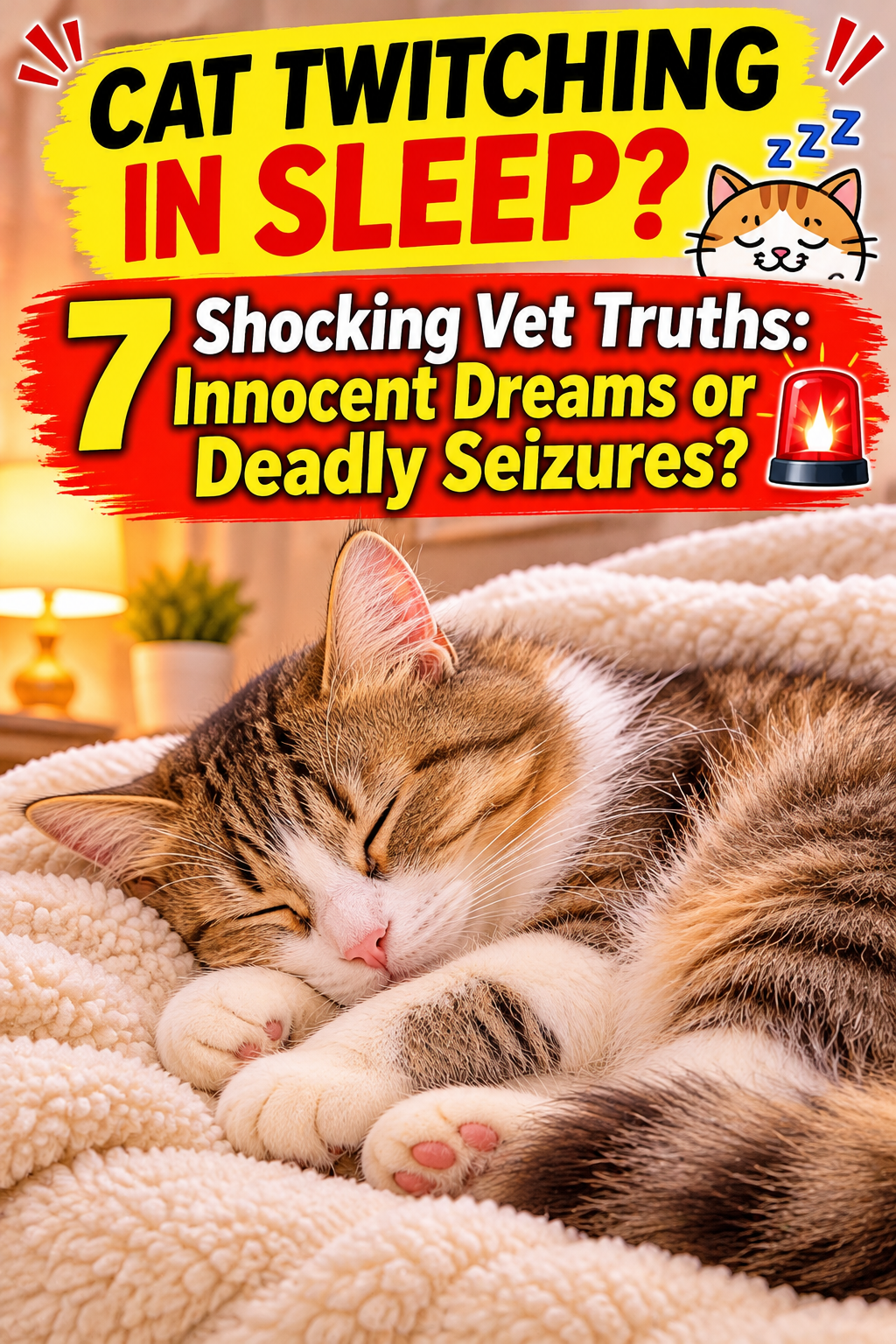
- Direct Answer: In over 95% of cases, a cat twitching while sleeping is completely normal and indicates rapid eye movement (REM) sleep, during which the brain processes daytime hunting memories.
- The Biological Mechanism: Sleep myoclonus—involuntary, rapid muscle twitches of the whiskers, paws, tail tip, and ears—occurs when subcortical motor signals temporarily leak past natural sleep paralysis.
- The Wake-Up Rule: A dreaming cat can be easily and gently awakened with a soft voice or gentle touch, immediately returning to full consciousness; a cat experiencing a true neurological seizure cannot be roused.
- Emergency Indicators: Full-body muscle rigidity, violent jerking lasting over 60 seconds, involuntary urination or defecation, foaming at the mouth, or post-sleep disorientation demand immediate emergency veterinary triage.
1. Direct Clinical Answer: Why Is My Cat Twitching While Sleeping?
In the vast majority of cases, a cat twitching while sleeping is simply experiencing the rapid eye movement (REM) stage of sleep, actively dreaming about daytime hunting, running, or playing. In my years of clinical veterinary practice, I frequently consult with anxious pet parents who witness their sleeping cat suddenly paddling their paws, quivering their whiskers, or jerking their ears, terrified that their beloved pet is suffering an epileptic seizure on the living room sofa.
Sleep twitching is a natural physiological phenomenon known in feline neurology as sleep myoclonus. While it looks startling to human observers, it is a healthy indicator that your cat’s central nervous system is functioning properly and cycling smoothly through deep neurological restorative stages. The feline brain is highly active during sleep, consolidating memories, organizing predatory motor patterns, and repairing cellular tissue.
However, while most nocturnal twitches are completely harmless dreams, persistent, violent, or abnormal tremors can occasionally point to underlying medical conditions—such as metabolic electrolyte imbalances, feline epilepsy, severe ear mite infestations, or toxin exposure. In this comprehensive, veterinary-backed clinical guide, we will unpack the fascinating architecture of feline sleep, provide a foolproof checklist to separate innocent dreams from true medical seizures, and outline clear home protocols to keep your cat safe.
2. Feline Sleep Architecture: REM Stage & The Dream State
To understand why cats twitch, we must examine their extraordinary sleep cycle. Domestic felines spend an astonishing 12 to 16 hours per day asleep—with senior cats and young kittens sleeping upwards of 18 to 20 hours. However, not all feline sleep is biologically identical. Cats cycle continuously between two distinct neurological phases: Non-Rapid Eye Movement (NREM) sleep and Rapid Eye Movement (REM) sleep.
During NREM sleep, also referred to as “cat napping” or slow-wave sleep, the cat remains in a light, hyper-vigilant state of resting alertness. Their sensory apparatus remains partially active; ears swivel toward faint household sounds, and muscle tone is preserved so they can spring into an immediate predatory sprint if startled. Blood pressure and heart rate drop slightly, but the brain produces broad, synchronized slow waves on electroencephalograms (EEGs).
After roughly 20 to 30 minutes of light slow-wave sleep, the feline brain transitions into deep REM sleep. During this phase, brain wave activity abruptly accelerates, mirroring the exact high-frequency, desynchronized neural patterns seen when a cat is wide awake and stalking prey. It is during this intense REM window that vivid dreaming occurs. A cat dreaming of catching a mouse or swatting a bird will attempt to physically execute those predatory maneuvers, resulting in observable physical twitches across their peripheral extremities.
According to feline cognitive research from the Cornell Feline Health Center, cats experience significantly more total REM sleep per 24-hour cycle than humans. This evolutionary adaptation allows these obligate carnivores to mentally rehearse complex hunting strategies safely while their physical bodies undergo cellular recovery.
3. Neurochemistry: The Role of Sleep Myoclonus & Muscle Atonia
Why do these dreams manifest as small, subtle twitches rather than full-body leaps across the living room? The answer lies in a vital biological safety mechanism called muscle atonia. During healthy REM sleep, a specialized cluster of neurons in the brain stem—predominantly located in the pons and medulla oblongata—releases inhibitory neurotransmitters, primarily glycine and gamma-aminobutyric acid (GABA).
These inhibitory neurochemicals travel down the spinal cord and selectively hyperpolarize somatic motor neurons. In essence, the brain stem deploys a biological “paralysis switch” that completely turns off voluntary skeletal muscle tone throughout the cat’s body. This temporary paralysis protects the sleeping animal from physically acting out their dreams, preventing them from leaping off high perches, crashing into walls, or injuring themselves while unconscious.
However, this biological paralysis switch is not 100% impenetrable. Powerful subcortical motor signals generated in the cerebral cortex during an intense dream can occasionally break through the inhibitory barrier. These leaked electrical impulses travel to the most distal, finely innervated peripheral nerve endings—specifically the paws, claws, whisker pads, eyelids, and tail tip. This creates brief, rhythmic contractions termed physiologic sleep myoclonus. In healthy felines, these micro-twitches are completely benign, painless, and indicate that your cat feels safe enough in their territory to enter profound neurological rest.
If your cat also exhibits unusual nighttime behaviors, such as purring loudly when startled awake, explore our clinical behavioral guide on why cats purr when scared or stressed to decode their internal emotional coping systems.

4. Dreaming vs. Feline Seizures: Critical Diagnostic Differences
The primary clinical responsibility of a pet parent is distinguishing harmless dream-state myoclonus from a life-threatening neurological seizure. While both conditions involve involuntary muscle movement during recumbency, their clinical presentation, duration, and post-event recovery are dramatically different.
A dreaming cat exhibits localized, soft, and intermittent twitches. You might notice a paw gently flexing, whiskers vibrating, ears flicking, or soft muffled chattering or purring sounds. Crucially, the rest of the cat’s body remains completely limp, relaxed, and supple. If you gently speak their name, softly stroke their shoulder, or offer a smelly treat near their nose, a dreaming cat will easily awaken, blink sleepily, stretch their limbs, and return immediately to normal cognitive awareness.
Conversely, an epileptic or grand mal seizure (generalized tonic-clonic convulsion) is an uncontrolled storm of abnormal electrical discharges across the cerebral cortex. A cat experiencing a seizure presents with severe, unmistakable physical distress:
- Full-Body Muscular Rigidity: The cat’s body becomes as stiff as a wooden board (the tonic phase), often with the neck and spine arched backward (opisthotonos) and all four limbs extended rigidly outward.
- Violent Spasmodic Paddling: The initial rigidity is followed by uncontrollable, violent jerking or thrashing (the clonic phase) that cannot be interrupted by calling their name or physical touch.
- Autonomic Incontinence: During an epileptic seizure, autonomic nervous system control is lost. The cat frequently loses bladder and bowel control, voiding urine and feces involuntarily.
- Oral Foaming & Chomping: Seizure episodes are commonly accompanied by violent jaw-chomping, tongue-biting, and profuse, frothy hypersalivation bubbling from the mouth.
- The Post-Ictal Confusion Phase: Unlike a dreaming cat who wakes up bright and alert, a post-seizure cat enters a prolonged “post-ictal” recovery state lasting 15 minutes to several hours. They appear blind, disoriented, stagger unsteadily across rooms, bump into furniture, and may display extreme vocal distress or temporary behavioral aggression.
According to clinical neurology protocols from the American Veterinary Medical Association (AVMA), any seizure lasting longer than three minutes, or two or more cluster seizures occurring within a 24-hour window, constitutes status epilepticus—a critical emergency that causes irreversible brain damage and hyperthermia without immediate intravenous anticonvulsant therapy.
Does your cat sometimes vomit clear foamy liquid upon waking from sudden sleep disturbances? Review our clinical triage manual on why cats throw up clear liquid and foam to separate gastrointestinal nausea from central nervous system triggers.
5. Feline Hyperesthesia Syndrome (Twitch-Skin Disease)
Another specialized clinical condition that causes intense twitching episodes is Feline Hyperesthesia Syndrome (FHS), colloquially known among veterinary behaviorists as “twitchy-skin disease” or “rolling skin syndrome.” While FHS primarily manifests during waking hours, severe episodes can jolt a cat awake from light sleep.
Feline hyperesthesia is a complex neuromuscular and behavioral disorder thought to involve an abnormal interplay between neuropathic dermatological sensitivity, seizure-like electrical activity in the spinal cord, and obsessive-compulsive anxiety. When triggered, the dorsal skin along the cat’s lumbar spine and flank begins rippling or undulating violently, as if a current of electricity is passing underneath the fur.
Cats suffering an acute FHS flare-up will suddenly jolt out of sleep, stare frantically at their hindquarters or tail, vocalize with bizarre high-pitched yowls, and attack their own lower back or tail base with savage biting and scratching. Their pupils dilate enormously, and they may sprint erratically across the home in acute panic. If your cat displays rolling back skin accompanied by aggressive self-mutilation, consultation with a veterinary neurologist is essential to formulate a targeted treatment plan using neuro-modulating medications like gabapentin.

6. Metabolic & Neurological Triggers: Hypoglycemia, Toxins & Kidneys
When twitching and tremors during recumbency are persistent, abnormal, and do not fit the clean profile of REM sleep dreaming, veterinarians systematically evaluate the patient for underlying systemic metabolic and toxicological disturbances.
One major metabolic trigger is severe hypoglycemia (dangerously low blood sugar). Hypoglycemia is frequently seen in young pediatric kittens due to immature hepatic glycogen storage, or in adult diabetic cats receiving uncalibrated or excessive doses of injectable insulin. When blood glucose drops below critical thresholds, cerebral neurons are starved of cellular energy, sparking generalized physical tremors, hypothermia, head tremors, and potential comatose collapse.
A second severe metabolic cause is end-stage Chronic Kidney Disease (CKD) or acute renal failure. When failing kidneys lose the filtration capacity to excrete metabolic waste products, blood levels of blood urea nitrogen (BUN) and creatinine skyrocket, leading to uremic encephalopathy. Uremic toxins crossing the blood-brain barrier cause continuous micro-tremors, muscle twitches during rest, chronic nausea, and distinctive ammoniacal breath odors.
Finally, acute household toxicities must never be overlooked. The most catastrophic toxin presented in feline emergency triage is permethrin / pyrethroid toxicity, which occurs when well-meaning pet parents mistakenly apply canine spot-on flea treatments to a cat, or when a cat grooms a treated dog. Permethrins bind to voltage-gated sodium channels in feline nerve membranes, keeping them permanently open. This sparks uncontrollable, non-stop full-body muscle tremors, hyperthermia, seizures, and rapid death without aggressive veterinary decontamination and intravenous muscle relaxants.
For household toxin safety frameworks and emergency protocols regarding common human foods and toxicities, explore our companion survival manual on why certain foods and dairy items are hazardous to felines.
7. Parasites, Fleas, and Cutaneous Nerve Irritation
Occasionally, what appears to be a neurological sleep twitch is actually a mechanical reaction to microscopic parasites irritating epidermal nerve endings. Felines possess sensitive cuticular nerves closely linked to hair follicle receptors.
When an active flea infestation is present, adult fleas crawl actively through the warm micro-climate of your cat’s fur while the animal is resting. As fleas pierce the skin to suck blood and deposit saliva, the mechanical movement and allergenic salivary enzymes trigger localized cutaneous twitches. The cat’s skin will involuntarily ripple, or a rear leg will repeatedly twitch or kick in an instinctive effort to scratch the irritation without fully waking the cat.
Similarly, an infestation of ear mites (Otodectes cynotis) living deep within the external ear canal causes intense localized pruritus. The mechanical crawling of mites inside the auditory canal sparks violent, rhythmic ear flicking and head shaking while the cat attempts to sleep. Inspecting your cat’s coat with a fine-toothed flea comb and checking their ears for dark, coffee-ground-like debris is an essential first diagnostic step when evaluating chronic sleep twitching.
If you suspect an active external parasite infestation is disrupting your pet’s sleep cycles, read our non-toxic eradication blueprint on how to get rid of fleas naturally on cats and dogs without toxic chemicals.
8. Clinical Decision Matrix: Normal Twitch vs. Emergency Medical Alert
| Clinical Feature | Normal REM Sleep Dreaming | Pathological Neurological Seizure | Recommended Action |
|---|---|---|---|
| Muscle Rigidity & Tone | Body is completely limp, relaxed, and loose; only distal paws and whiskers twitch. | Body is rock-hard, arching backward, rigid extended legs with violent jerking. | Dreaming requires zero intervention; rigid seizures require immediate emergency veterinary transport. |
| Rousability (Wake-Up Test) | Wakes easily when called or softly touched; returns immediately to normal alert state. | Completely unresponsive to voice, physical touch, or loud sounds; unconscious. | Never attempt to physically restrain or place fingers in the mouth of an unresponsive seizing cat. |
| Facial / Autonomic Signs | Eyelids flicker softly, quiet purring, soft muffled meows, dry clean mouth. | Violent jaw chomping, thick frothy drooling, involuntary urination and defecation. | Autonomic incontinence is an unequivocal red flag for grand mal epileptic seizure activity. |
| Post-Event Behavior | Stretches, yawns, may groom fur or walk normally to the food bowl immediately. | Post-ictal state: stumbling, apparent blindness, frantic wandering, disorientation for hours. | Keep the room dark and quiet, remove obstacles, and contact your primary veterinarian for bloodwork. |
9. Step-by-Step Home Triage: What to Do When Your Cat Twitches
When you spot your sleeping cat twitching irregularly across the living room rug, execute this calm, four-step veterinary observational protocol before panicking or rushing to conclusions:
- Do Not Shake or Jolt the Cat Awake: If your cat is in deep REM sleep, violently shaking them awake induces acute autonomic fright. A startled cat may lash out defensively with claws or teeth before their conscious brain realizes they are safe. Instead, speak their name in a soft, calm tone from a couple of feet away.
- Record a High-Quality 30-Second Video: This is the single most valuable diagnostic asset you can provide your veterinarian. In clinical practice, cats rarely seize or twitch inside an exam room. Capturing clear smartphone footage showing their facial expressions, paw movements, and eye responsiveness allows your veterinarian to distinguish between myoclonus, REM sleep, and focal seizures in seconds.
- Check Environmental Safety: If you suspect the cat is experiencing a true seizure, immediately move away any nearby sharp furniture, heavy objects, or elevated perches from which the cat could fall. Place a soft folded blanket underneath their head to prevent traumatic cranial impact.
- Perform a Post-Sleep Neurological Assessment: Once the cat awakens, observe their gait across the room. Are they walking in steady, straight lines, or are they circling continuously, tilting their head, or dragging a paw? A cat that resumes normal eating and affectionate head-bunting within two minutes was simply enjoying a rich, vivid dream.
10. Schema-Optimized Frequently Asked Questions (FAQ)
Is it normal for kittens to twitch significantly more than adult cats while sleeping?
Yes, absolutely. Young kittens spend upwards of 80% of their total sleep time in the REM phase. Because their central nervous systems and brain stems are still developing, the inhibitory neurotransmitter pathways that cause muscle paralysis during sleep are not yet fully mature. Intense twitching, trembling, and paw paddling are completely healthy signs of active nervous system maturation in growing kittens.
Can ear mites cause a cat to twitch their head and ears during sleep?
Yes. Microscopic ear mites (Otodectes cynotis) crawl through the sensitive epidermal lining of the feline ear canal. When a cat rests, the movement of mites and their inflammatory waste products triggers sharp localized irritation, prompting involuntary ear twitching, flicking, and sudden awakenings accompanied by intense head scratching.
What should I do if my cat is having a full-body seizure right now?
Stay calm and do not place your hands near your cat’s mouth; cats cannot swallow their tongues, and attempting to intervene will result in severe bite wounds. Dim the lights, turn off all audio devices, clear hard objects away to prevent trauma, time the seizure duration precisely, and contact the nearest 24-hour emergency veterinary hospital immediately.
Why do some cats make chattering or squeaking noises while twitching in their sleep?
Soft chattering, muffled squeaks, and quiet purring during sleep are auditory reflections of hunting dreams. Cats naturally chatter their teeth and squeak when stalking visual prey like birds or insects through windows. During REM sleep, leaked vocal motor signals replicate these exact same predatory vocalizations.
Professional Veterinary Disclaimer: The clinical neurological insights, sleep architectural data, and home triage protocols presented in this comprehensive guide are authored by Dr. Ahmed, a licensed veterinarian, strictly for educational and informational purposes. This content does not constitute formal veterinary diagnosis, neuro-diagnostic evaluation, or clinical emergency treatment. If your cat exhibits prolonged muscle rigidity, loss of consciousness, repetitive seizures, or severe post-sleep disorientation, transport them to an accredited veterinary emergency hospital immediately.