
Table of Contents
🩺 Dr. Ahmed’s Behavioral & Clinical Summary
- Direct Answer: Cats do not purr solely when content; they purr when scared, injured, or in labor as a powerful self-soothing mechanism and internal biological pacifier.
- Biomechanical Truth: The feline purr is driven by a neural oscillator in the brain stem that vibrates the laryngeal muscles between 20 and 140 Hertz.
- Acoustic Therapy: Frequencies between 25 and 50 Hz stimulate bone density regeneration, repair torn tendons, and ease physical muscle pain naturally.
- Context Is Everything: A purring cat with wide dilated pupils, flattened ears, or a tucked tail is signaling severe emotional distress, not joyful relaxation.
1. Direct Clinical Answer: Why Do Cats Purr When Scared?
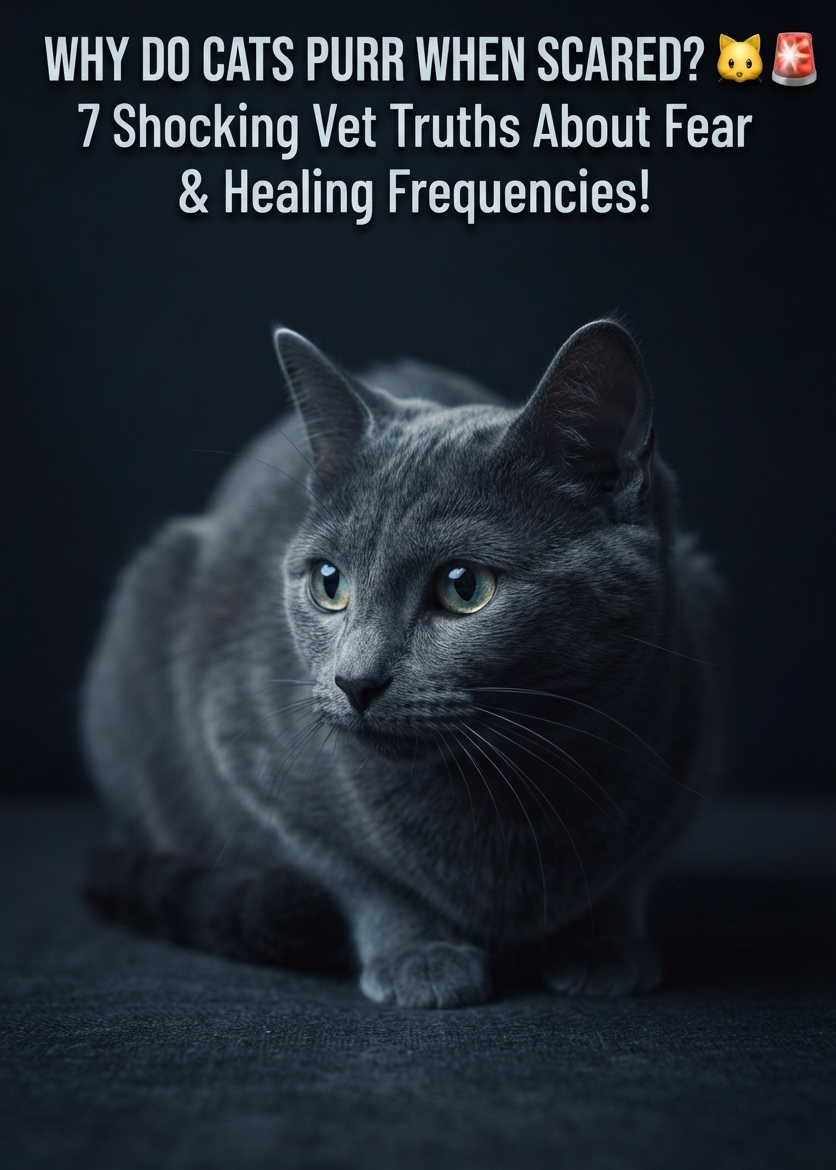
Cats purr when scared because the rhythmic low-frequency vibration releases calming endorphins, lowers heart rate, and serves as an innate self-soothing survival tool. In clinical veterinary practice, one of the most poignant moments occurs on the examination table: a terrified feline trembling with dilated pupils while purring at maximum volume. Well-meaning owners frequently mistake this response for sudden happiness, assuming their cat is enjoying the clinical exam.
Purring is not a simple feline smile; it is a complex, multi-purpose evolutionary communication system. While cats certainly purr when lounging in a sunbeam or nursing their kittens, they also purr when trapped, facing physical injury, or undergoing acute medical trauma. In biological terms, purring operates much like human nervous smiling or a distressed child humming softly to soothe their racing pulse in a dark room.
Understanding this critical distinction transforms how you read your cat’s emotional state. When you realize that purring can signify intense terror or physical agony rather than contentment, you can intervene quickly to remove fear triggers and deliver compassionate comfort. In this veterinary-backed guide, we will unpack the fascinating neuromuscular biology of feline purring, decode subtle body language clues, and explore the remarkable science of healing acoustic frequencies.
2. The Biomechanics of the Purr: How Felines Generate Sound
For decades, veterinary anatomists and researchers debated how a small animal produces such continuous, rhythmic resonance without vocal strain. Unlike roaring big cats (such as lions and tigers) who possess an elastic, flexible hyoid cartilage, domestic felines possess a completely ossified (rigid) hyoid bone that allows continuous vibration during both inhalation and exhalation.
The purring mechanism begins deep within the feline central nervous system. A rhythmic neural oscillator located in the brain stem sends continuous, rhythmic nerve impulses to the intrinsic laryngeal muscles surrounding the vocal cords. These electrical impulses cause the glottis—the space between the vocal cords—to dilate and constrict rapidly at 25 to 150 cycles per second.
As the cat inhales and exhales, incoming air molecules impact the rapidly vibrating laryngeal muscles, generating acoustic sound waves and palpable mechanical vibrations that radiate throughout the entire thoracic cage and skeleton. Because this neural oscillator functions involuntarily, a cat can continue purring even while experiencing acute systemic shock or respiratory distress.
3. The 20–140 Hz Frequency: Endogenous Cellular Healing
One of the most extraordinary discoveries in modern feline medicine involves the specific acoustic frequencies produced during purring. Acoustic analysis reveals that the fundamental feline purr registers consistently between 20 and 140 Hertz (Hz), with dominant harmonic peaks concentrating between 25 and 50 Hz.
In human sports medicine, physical therapy, and aerospace orthopedic research, exposure to vibrational frequencies between 20 and 50 Hz is clinically proven to accelerate cellular repair. These low-frequency mechanical waves stimulate osteoblastic activity (bone cell regeneration), improve bone mineral density, relieve muscle tension, and enhance collagen synthesis in damaged ligaments.
Felines spend upwards of 16 hours a day resting to conserve hunting energy. Evolutionary biologists theorize that the low-frequency purr acts as an internal, low-energy physical therapy mechanism. By purring during periods of fear, illness, or post-surgical recovery, cats bathe their internal organs and skeletal structures in therapeutic vibrations that minimize bone density loss and ease tissue inflammation. According to clinical veterinary archives from the Cornell Feline Health Center, injured cats that purr consistently often exhibit faster post-operative recovery timelines than quiet, stressed patients.
If your feline companion is also exhibiting sudden oral drooling alongside strange vocalizations, explore our detailed clinical diagnostic on why cats drool when purring to separate relaxed bliss from oral discomfort.
4. Self-Soothing & Anxiety Regulation: The Feline Coping Mechanism
In the wild, solitary predators face unique psychological pressures. Unlike pack-hunting canines who seek comfort and collective protection from human handlers or packmates, felines are solitary survivors who rely strictly on self-contained internal mechanisms to survive intense stress.
When a cat is cornered by a predator, trapped in a noisy cat carrier, or startled by violent thunderstorms, their sympathetic nervous system floods their bloodstream with adrenaline and cortisol. Blood pressure spikes, and the cardiovascular system enters acute overdrive.
To prevent neurochemical exhaustion and cardiac overload, the brain stem activates the purring circuit. The mechanical vibrations stimulate the release of endogenous endorphins—the body’s natural opiate-like pain relievers and calming neurochemicals. These endorphins bind to cerebral receptors, slowing a racing heart rate, lowering blood pressure, and helping the feline endure terrifying scenarios until the threat dissipates.
Does your cat also display unpredictable midnight aggression or sudden nocturnal vocalizations when frightened? Review our behavioral triage guide on why cats attack unprovoked at night to identify fear triggers and nocturnal territorial stress.