
In This Canine Gear Guide
Clinical Summary for Pet Parents
- Standard two-strap walking rigs fail on deep-chested breeds because their broad ribcages taper down into narrow waists.
- A genuine escape-proof design requires an anatomical third belly strap that anchors securely behind the floating ribs.
- Traditional neck collars risk acute tracheal collapse, hyoid fractures, and ocular pressure spikes in pulling breeds.
- Deep-chested breeds require padded chest plates and cutaway leg clearances to prevent painful axillary skin chafing.
The Direct Veterinary Verdict
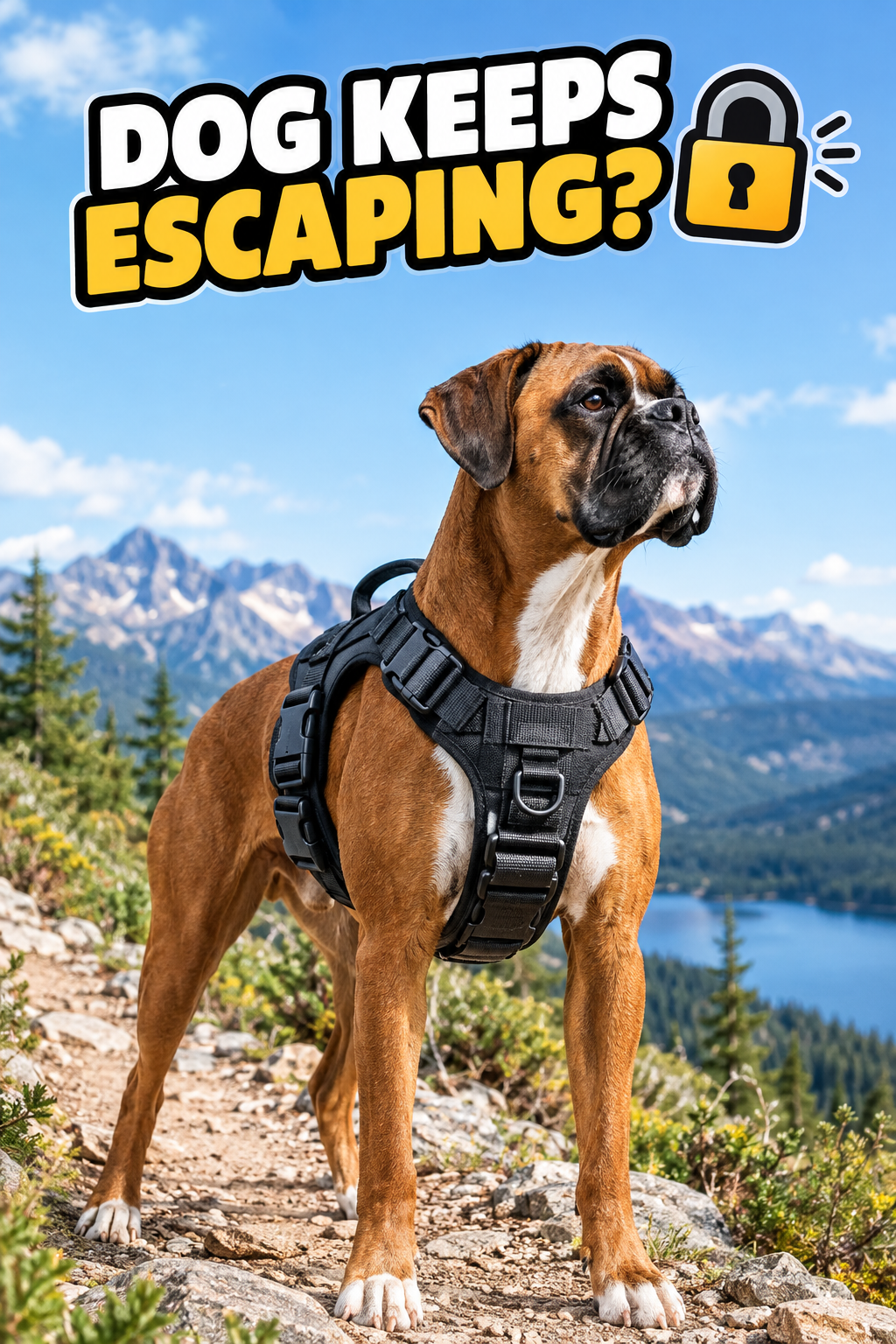
The best escape proof harness for deep chested dogs is an anatomical three-strap walking rig featuring an adjustable rear belly band that sits behind the widest circumference of the ribcage. Standard two-strap walking gear fails because deep-chested breeds—including Greyhounds, Whippets, Boxers, and Pitbulls—possess broad ribcages that taper down toward a slender waist, allowing the dog to back out effortlessly when backing away from tension.
In clinical orthopedic practice, a properly engineered escape-resistant vest disperses pulling forces across the sternum and skeletal ribcage rather than soft neck structures. Models like the Ruffwear Web Master serve as the veterinary gold standard because their mechanical geometry prevents backward slippage while protecting sensitive underarm nerves.
Selecting the proper walking gear prevents tragic roadside escapes while safeguarding your companion against cervical disc herniations and tracheal trauma.

Deep-chested canine breeds require specialized anatomical gear tailored to their unique skeletal contours.
The Anatomical Escape Trap: Why Deep-Chested Dogs Back Out
Deep-chested canines possess a distinct skeletal morphology characterized by a deep, prominent sternum and an expanded thoracic cavity that houses large athletic lungs and hearts. Sighthounds like Greyhounds and Whippets, as well as powerful working breeds like Boxers, Dobermans, and Belgian Malinois, epitomize this tapered silhouette.
The core challenge arises from the radical diameter difference between the deep forward ribcage and the narrow abdominal tuck behind it. In standard two-strap walking rigs, one strap wraps around the neck and the second buckles right behind the front armpits around the deepest point of the chest.
When an anxious or reactive dog plants their front paws, lowers their head, and pulls backward in reverse, physics works against standard equipment. Because the ribcage tapers forward toward the neck, pulling backward slides the chest strap forward across shrinking circumferences until the entire rig pops over the dog’s ears.
This escape maneuver happens in less than two seconds, leaving panicked owners holding an empty leash near busy traffic. According to canine safety guidelines from the American Kennel Club (AKC), traditional walking equipment is structurally inadequate for tapered athletic breeds.
The 3-Strap Rule: Anatomy of a Truly Escape-Proof System
To eliminate the risk of backward slippage, veterinary biomechanics dictates a very specific gear geometry known as the three-strap anatomical chassis. This configuration introduces an extra security anchor that makes backing out physically impossible.
The first strap encircles the base of the neck, resting over the sturdy shoulders rather than pressing against delicate cervical vertebrae. The second strap encompasses the deep mid-chest, stabilizing primary forward momentum.
The secret lies entirely in the third rear belly strap. This rear strap sits farther back along the torso, resting comfortably behind the widest point of the ribcage around the narrow upward tuck of the waist.
Because the circumference of a deep-chested dog’s waist is substantially smaller than their deep ribcage, the rear strap acts as a physical stopper. Even if the dog lowers their head and pulls in reverse with maximum force, the third strap cannot slide forward over the wider bony ribcage, keeping the dog locked safely inside their walking gear.
Discover more about managing reactive behaviors and outdoor safety in our library on canine behavioral training.
Preventing Axillary Chafing and Friction Lesions
A primary medical drawback of cheap walking equipment on deep-chested dogs is severe dermatological trauma in the axillary vaults (armpits). Breeds like Dobermans, Boxers, and Greyhounds possess thin skin coats with sparse fur coverage along their undersides.
When a harness features straps positioned too close to the front legs, the rough nylon webbing rubs relentlessly against sensitive armpit skin with every stride. Within a single forty-minute walk, this repetitive friction produces painful raw abrasions, secondary bacterial folliculitis, and painful calluses.
Superior walking gear solves this issue by incorporating an extended sternal bridge. This elongated lower plate pushes the girth straps several inches back from the front armpits, granting full range of motion to the scapula without fabric contact.
Additionally, search for gear manufactured with breathable, closed-cell foam padding or soft microfleece edge piping. Protecting delicate skin ensures your companion enjoys walking adventures without suffering painful contact sores, a priority detailed in our guide to preventative canine wellness.

Padded chest pieces distribute leash pressure across the sternum, avoiding sensitive neck and throat nerves.
Top Vet-Reviewed Escape-Proof Dog Restraints
After evaluating dozens of commercial systems for durability, joint mobility, and escape security, two top-tier models consistently earn high clinical marks for deep-chested breeds.
1. Ruffwear Web Master: The Clinical Gold Standard
The Ruffwear Web Master is universally celebrated by veterinarians, search-and-rescue teams, and canine rehab specialists as the benchmark escape-proof walking vest. Engineered with a supportive multi-use chassis, it incorporates the indispensable third waist strap that prevents backward escapes.
Its anatomically shaped foam padding distributes pressure evenly across the chest and ribcage, offering superior support without pinching the axillary nerves. The integrated balanced assistance handle on the back allows owners to lift or steady aging, injured, or mobility-impaired deep-chested dogs safely.
With five separate points of adjustment, you can customize the fit to match the exaggerated tapers of Whippets and deep Boxers alike. Anodized aluminum V-rings deliver rock-solid leash connection points that withstand sudden lunging forces from powerful pullers.
2. Icefang Tactical Multi-Strap: Maximum Heavy-Duty Security
For high-drive working breeds, strong Pitbulls, and reactive Malinois, the Icefang Tactical Multi-Strap delivers unmatched structural reinforcement. Constructed from military-grade 1050D nylon, this heavy-duty rig features alloy metal buckles tested to withstand hundreds of pounds of explosive pulling tension.
Its extended body design wraps securely around the midsection, featuring two separate belly straps that anchor behind the floating ribs. Even the most determined escape artist cannot torque or twist their way out of this rigid, reinforced frame.
The front chest attachment ring functions as an effective no-pull training aid, turning the dog sideways toward you whenever they attempt to forge forward. Hook-and-loop MOLLE panels allow working dogs to carry identification patches or service gear effortlessly.
3. Rabbitgoo Escape Proof Dog Harness with Handle: The Best Budget Value
Pet parents seeking dependable security on a modest budget will appreciate the Rabbitgoo Escape Proof Dog Harness. Designed with a prolonged body length and an adjustable third rear strap, it prevents backing-out maneuvers without the premium price tag of high-end expedition gear.
The chest and back plates feature breathable air-mesh padding that wicks away body heat during strenuous summer walks. Soft padded borders line the outer edges, minimizing friction against thin, hairless underarm folds on breeds like Boxers and Pitbull mixes.
Dual metal leash attachment points provide walk-training versatility. The heavy-duty chest D-ring redirects pulling forces sideways to discourage pulling, while the sturdy reinforced back handle offers quick physical restraint during sudden reactive triggers.
4. Gooby Escape Free Easy Fit: Best for Small Deep-Chested Breeds
Small deep-chested companions—such as French Bulldogs, Pugs, Boston Terriers, and Italian Greyhounds—struggle with oversized tactical gear that overwhelms their small frames. The Gooby Escape Free Easy Fit addresses this issue through a patented memory-frame closure system.
When a small dog pulls backward in reverse, the rear straps automatically contract around the torso, closing any escape gaps before the head can slip free. The moment leash tension releases, the frame relaxes back into a loose, comfortable posture that prevents continuous pressure.
Crafted from synthetic neoprene and lightweight microfiber, it is featherlight, water-resistant, and machine washable. Its low-cut chest profile leaves the delicate windpipe completely unencumbered, making it exceptional for brachycephalic dogs prone to upper respiratory distress.
5. Kurgo Journey Air: Best for Athletic Running and Hiking
Built specifically for active outdoor dogs, the Kurgo Journey Air combines lightweight athletic construction with escape-resistant geometry. Its deep V-neck cut sits low across the chest, freeing the canine shoulders for unrestricted natural stride extension.
Four heavy-duty steel nesting buckles ensure rock-solid structural integrity during rapid sprints or sudden lurches. The wide padded chest plate acts as an impact buffer, distributing sudden leash jerks evenly across the ribcage to prevent localized bruising.
Rust-proof aluminum hardware keeps overall weight minimal while resisting corrosion from mud, salt water, and rain. It serves as an outstanding choice for athletic Greyhounds, Vizslas, and Dobermans who join their owners for daily trail runs, as highlighted by active canine reviews in the American Kennel Club (AKC).

A well-fitted walking rig prevents chronic cervical strain and maintains healthy spinal alignment.
Cervical Spine Protection: Why Traditional Collars Injure Deep-Chested Pullers
Many owners resort to tightening flat neck collars when their deep-chested dogs slip out of standard walking gear. From an orthopedic and neurological standpoint, walking a powerful, deep-chested puller on a standard neck collar is medically hazardous.
The canine neck houses fragile anatomical structures, including the trachea, thyroid glands, laryngeal cartilages, and the delicate cervical vertebrae (C1 through C7). Sudden leash tension exerts crushing hydrostatic pressure directly against these soft tissues.
In deep-chested breeds, violent pulling against a neck collar spikes intraocular pressure, aggravating genetic risks for glaucoma and optic nerve damage. Furthermore, chronic cervical strain can trigger cervical disc herniations and nerve impingement that radiate excruciating pain down the front limbs.
Switching to an anatomically balanced walking vest shifts mechanical force away from vulnerable throat structures onto the sturdy skeletal sternum and ribcage. You can discover more about managing mobility challenges in our clinical guide to preventative canine health care.
The Veterinary 2-Finger Sizing and Fitting Protocol
Even the highest-rated escape-resistant vest will fail if it is sized incorrectly. Follow this clinical measurement protocol before purchasing gear online to ensure a safe, slip-proof fit:
- Measure the Widest Chest Girth: Wrap a flexible measuring tape around the deepest point of your dog’s ribcage, typically situated two to three inches behind the front legs. Take this measurement while your dog is standing upright with their head elevated.
- Measure the Narrow Waist Circumference: Measure around the upward tuck of the abdomen directly in front of the hind legs. This establishes the target measurement for the third rear security strap.
- Measure the Lower Neck Base: Measure around the widest base of the neck where it transitions into the shoulders, not high up under the chin where traditional collars sit.
- Execute the Two-Finger Fit Test: Once the gear is buckled, slide two stacked fingers under every strap. The straps should feel snug against your fingers with light resistance, but loose enough to slide your fingers back and forth without pinching the skin.
- Perform the Reverse Tug Test Indoors: Clip a leash to the harness while indoors, step in front of your dog, and gently apply backward tension while having someone call the dog from behind. If the chest plate bunches upward toward the chin or slips forward over the shoulders, tighten the rear belly band.
Adhering to these accurate measurements prevents painful underarm chafing while keeping your canine companion completely secure during high-distraction outings, as detailed in our guide to canine behavioral training.
Clinical Comparison Matrix: Top Escape-Proof Walking Gear
Use this comprehensive veterinary comparison table to select the ideal walking vest based on your dog’s unique anatomy, weight, and pulling style:
| Harness Model | Strap Architecture | Escape Security | Best Breed Match | Chafing Protection |
|---|---|---|---|---|
| Ruffwear Web Master | 3-Strap (Double Belly Bands) | Maximum (10/10) | Greyhounds, Boxers, Whippets | High (Anatomical foam padding) |
| Icefang Tactical | 3-Strap with Metal Buckles | Maximum (10/10) | Pitbulls, Malinois, Dobermans | Moderate (Heavy-duty Cordura) |
| Rabbitgoo Escape Proof | 3-Strap Long-Body Chassis | High (8.5/10) | Medium Deep-Chested Mixes | High (Breathable air mesh) |
| Gooby Escape Free | Contracting Memory Frame | High for Small Dogs (9/10) | Frenchies, Pugs, Boston Terriers | Exceptional (Soft neoprene edges) |
| Kurgo Journey Air | Athletic Deep-V Chassis | Moderate to High (8/10) | Running Breeds & Trail Dogs | High (Deep shoulder cutouts) |
Frequently Asked Questions
Can a dog still back out of a 3-strap harness?
If adjusted correctly using the two-finger rule, it is physically impossible for a deep-chested dog to back out of a three-strap rig. The third strap sits behind the widest circumference of the ribcage, acting as a bony mechanical barrier that prevents forward slipping over the chest.
How tight should the rear belly strap be on a deep-chested dog?
The rear belly strap should rest snugly against the upward tuck of the waist without compressing internal abdominal organs. You should easily slide two stacked fingers between the webbing and your dog’s skin while they are standing naturally.
Why does my deep-chested dog get sores in their armpits from walking gear?
Deep-chested breeds possess thin skin with minimal fur covering in the axillary vaults. Walking rigs with girth straps placed too close to the front legs cause constant mechanical friction during movement, leading to chafing sores and bacterial dermatitis.
Is a no-pull front-clip harness safe for deep-chested dogs?
Yes, provided the front-clip rig features a Y-shaped chest plate rather than a horizontal strap across the shoulders. Horizontal strap designs restrict scapular motion and alter gait biomechanics, predisposing athletic breeds to premature shoulder arthritis.
Professional Veterinary Orthopedic Disclaimer: The product evaluations and ergonomic fitting guidelines provided in this guide are intended for educational and pet safety purposes only. Proper fit and gear selection vary based on your individual dog’s skeletal conformation, spinal health, and behavioral reactivity. If your companion exhibits signs of contact dermatitis, gait limping, or cervical discomfort, consult your primary veterinarian or a certified canine rehabilitation therapist.