
In This Veterinary Nutrition Guide
Clinical Summary at a Glance
- Nutritional yeast is completely safe and non-toxic for cats when served as an inactive, unseasoned food topper.
- Its rich natural glutamate profile creates an irresistible cheesy, umami flavor that entices sick or finicky eaters.
- It delivers bioavailable B-complex vitamins that support feline energy metabolism, coat health, and hepatic function.
- Cats diagnosed with chronic kidney disease (CKD) must exercise caution due to the naturally high phosphorus concentration.
The Direct Veterinary Answer
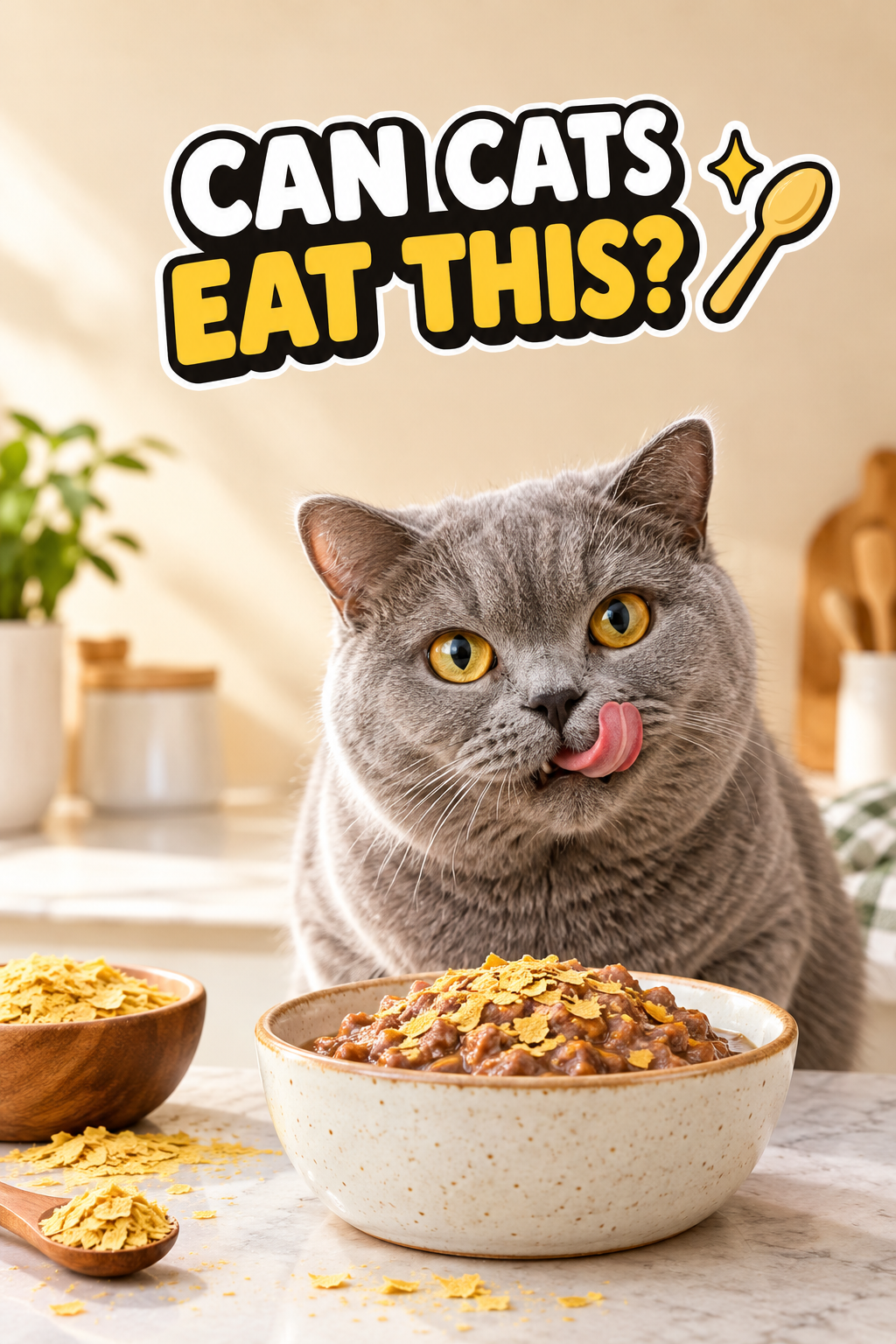
Can cats eat nutritional yeast flakes as a food topper? Yes, cats can eat nutritional yeast flakes safely as an occasional meal enhancement, provided it is deactivated, completely unseasoned, and fed in controlled moderation.(no more than a quarter to half a teaspoon daily). Its naturally savory, cheese-like umami aroma makes it one of the most effective natural appetite stimulants for finicky eaters, recovering surgical patients, or senior felines losing interest in meals.
Because nutritional yeast consists of deactivated single-celled fungi, it will not ferment or expand inside your cat’s gastrointestinal tract like raw bread dough does. Furthermore, it supplies bioavailable B-complex vitamins, trace minerals, and complete dietary proteins that support cellular metabolism.
However, pet parents must never confuse deactivated nutritional flakes with active baking yeast, and caution is necessary for felines with kidney disease due to elevated phosphorus concentrations.
What Exactly Is Nutritional Yeast? (And Why Baker’s Yeast Is Deadly)
Nutritional yeast is a specialized culinary product cultured from a single-celled microorganism known as Saccharomyces cerevisiae. Grown commercially on enriched molasses or sugarcane slurries, the harvested yeast undergoes thermal heating to deactivate its living cells before being washed, dried, and crumbled into golden flakes or powders.
Because it is thermally deactivated, nutritional yeast cannot reproduce, ferment, or generate carbon dioxide gas inside your cat’s digestive system. It acts purely as a concentrated whole-food nutritional supplement rich in amino acids and micronutrients.
It is vital to distinguish nutritional yeast from live active baker’s yeast or brewer’s yeast mash. If a cat ingests raw baking yeast dough, the living organisms thrive within the warm, moist stomach environment, fermenting sugars into alcohol and carbon dioxide.
This living fermentation causes acute gastric distention, painful bowel expansion, and life-threatening ethanol alcohol poisoning that requires emergency intensive care. Pure deactivated nutritional flakes pose none of these fermentation dangers, as documented by safety protocols from the ASPCA Animal Poison Control Center.
The Umami Secret: Why Felines Crave That Cheesy Aroma
Cat owners often marvel at how intensely their pets react to nutritional yeast, practically climbing the kitchen cabinets the moment the container opens. While humans lack the ability to explain why an obligate carnivore craves a vegan food product, the secret lies in feline neuro-gustatory anatomy.
Cats are genetically incapable of tasting sweetness due to a permanent pseudogene deletion in their Tas1r2 receptor gene. Instead, feline taste buds are hyper-tuned to detect umami (the savory, meaty taste profile), driven primarily by free amino acids like L-glutamate and inosine monophosphate.
Deactivated nutritional yeast contains dense, natural concentrations of free glutamic acid produced during cell drying. To your cat’s sensory receptors, this aroma mimics roasted poultry, rich animal broth, and aged cheese, triggering a massive salivary and digestive enzyme cascade.
For an elderly feline battling chronic nausea, dental discomfort, or upper respiratory congestion that dampens olfactory senses, a gentle dusting of nutritional flakes cuts through sensory fog. It transforms bland therapeutic prescription kibble into an irresistible savory feast, a technique detailed in our library on feline dietary management.
Nutritional Powerhouse: Natural B-Complex Vitamins for Felines
Beyond functioning as a culinary bribe, high-quality nutritional yeast delivers exceptional dietary value. It serves as an abundant, bioavailable source of the entire B-complex vitamin spectrum, which felines require daily from their meals.
Because B vitamins are water-soluble, feline bodies cannot store excess reserves in adipose tissues; any unused portions are excreted through urine. Consequently, cats experiencing chronic gastrointestinal upset, diabetes, or polyuria from kidney conditions rapidly deplete their B-vitamin reserves.
Nutritional yeast supplies rich levels of Thiamine (Vitamin B1), an essential micronutrient for central nervous system function. Thiamine deficiency in cats leads to sudden neurological decline, ventroflexion of the neck, dilated pupils, and cardiac failure.
Furthermore, it delivers Riboflavin (B2), Niacin (B3), Pyridoxine (B6), and natural Pantothenic acid (B5), which support cellular ATP production, lipid synthesis, and dermatological coat health. Explore how cellular vitamins defend against chronic illnesses inside our clinical guide on preventative feline wellness.
Adequate B-vitamin supplementation promotes vibrant skin elasticity and minimizes seasonal feline shedding.
Fortified vs. Unfortified Yeast: The Hidden Chemical Dilemma
One of the most significant oversights among commercial pet owners is failing to check whether their grocery store nutritional yeast is fortified or unfortified. This single distinction can mean the difference between gentle nutrition and metabolic toxicity.
Fortified nutritional yeast has synthetic, laboratory-created vitamins added during final packaging to satisfy human Recommended Daily Allowances (RDAs). These synthetic additives include large amounts of synthetic folic acid, chemical cobalamin (B12), and excessive doses of synthetic niacin.
Human vitamin ratios are calibrated for seventy-kilogram adult primates, not four-kilogram obligate carnivores. Feeding heavily fortified human yeast to a cat can lead to excess micronutrient accumulation that stresses hepatic and renal filtration systems.
Unfortified nutritional yeast, by contrast, contains only the natural vitamins, minerals, and amino acids produced organically by the yeast cells during fermentation. As verified by nutritional guidelines from the Association of American Feed Control Officials (AAFCO), unfortified whole-food yeast is far safer and physiologically balanced for feline companion animals.
5. The Renal Warning: Phosphorus Levels and Chronic Kidney Disease (CKD)
While nutritional yeast offers substantial benefits for healthy young felines, it introduces specific physiological concerns for senior cats. Yeasts are cellular powerhouses, meaning they naturally contain elevated concentrations of organic phosphorus.
In cats diagnosed with Chronic Kidney Disease (CKD), the filtering nephrons lose their ability to excrete surplus phosphorus through the urine. As blood phosphorus levels climb, parathyroid glands overcompensate, accelerating renal tissue calcification and speeding up clinical decline.
A single tablespoon of commercial nutritional yeast can deliver up to one hundred milligrams of dietary phosphorus. For an elderly feline on strict stage-two or stage-three renal diets, this abrupt phosphorus spike disrupts carefully balanced calcium-to-phosphorus ratios.
If your senior companion suffers from renal insufficiency or elevated symmetric dimethylarginine (SDMA) values, consult your primary veterinarian before sprinkling yeast flakes over their bowl. Therapeutic renal-safe appetite stimulants like mirtazapine or specialized veterinary broths provide safer alternatives without compromising kidney function, as detailed in research from the Cornell Feline Health Center.
6. Urinary Tract Health: Magnesium, Ash, and Feline Lower Urinary Tract Disease (FLUTD)
Cat owners frequently worry about whether nutritional yeast promotes painful bladder crystals or urethral blockages. Domestic felines are notoriously vulnerable to Feline Lower Urinary Tract Disease (FLUTD), a condition influenced heavily by dietary mineral ash and urinary pH.
Nutritional yeast carries a measurable mineral ash content, including trace magnesium, potassium, and calcium. However, when fed in conservative veterinary dosages (under half a teaspoon daily), nutritional yeast does not contain enough magnesium to precipitate struvite crystal formation on its own.
In fact, the natural amino acid composition of yeast slightly acidifies feline urine, creating an inhospitable bladder environment for alkaline struvite stones. Nevertheless, male neutered cats with a history of sterile idiopathic cystitis or urinary blockages require close monitoring whenever novel dry toppers are introduced.
The most important safeguard against urinary crystal formation is adequate daily water intake. If you offer dry nutritional flakes, ensure your cat has access to recirculating water fountains, or mix the flakes directly into warm water to create a savory hydration gravy. Discover more about urinary balance in our guide to feline internal medicine.

Proper hydration and measured mineral intake prevent urinary tract inflammation in adult domestic felines.
7. The Picky Eater Addiction Trap: How to Prevent Dependency
Because the concentrated umami flavor of nutritional yeast is so potent, cats can quickly develop an intense psychological dependency on it. In veterinary behavioral circles, this is known as the “yeast addiction trap.”
If you dust your cat’s meals with generous amounts of yeast every single day, their taste receptors become desensitized to natural meat aromas. Within a few weeks, the cat may stage a total hunger strike, stubbornly refusing to touch their bowl unless it is dusted with golden flakes.
Prolonged hunger strikes in felines are dangerous, predisposing overweight cats to hepatic lipidosis (fatty liver disease) after just forty-eight hours without adequate calories. To prevent this behavioral dependency, nutritional yeast must be utilized as an occasional rotational topper, not a permanent daily garnish.
Use nutritional yeast strategically during times of illness, antibiotic administration, post-operative recovery, or weather-related appetite slumps. Once your cat’s appetite stabilizes, taper the amount gradually over five days to transition them back to standard meals, as outlined in our library on feline feeding protocols.
Clinical Dosage Matrix: Exact Daily Measurements by Feline Body Weight
To maximize nutritional benefits while preventing gastrointestinal upset or mineral overload, adhere to this precise veterinary dosage schedule based on your cat’s lean physical weight:
| Feline Life Stage & Weight | Recommended Daily Dose | Approximate Milligram Weight | Clinical Feeding Frequency |
|---|---|---|---|
| Weaned Kittens (Under 5 lbs) | Pinch between thumb and forefinger | 50 mg – 100 mg | 1 to 2 times weekly as a treat |
| Small Adult Cats (5 to 8 lbs) | 1/8 teaspoon daily | 250 mg | 3 to 4 times weekly |
| Average Adult Cats (9 to 12 lbs) | 1/4 teaspoon daily | 500 mg | Daily during appetite recovery |
| Large Breeds (13+ lbs / Maine Coons) | 1/2 teaspoon daily | 1,000 mg (1.0 gram) | Daily during active illness |
Step-by-Step Introduction Protocol: Avoiding Digestive Upset
Introducing any concentrated novel food to a feline digestive tract too quickly can trigger transient osmotic diarrhea or soft stools. Follow this simple seven-day veterinary acclimatization schedule:
- Day 1 to 2 (Micro-Dosing): Sprinkle a tiny pinch (roughly ten to twenty individual flakes) across the surface of your cat’s evening meal. Observe for twenty-four hours to ensure no signs of facial itching, soft stool, or vomiting appear.
- Day 3 to 4 (Hydration Integration): Increase the amount to one-eighth of a teaspoon. Instead of leaving the flakes dry on top, mix them into two tablespoons of warm water or unsalted chicken bone broth to create an aromatic broth layer.
- Day 5 to 7 (Target Therapeutic Dose): Advance to your cat’s weight-appropriate target dose (such as one-quarter teaspoon for an average adult). Use this full serving to encourage complete food consumption during medication administration or appetite dips.
Always verify that the commercial packaging lists only 100% pure nutritional yeast without added garlic powder, onion salt, artificial flavorings, or sodium additives, all of which are highly toxic to felines.
Diagnostic Decision Matrix: Nutritional vs. Brewer’s vs. Baker’s Yeast
Understand the critical safety differences between common culinary and commercial pet yeasts:
| Yeast Variety | Biological Activity | Flavor Profile | Primary Purpose | Veterinary Safety Verdict |
|---|---|---|---|---|
| Nutritional Yeast (Nooch) | 100% Deactivated (Dead cells) | Savory, cheesy, rich umami | Appetite stimulant & B-vitamin source | Exceptional (Safe in moderation) |
| Brewer’s Yeast (Debittered) | Deactivated brewing byproduct | Slightly bitter, earthy, nutty | Coat supplement & flea deterrent support | Moderate (Higher allergy potential) |
| Active Baker’s Yeast | Live, replicating active fungi | Sour, doughy, yeasty fermentation | Bread baking & rising agent | Strict Medical Poison (Fatal Bloat/Ethanol) |
Frequently Asked Questions
Can nutritional yeast flakes cure fleas on cats?
No, scientific veterinary trials have conclusively proven that nutritional yeast and brewer’s yeast do not repel or kill fleas. While healthy skin supported by B vitamins resists secondary flea allergy dermatitis better, relying on yeast as a primary flea preventive leaves cats vulnerable to heavy parasite infestations.
Can cats be allergic to nutritional yeast?
Yes, while uncommon, cats can develop adverse cutaneous food reactions to yeast proteins. Symptoms of a yeast sensitivity include intense facial itching, red ear flaps, obsessive paw licking, and transient watery stools after consumption.
Can I give human nutritional yeast containing garlic or salt to my cat?
No, never feed seasoned human nutritional yeast blends to cats. Human seasoning blends frequently contain garlic powder, onion powder, and concentrated sodium. Allium species destroy feline erythrocytes, causing life-threatening hemolytic anemia even in tiny cumulative doses.
How long does an open bag of nutritional yeast last?
When stored in an airtight container in a cool, dark, and dry pantry, deactivated nutritional yeast retains its potency, vitamin integrity, and savory umami aroma for up to two years. Exposure to ambient moisture or direct sunlight causes rapid oxidation of delicate B vitamins.
Professional Veterinary Medical Disclaimer: The nutritional evaluations and dietary guidelines provided in this guide are designed for educational, informational, and pet parent guidance purposes only. They do not substitute for personalized clinical veterinary diagnosis, laboratory blood testing, or therapeutic prescription diets. If your cat suffers from diagnosed chronic kidney disease, lower urinary tract crystals, or persistent anorexia exceeding 24 hours, consult your primary veterinarian immediately.