
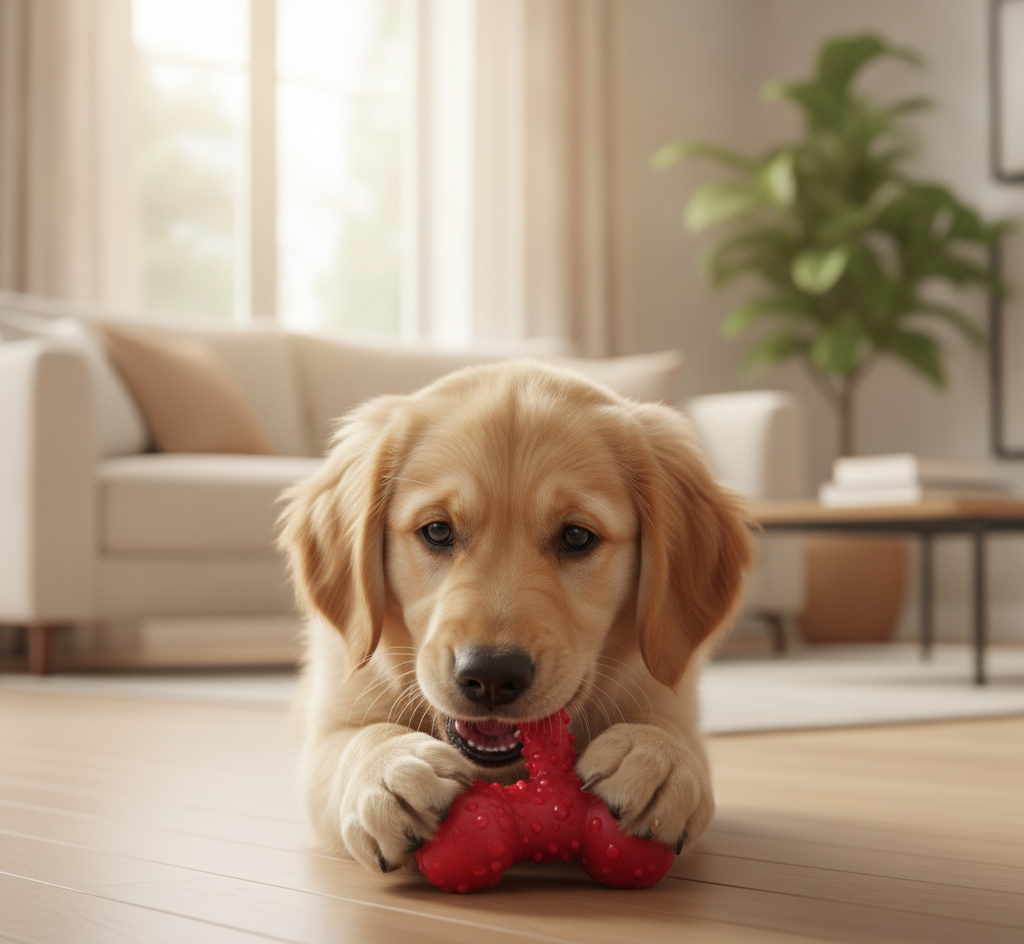
There is a specific moment in every new puppy owner’s life when the romantic dream of canine companionship collides hard with reality. You are sitting on the rug, watching your adorable eight-week-old fluffball, and suddenly those razor-sharp baby teeth sink directly into your wrist. It hurts—a lot. I have sat with dozens of exhausted, scratched-up owners who look at me with genuine worry and ask, “Is my puppy aggressive?” Or more desperately, how to stop puppy biting fast before their hands are permanently scarred.
The first thing I tell them is to take a deep breath. Your puppy is not a psychopath. In the canine world, teeth are the equivalent of human hands. Puppies use their mouths to explore their environment, play, and communicate their needs. However, what works in a litter of puppies does not work on human skin. If you want to learn how to stop puppy biting fast, you must understand that this is not about “punishing” a bad dog; it is about teaching a bilingual skill. In this massive, 1740-word guide, we are going to dive deep into the neurobiology of puppy teething, debunk the most common training myths that actually make biting worse, and provide you with a step-by-step, humane protocol to reclaim your hands and your sanity.
Inside This Survival Guide:
- 1. Teething vs. Play Biting: Understanding Feline-Like Predatory Drives
- 2. The “Yelping” Myth: Why Making Hurt Noises Backfires
- 3. The 4-Step Protocol to Stop Puppy Biting Fast
- 4. Biological Relief: Satiating the Teething Urge Naturally
- 5. The Overtired Puppy: Why Sleep is Your Secret Weapon
- 6. Long-Term Prevention: Establishing Household Boundaries
- 7. Frequently Asked Questions (FAQ)
1. Teething vs. Play Biting: Understanding Feline-Like Predatory Drives
To successfully train your pup, you must first identify what kind of biting you are dealing with. Puppies have 28 deciduous (baby) teeth that are needle-sharp. These teeth are designed to break through soft tissues easily because a puppy’s jaw muscles are relatively weak. When they bite you, they are usually operating under one of two biological systems: teething pain or predatory play.
Teething is a physical discomfort. Between 3 and 6 months of age, those baby teeth are pushed out by 42 permanent adult teeth. This causes intense, burning pressure in the gums. The puppy bites hard objects to numb this pain. Play biting, however, is a manifestation of their predatory drive. In their minds, your moving ankles, loose pant legs, and flailing hands are “prey” to be chased and captured. If you have been studying how to work from home with a puppy, you know that managing this high-intensity play drive during your work hours is essential to preventing your office from turning into a wrestling ring.
2. The “Yelping” Myth: Why Making Hurt Noises Backfires
If you search the internet for how to stop puppy biting fast, you will find one piece of advice repeated on almost every forum: “Yelp like a hurt puppy when they bite you.” The theory is that this mimics littermate behavior and tells the puppy they bit too hard. In my clinical experience, this advice fails spectacularly for about 70% of dog owners.
Why? Because humans are terrible at mimicking puppies. A high-pitched human “Ouch!” or yelp doesn’t sound like a warning to a high-drive breed like a Retriever, Shepherd, or Terrier. Instead, it sounds like the squeak of a dying prey animal. It excites them. Their pupils dilate, their tail starts thumping, and they bite *harder* because they think the “toy” (your hand) is responding. Unless you have a highly sensitive breed, yelling or making dramatic noises usually escalates play biting into a chaotic frenzy. We need a more calm, systematic approach that relies on consequence rather than drama.
3. The 4-Step Protocol to Stop Puppy Biting Fast
This is the systematic, low-arousal method I use in my behavioral consultations. It relies on the absolute law of canine training: What gets rewarded gets repeated, and what gets ignored dies out.
Step 1: The Instant Freeze
The second those needle teeth touch your skin, you must go completely still. Do not pull your hand away quickly—pulling away mimics prey fleeing, which triggers a chase reflex. Make your hand “dead weight.” Keep your facial expression neutral. You are showing them that the second teeth touch skin, the “toy” loses all its fun.
Step 2: The Quiet Redirection
Slowly and calmly offer an acceptable chew toy with your other hand. This is the “bridge.” You are teaching them: *”You cannot bite my skin, but you CAN bite this rubber bone.”* The second their teeth latch onto the toy instead of your arm, praise them quietly.
Step 3: The “Reverse Timeout”
If the puppy ignores the toy and goes straight back for your skin, the interaction is over. Stand up, cross your arms, look at the ceiling, and walk away. If possible, step behind a baby gate or close a door between you and the puppy for exactly 30 seconds. This is the ultimate consequence for a social pack animal: **Biting makes the human disappear.**
Step 4: The Settle Return
After 30 seconds of quiet, return to the room. If the puppy is calm, resume interaction. If they immediately try to bite again, repeat the timeout. Consistency is key. Everyone in the household must follow this exact sequence, or the puppy will remain confused.
4. Biological Relief: Satiating the Teething Urge Naturally
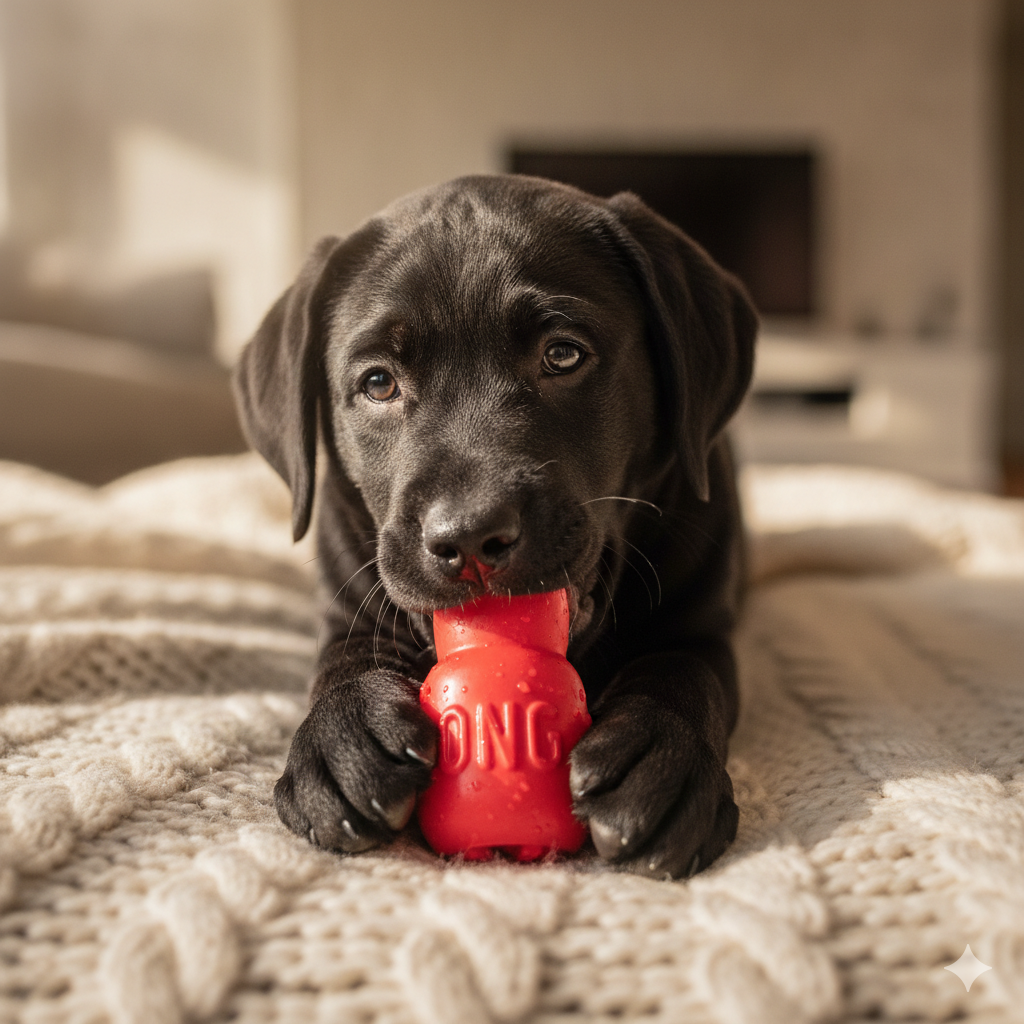
You cannot stop a teething puppy from biting; you can only control *what* they bite. If their gums are burning, they need physical relief. Providing the right toys is the key to protecting your furniture and your fingers.
Instead of soft plush toys, you need high-density rubber toys (like a Kong) or nylon chews.
* The Frozen Toy Trick: Stuff a rubber toy with plain wet food or mashed banana and freeze it solid. The cold numbs their swollen gums, while the licking action releases endorphins that naturally calm their nervous system.
* The Frozen Washcloth: Soak a clean washcloth in water (or sodium-free chicken broth), twist it into a rope shape, and freeze it. The texture of the frozen fabric is incredibly satisfying for teething puppies to chew on.
* Safe Raw Bones: Under supervision, large, cold marrow bones can provide hours of relief. However, avoid cooked bones as they can splinter and cause a severe dog upset stomach or internal damage.
🚨 PET SAFETY ALERT: Did your curious pup swallow something strange? Here is the complete emergency guide on What to Do If Your Dog Ate a Silica Gel Packet.
5. The Overtired Puppy: Why Sleep is Your Secret Weapon
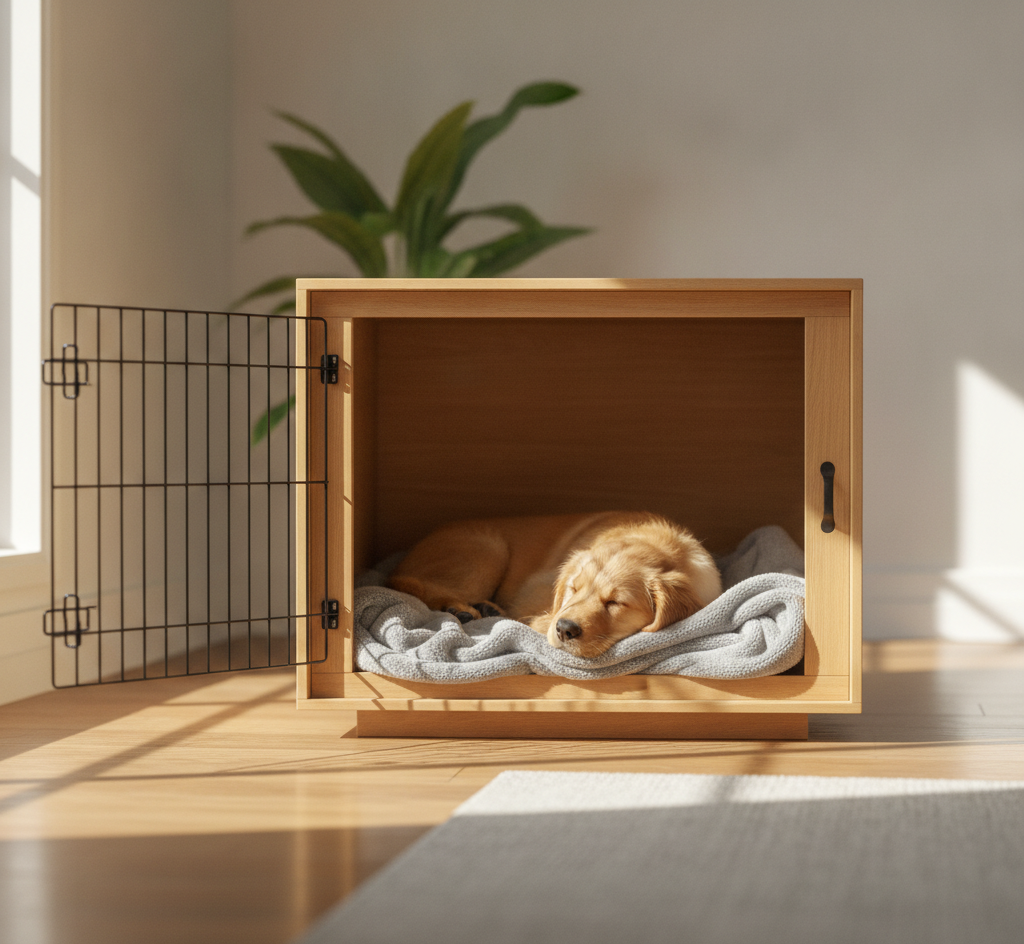
In many of my consultations, owners tell me: “My puppy is fine all day, but around 8 PM, they turn into a demon. They run laps, growl, and bite everything.” This is not a training issue; it is a sleep issue.
Puppies need between 18 and 20 hours of sleep per day. Most owners do not realize this and keep their puppies awake for hours, assuming they will eventually just fall asleep. An overtired puppy loses all impulse control. Their brain gets flooded with cortisol and adrenaline, leading to the “zoomies” and frantic, painful biting.
This is where the Enforced Nap strategy becomes your lifesaver. If your puppy has been awake for more than an hour and a half, they need to go into their crate or a quiet room for a 2-hour nap. Managing their sleep schedule is 80% of the battle when learning how to stop puppy biting fast. If you are keeping them on a structured routine, you might also want to look at our list of dog breeds that can stay alone at home to understand how different breeds handle this crate or pen confinement as they grow up.
6. Long-Term Prevention: Establishing Household Boundaries
To ensure your puppy grows into a confident, gentle adult dog, you must establish clear household boundaries from day one.
- The “No Hands as Toys” Rule: Never wrestle with your puppy using your bare hands. If your hand is the toy, they will always view it as a target. Always have a toy between your skin and their teeth.
- Socialization: Let your puppy play with older, vaccinated, balanced adult dogs. An adult dog is much better at teaching bite inhibition than any human. A quick growl or a corrective nudge from a senior dog teaches the puppy boundaries in their native language.
- Grooming Checks: Get your puppy used to having their paws, tail, and ears handled while they are calm. If they associate touch with relaxation, they are less likely to react defensively. If you find any irritations during these checks, like small scabs on dog skin, you can treat them early before they cause painful scratching.
Frequently Asked Questions
Why does my puppy bite my ankles when I walk?
This is predatory herding instinct. Your moving feet look like small prey. To stop this, freeze immediately when they bite. Do not move until they let go, then redirect them to a toy.
Will spaying or neutering stop puppy biting?
No. Puppy biting is a developmental phase and a physical need (teething/play). Hormonal changes from neutering do not change their need to chew or play.
My puppy growls when they bite me. Is this aggression?
At this age, almost certainly not. It is “play growling,” which is very common during wrestling or tug-of-war. However, if their body is stiff and their eyes are fixed, it could be resource guarding. Consult a vet if you are unsure.
At what age do puppies stop biting naturally?
Once their permanent adult teeth are fully in—usually around 6 to 8 months of age—the intense urge to chew and bite decreases significantly.
Final Thoughts: Consistency Wins the Game
Raising a puppy is a marathon of consistency. There will be days when you feel like your hands are permanently covered in scratches, and you’ll wonder if you’ll ever have a calm dog. But remember: this is a temporary, biological phase. By staying calm, using the “Reverse Timeout” method, and ensuring they get their 18 hours of sleep, you are teaching them that human skin is fragile and must be respected.
Be patient with them, and more importantly, be patient with yourself. If you ever feel overwhelmed or need a community of pet parents to share your struggles with, join us on our Facebook page. We share daily tips, expert research, and support to help you navigate every bite, wag, and nap of your journey. You can do this!