
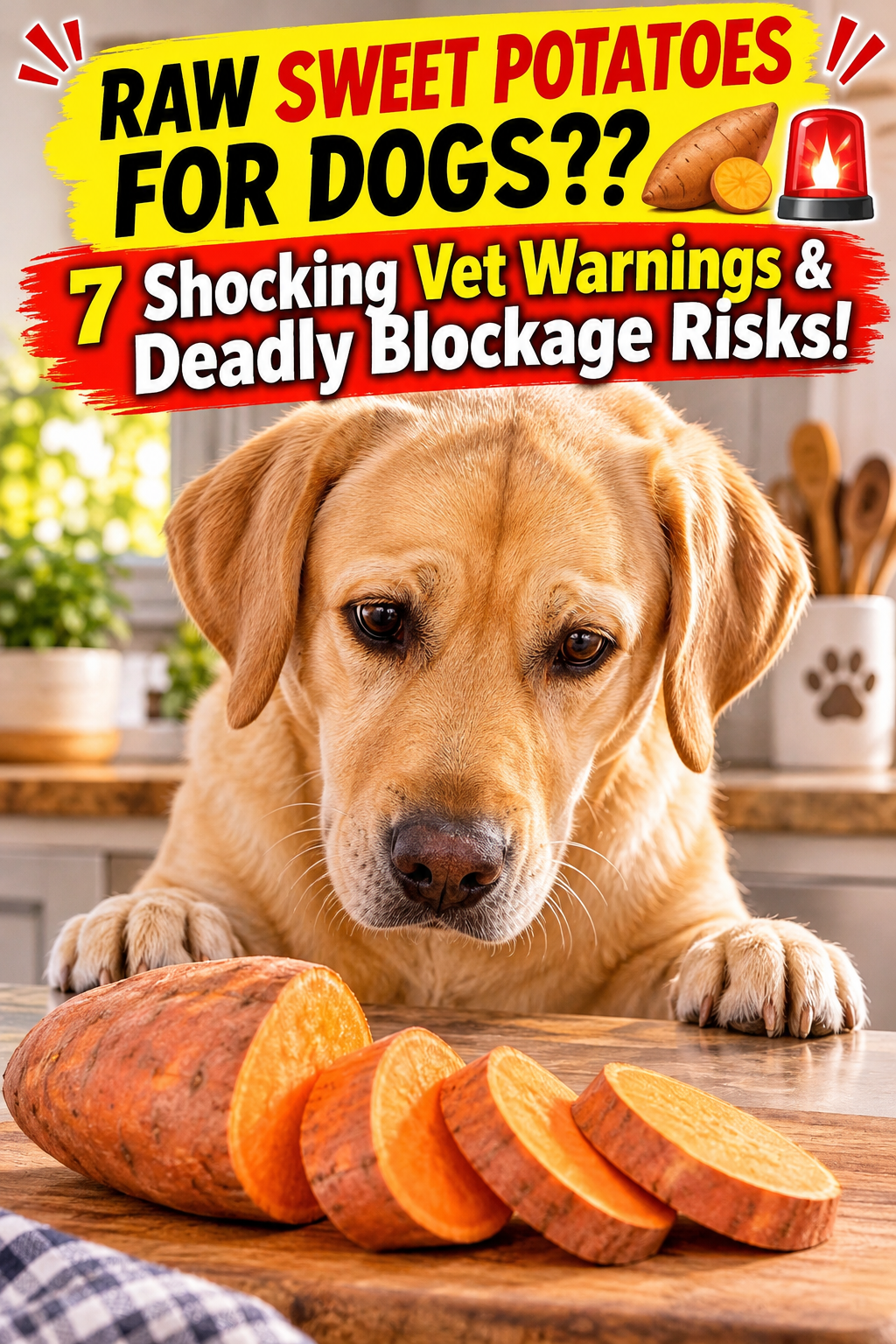
Table of Contents
- Quick Summary: Key Takeaways for Pet Parents
- 1. Direct Clinical Answer: Can Dogs Eat Raw Sweet Potatoes?
- 2. Botanical Chemistry: Raw Tuber Composition vs. Canine Digestion
- 3. Mechanical Obstruction: The Severe Choking & Bowel Blockage Risk
- 4. Anti-Nutrients & Enzyme Blockers: The Science of Trypsin Inhibitors
🩺 Dr. Ahmed’s Urgent Clinical Summary
- Direct Answer: No, dogs should never eat raw sweet potatoes. While cooked sweet potatoes are a fantastic superfood, raw tubers pose severe gastrointestinal obstruction risks, choking hazards, and digestive toxicity.
- Mechanical Danger: Raw sweet potato flesh is extremely dense, fibrous, and insoluble; chunks swallowed whole by dogs easily cause life-threatening intestinal blockages requiring emergency surgical removal.
- Enzyme Blockers: Raw sweet potatoes contain natural trypsin inhibitors that block protein absorption, triggering severe abdominal cramping, flatulence, and explosive diarrhea.
- The Cooking Golden Rule: Always steam, bake, or boil sweet potatoes completely plain—without butter, brown sugar, marshmallows, or salt—before offering them to your canine companion.
1. Direct Clinical Answer: Can Dogs Eat Raw Sweet Potatoes?
No, dogs cannot safely eat raw sweet potatoes under any circumstances. In my daily clinical veterinary practice, well-meaning pet parents frequently assume that because cooked sweet potato is a staple ingredient in high-end commercial dog foods, tossing raw raw peelings or hard chunks to their dog is perfectly harmless. This is a hazardous misconception that leads to preventable emergency abdominal surgeries every single year.
While thoroughly cooked sweet potato serves as a gentle, fiber-rich digestive tonic, its raw counterpart presents a completely different biological profile. Raw sweet potato flesh is exceptionally hard, dense, and packed with complex, uncooked starches that the canine gastrointestinal tract lacks the enzymatic machinery to degrade. Swallowed raw chunks act like inert stones inside the stomach and narrow small intestines.
Furthermore, raw sweet potatoes contain natural plant defense compounds designed to protect the tuber from soil insects and fungal pathogens. When consumed by a dog, these chemical compounds irritate the gastric mucosa and actively interfere with normal protein assimilation. In this comprehensive veterinary guide, we will unpack the precise physiological risks of raw sweet potatoes, analyze the mechanics of gastrointestinal obstruction, and provide vet-approved cooking methods that unlock their true nutritional benefits.

2. Botanical Chemistry: Raw Tuber Composition vs. Canine Digestion
To understand why raw sweet potatoes are dangerous for dogs, we must analyze their botanical anatomy. Unlike common white potatoes, which belong to the nightshade (Solanaceae) botanical family and contain toxic solanine glycoalkaloids, the sweet potato (Ipomoea batatas) belongs to the morning glory (Convolvulaceae) family. Sweet potatoes do not contain solanine, which leads many pet parents to mistakenly believe raw tubers are entirely non-toxic.
However, raw sweet potato tissue is composed of rigid, crystalline amylose starch granules tightly bonded within indigestible cellulose plant cell walls. Domestic canines are facultative carnivores; their short, acidic gastrointestinal tracts evolved to rapidly break down animal muscle tissue, organs, and fats. Dogs produce salivary amylase in minuscule amounts compared to omnivorous humans, meaning carbohydrate digestion begins entirely in the duodenum via pancreatic amylase.
When dense raw amylose starch enters the canine small intestine without prior heat gelatinization, pancreatic enzymes cannot penetrate the rigid cellular matrix. According to clinical veterinary nutrition standards published by the American Kennel Club (AKC), ungelatinized raw root starches bypass normal enzymatic digestion and pass directly into the large intestine, sparking severe microbial fermentation, massive osmotic gas buildup, and intense visceral abdominal pain.
If your canine companion is already experiencing mysterious digestive rumblings or refusing to eat, review our emergency diagnostic guide on dog stomach gurgling and loss of appetite to identify gastrointestinal distress before it escalates.
3. Mechanical Obstruction: The Severe Choking & Bowel Blockage Risk
By far the most immediate life-threatening danger associated with raw sweet potatoes is physical, mechanical obstruction of the canine digestive tract. Raw sweet potatoes have a firm, fibrous, and unyielding consistency comparable to raw wood or hard rubber.
Canine dentition is biologically engineered to shear meat and crush bone, not to finely chew and grind dense fibrous tubers. When a dog is given a slice, chunk, or whole raw sweet potato, they rarely chew it into a fine pulp. Most dogs crush the piece once or twice and swallow large, jagged chunks whole. These rigid fragments present acute physical hazards at multiple anatomical checkpoints:
- Esophageal Choking Hazard: In small toy breeds (such as Chihuahuas, Pomeranians, and Shih Tzus) or brachycephalic dogs like French Bulldogs, a hard chunk of raw potato easily lodges in the pharynx or mid-cervical esophagus, causing acute airway occlusion, frantic gagging, and asphyxiation.
- Gastric Foreign Body: If the chunk reaches the stomach, stomach acid cannot dissolve the dense cellulose exterior. The hard chunk bounces around the gastric lining, causing localized ulceration, persistent nausea, and repeated vomiting.
- Intestinal Impaction: The most catastrophic scenario occurs when a raw sweet potato chunk attempts to exit the stomach through the pyloric sphincter into the narrow duodenum or ileocecal valve. Because the fragment cannot compress or break down, it forms an absolute mechanical blockage (ileus). Blood supply to that intestinal segment is choked off, leading to rapid tissue necrosis, intestinal perforation, peritonitis, and septic shock within 24 to 48 hours without emergency exploratory surgery.
Does your dog exhibit breathing struggles or night pacing after swallowing non-food items or dense treats? Read our urgent anatomical review on why French Bulldogs face severe nighttime breathing and choking hazards to protect vulnerable airway structures.

4. Anti-Nutrients & Enzyme Blockers: The Science of Trypsin Inhibitors
Beyond physical mechanical blockage, raw sweet potatoes harbor significant biochemical hazards known in veterinary toxicology as anti-nutritional factors (ANFs). The most potent of these compounds are trypsin inhibitors, naturally occurring plant defense proteins that deactivate digestive enzymes in animal digestive tracts.
Trypsin is a crucial pancreatic enzyme responsible for cleaving dietary proteins into bioavailable peptides and amino acids inside the small intestine. When a dog ingests raw sweet potatoes, these active trypsin inhibitors bind directly to the enzyme’s catalytic site, rendering pancreatic trypsin completely inert and useless.
According to veterinary toxicology bulletins from the American Veterinary Medical Association (AVMA), chronic consumption of active trypsin inhibitors forces the canine pancreas into a state of severe compensatory hypertrophy. The organ overworks frantically to synthesize extra enzymes to overcome the blockage, dramatically elevating the risk of acute or chronic canine pancreatitis.
Fortunately, thermal heat denatures and deactivates these trypsin inhibitors completely. Steaming, baking, or boiling sweet potatoes at temperatures exceeding 200°F (93°C) breaks the chemical peptide bonds of these enzyme blockers, neutralizing their anti-nutritional activity and transforming the tuber into a biologically safe, digestible carbohydrate source.
If you enjoy feeding healthy, veterinary-approved whole foods to your dog, discover how properly prepared human foods support gut health in our clinical guide on can dogs eat scrambled eggs safely.
5. Raw Skins & Agricultural Contaminants: The Mold and Chemical Threat
When pet parents peel fresh sweet potatoes in the kitchen, tossing the discarded raw outer skins onto the floor for the family dog seems like an innocent, zero-waste habit. In clinical gastroenterology, however, raw sweet potato peelings represent a concentrated bundle of mechanical and chemical hazards.
The skin of a sweet potato is exceptionally rich in insoluble lignin and suberin—dense, woody structural polymers engineered by nature to resist microbial decay in damp soil. The canine gastrointestinal tract possesses zero enzymatic or bacterial capacity to break down lignin. When a dog consumes a pile of raw peels, these fibrous ribbons twist together inside the stomach, tangling with fur and ingested food particles to form a concrete-like biological mass known as a phytobezoar.
Furthermore, sweet potatoes grow directly submerged in agricultural topsoil for four to five months, during which they absorb heavy chemical treatments, including synthetic fungicides, nematicides, and post-harvest anti-sprouting chemicals like chlorpropham. Because dogs have a much smaller body mass and a rapid metabolic turnover compared to humans, ingesting unwashed, raw peelings delivers a concentrated dose of chemical residues directly to their gastric lining, sparking acute chemical gastritis and toxic drooling.
Even more dangerous is the risk of microscopic fungal rot. Bruised or decaying raw sweet potatoes harbor soil-borne molds from the Fusarium family. These molds produce a potent pulmonary toxin known as 4-ipomeanol. In canines, ingesting moldy raw sweet potato peelings can cause acute respiratory distress syndrome (ARDS), rapid fluid accumulation in lung tissues, and profound interstitial pneumonia.
If your canine companion is exhibiting strange mouth licking or swallowing motions after sneaking kitchen scraps, review our clinical emergency breakdown on why dogs lick the air and swallow repeatedly to evaluate possible esophageal foreign bodies.

6. Emergency Red Flags: Recognizing an Acute Intestinal Obstruction
If your dog accidentally consumed a whole raw sweet potato, a large chunk, or a handful of raw peelings while your back was turned, you must monitor them with extreme clinical vigilance over the subsequent 24 to 72 hours. An intestinal foreign body obstruction is a rapidly progressive surgical emergency; catching the clinical signs early is the difference between simple endoscopic extraction and catastrophic bowel rupture.
Watch for this precise progression of clinical red flags:
- Unproductive Retching and Vomiting: The earliest and most consistent sign of a high gastrointestinal blockage. The dog attempts to vomit repeatedly, producing frothy clear saliva or yellowish bile because food and fluid cannot physically pass beyond the impacted chunk in the duodenum.
- Severe Anorexia and Water Refusal: A dog with an obstructed bowel experiences intense internal visceral pressure and nausea. They will turn their head away from high-value foods and refuse water entirely, leading to precipitous clinical dehydration.
- The Classical “Prayer Position” (Abdominal Pain): Dogs experiencing acute visceral agony adopt a distinct posture: front chest and paws pressed flat against the floor while their hindquarters remain elevated in the air. This posture is an instinctive attempt to stretch the abdominal cavity and take physical weight off the inflamed, blocked intestine.
- Complete Absence of Bowel Movements (Obstipation): While a dog may pass one small, dry stool containing fecal matter stored downstream of the blockage, they will subsequently strain unsuccessfully without producing feces, occasionally passing only clear mucus or drops of dark blood.
- Lethargy, Weakness, and Pale Gums: As the trapped potato chunk chokes off intestinal micro-circulation, systemic blood pressure plummets and bacterial toxins begin leaking across the compromised bowel wall into the bloodstream. The dog becomes profoundly lethargic, weak, and displays pale or grayish mucous membranes.
Is your dog also exhibiting restless midnight pacing, panting heavily, or whining in pain? Review our midnight triage protocol on why dogs pace and pant restlessly at night to distinguish acute surgical emergencies from chronic discomfort.
7. The Vet-Approved Cooking Protocol: Steamed, Boiled, or Baked
While raw sweet potatoes are unequivocally dangerous, cooked sweet potatoes represent one of the most therapeutically beneficial root vegetables in clinical canine nutrition. The application of moist or dry heat completely transforms the biochemistry of the tuber: it gelatinizes rigid starches into easily digestible carbohydrates, softens tough cellulose fibers, and completely deactivates anti-nutritional trypsin inhibitors.
Cooked sweet potatoes provide dense concentrations of dietary beta-carotene (which the canine liver converts into active vitamin A for retinal health), vitamin C for cellular defense, and a superb 4-to-1 ratio of soluble to insoluble fiber that gently regulates stool consistency during bouts of colitis.
To prepare sweet potatoes safely for your canine at home, execute these three non-negotiable veterinary cooking rules:
- Peel and Discard the Outer Skin Completely: Always peel the raw skin away using a vegetable peeler before cooking. Removing the skin eliminates insoluble lignin, reduces pesticide risks, and ensures a smooth, gut-friendly consistency.
- Apply Pure, Moist Heat: Steam or boil the peeled sweet potato cubes in plain water until they are fork-tender throughout (approximately 15 to 20 minutes). Steaming is preferred as it preserves 90% of heat-sensitive bioflavonoids without requiring any cooking oils. Alternatively, you may bake the whole peeled tuber in an oven at 375°F (190°C) until completely soft.
- The Zero-Additive Kitchen Law: This is the golden rule of veterinary culinary prep. Never add butter, margarine, olive oil, salt, brown sugar, cinnamon, nutmeg, marshmallows, or garlic. Traditional human holiday sweet potato casseroles are loaded with dairy and fats that instantly spark acute canine pancreatitis. Serve the cooked sweet potato completely plain and thoroughly mashed.
Looking for other nutrient-dense, antioxidant-rich whole foods you can safely rotate into your dog’s weekly meal plan? Read our comprehensive clinical guide on feeding blueberries to dogs safely for balanced, low-calorie treat ideas.
8. Clinical Portion Guidelines: Mashed Cooked Sweet Potato by Dog Weight
Even when thoroughly cooked and completely plain, sweet potatoes must be treated with strict clinical moderation. While rich in vitamins and prebiotics, sweet potatoes are also dense in natural carbohydrates and carry a moderate glycemic index. Uncontrolled daily feeding can easily promote canine obesity and destabilize insulin levels in dogs with borderline glucose tolerance.
In clinical canine dietetics, treats and fresh carbohydrate toppers must never exceed 10% of a dog’s total daily caloric allowance, with the remaining 90% supplied by a nutritionally complete, AAFCO-compliant commercial food. When introducing cooked, mashed sweet potato into your dog’s regular meals, follow these weight-calibrated daily maximums:
- Toy Breeds (Under 10 lbs / 4.5 kg): Maximum 1 teaspoon of plain mashed sweet potato once or twice per week. Ideal for Chihuahuas, Pomeranians, and Yorkshire Terriers.
- Small Dogs (10–25 lbs / 4.5–11 kg): Maximum 1 tablespoon of plain mashed sweet potato two to three times per week. Great for French Bulldogs, Boston Terriers, and Miniature Schnauzers.
- Medium Breeds (26–55 lbs / 12–25 kg): Maximum 2 tablespoons mixed into regular kibble every other day. Excellent natural digestive fiber for Beagles, Cocker Spaniels, and Border Collies.
- Large Breeds (56–90 lbs / 25–40 kg): Maximum 1/4 cup (approximately 3 to 4 tablespoons) per serving. Perfect for Labrador Retrievers, Golden Retrievers, and German Shepherds.
- Giant Breeds (Over 90 lbs / 40+ kg): Maximum 1/3 cup per serving. Safe for Great Danes, Mastiffs, and Bernese Mountain Dogs. Exceeding this portion often leads to loose, bulky stools due to excess fiber fermentation.

9. Comprehensive Potato Safety & Toxicity Matrix
| Potato Variety & State | Canine Safety Rating | Primary Clinical Hazards | Veterinarian’s Verdict |
|---|---|---|---|
| Raw Sweet Potato (Flesh or Peels) | CRITICAL CHOKING / UNSAFE | Intestinal obstruction, choking, active trypsin enzyme inhibitors. | Never feed raw. Chunks require emergency surgical removal; inhibitors cause severe digestive pain. |
| Cooked Plain Sweet Potato (Boiled/Baked) | Safe & Highly Recommended | High calories if overfed, mild gas if given in excess. | Peel skin completely, steam or bake plain with zero seasonings. Fantastic soluble fiber source. |
| Raw White Potato (or Green Skins) | ACUTE TOXICITY HAZARD | Solanine glycoalkaloids, neurological tremors, cardiac arrhythmia. | Nightshade family toxin. Solanine causes severe neuro-toxic poisoning, hypothermia, and vomiting. |
| Commercial Sweet Potato Fries / Chips | Unsafe / Avoid | Deep-fried trans fats, excessive sodium, garlic/onion seasonings. | Deep-fried restaurant preparations easily spark acute canine pancreatitis and severe gastrointestinal upset. |
| Dehydrated Sweet Potato Chew Chews | Safe with Monitoring | Gulping large end-pieces, gum abrasion in puppies. | Excellent dental chew alternative to rawhide. Must be pre-cooked prior to dehydration. Supervise chewing. |
10. Schema-Optimized Frequently Asked Questions (FAQ)
What should I do if my dog accidentally ate a piece of raw sweet potato?
If your dog ate a tiny, shredded piece of raw sweet potato, monitor them for 24 hours for mild diarrhea or flatulence. However, if they swallowed a large chunk or whole tuber, do not induce vomiting at home; contact your emergency veterinarian immediately, as large hard chunks risk causing acute mechanical esophageal or intestinal obstruction.
Can dogs diagnosed with diabetes eat cooked sweet potatoes?
No, dogs with diabetes mellitus should generally avoid sweet potatoes. While rich in dietary fiber, sweet potatoes contain significant natural starches and sugars that convert into glucose, causing potential blood sugar spikes that interfere with precise insulin regulation. Always consult your veterinary endocrinologist before feeding starchy vegetables to a diabetic canine.
Are raw sweet potato vines and leaves poisonous to dogs?
Yes, sweet potato vine leaves and stems can be dangerous. Certain varieties of the sweet potato vine (Ipomoea batatas) contain toxic compounds and active lysergic hallucinogenic alkaloids similar to LSD. Ingesting garden vines can trigger clinical disorientation, dilated pupils, drooling, vomiting, and hallucinations in canines.
Is cooked sweet potato better for a dog’s diarrhea than plain canned pumpkin?
Both offer excellent therapeutic benefits, but pure canned pumpkin (100% pumpkin without pie spices) is slightly superior for acute diarrhea because it has fewer total calories and a higher concentration of soluble fiber per gram. Cooked sweet potato is fantastic for bulking up soft stools, but its higher carbohydrate load means pumpkin is often preferred for acute GI rest.
Professional Veterinary Disclaimer: The clinical nutritional insights, botanical evaluations, and home triage protocols provided in this guide are authored by Dr. Ahmed, a licensed veterinarian, strictly for informational and educational purposes. This content is not intended to serve as a substitute for professional veterinary diagnosis, individualized dietary prescription, or emergency surgical triage. If you suspect your dog has swallowed an indigestible foreign body or displays signs of an intestinal blockage, contact your primary veterinarian or emergency animal clinic immediately.