
Table of Contents
Clinical Summary at a Glance
- Loud gut noises paired with food refusal signal borborygmi and active abdominal pain, not standard digestion.
- Nausea, excessive gas accumulation, or gastrointestinal spasms make the thought of eating unpleasant for your dog.
- Mild causes include empty stomach acid buildup, while severe causes include pancreatitis and mechanical bowel blockages.
- Never force-feed a dog whose stomach is rumbling loudly; allow their gut to rest while evaluating warning flags.
The Direct Veterinary Answer
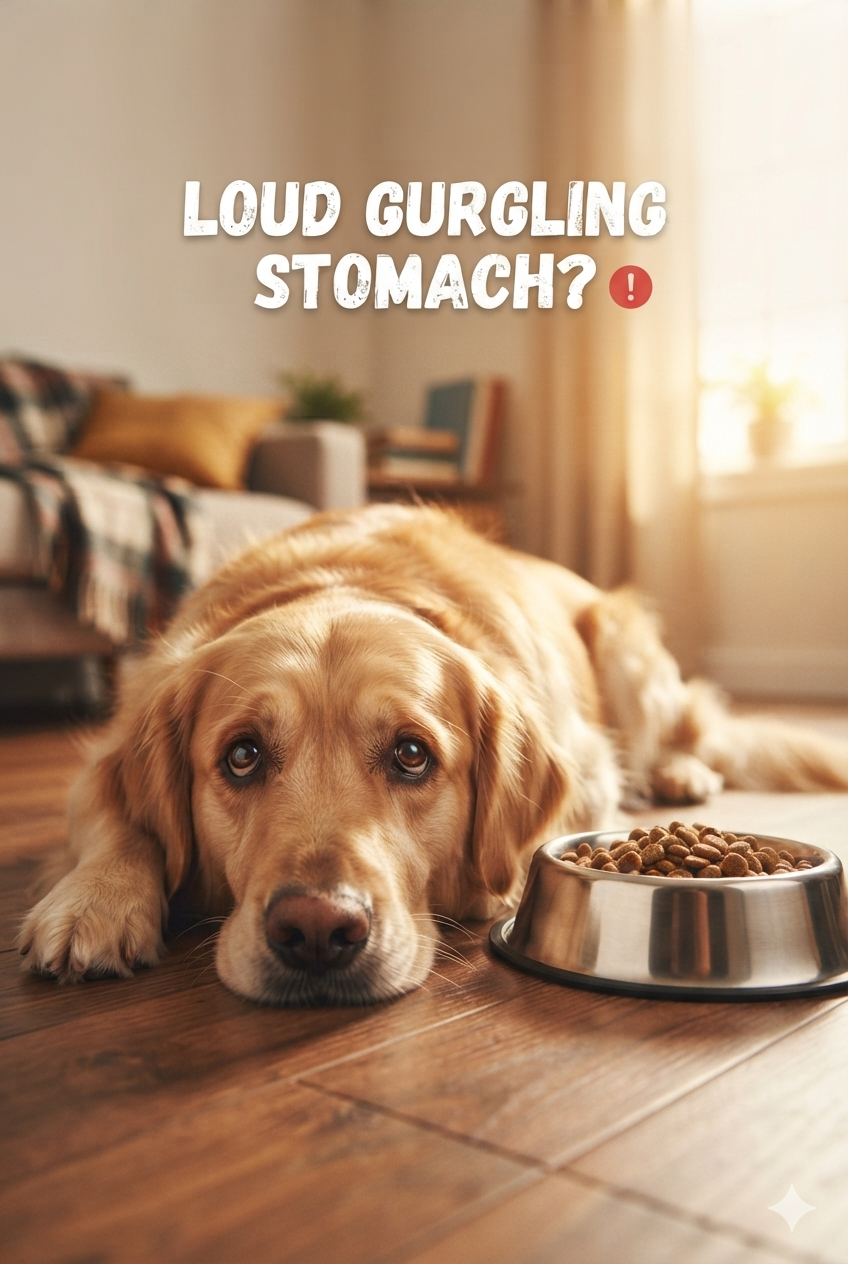
If your dog’s stomach is making loud gurgling noises and they refuse to eat, they are experiencing hyperactive borborygmi driven by gastrointestinal distress, nausea, or abdominal cramping. Normal canine digestion produces subtle, quiet sounds, but loud rumblings audible from across the room indicate gas and fluid churning through irritated intestinal walls under abnormal muscular contractions.
Your dog is refusing food because the pressure, gas pockets, and mucosal inflammation inside their digestive tract trigger intense nausea. In canine medicine, this self-imposed fasting is a natural defense mechanism to prevent further irritation of an inflamed stomach lining.
While an empty stomach or minor gas can resolve within a few hours, persistent gurgling accompanied by a hunched back, lethargy, or retching indicates serious conditions like pancreatitis or intestinal blockage.

A dog refusing their favorite meal while their stomach rumbles loudly is communicating active abdominal discomfort.
What Is Borborygmi? The Science Behind the Gut Sounds
The medical term for stomach and intestinal rumbling is borborygmi (pronounced bohr-boh-RIG-mee). These acoustic vibrations happen when gas, liquid digestive fluids, and partially digested nutrients travel along the gastrointestinal tract via peristalsis.
Peristalsis refers to the rhythmic, involuntary muscular contractions that propel food through the stomach and small intestines down into the colon. Under healthy physiological conditions, this smooth muscle activity is quiet, coordinated, and completely undetectable unless you place a stethoscope directly against your dog’s flank.
When the digestive tract faces inflammation, microbial imbalance, or mechanical irritation, peristaltic contractions become erratic and hyperactive. The intestinal walls squeeze aggressively against large pockets of trapped gas and watery secretions, amplifying the sound like air moving violently through narrow plumbing pipes.
According to research from the Merck Veterinary Manual, hypermotility and loud borborygmi commonly precede bouts of diarrhea or vomiting as the body attempts to purge irritants. Understanding this muscular churn explains why your dog looks anxious and unsettled.
The Deadly Link: Why Loud Gurgling Causes Food Refusal
Pet parents often ask why a dog with an obviously noisy stomach turns their nose away from their favorite treats. The answer lies in the close neural connection between gut hypermotility and feline and canine central nausea pathways.
When gas stretches the sensitive intestinal walls, stretch receptors send sharp pain signals through the vagus nerve directly to the emetic center inside the canine brainstem. This visceral discomfort triggers immediate sensation of nausea, mouth watering, and appetite shutdown.
You may observe subtle behavioral cues accompanying the loud gurgling sounds, such as frantic grass-eating, frequent lip-licking, hard swallowing, and excessive yawning. These are definitive clinical signs that your dog feels sick to their stomach and is attempting to buffer gastric acid.
Offering heavy meals or rich snacks during an active bout of borborygmi only overloads the system, triggering acute vomiting episodes. To protect your companion, explore our complete veterinary protocols on managing canine digestive health.
7 Medical Reasons Your Dog Has Loud Gut Sounds and Inappetence
Loud stomach noises combined with inappetence range from harmless temporary digestive upsets to life-threatening surgical crises. Here are the first four primary medical conditions behind this alarming presentation.
1. Bilious Vomiting Syndrome and Extreme Hunger Spasms
Paradoxically, one of the most common causes of loud gut noises and food refusal is an overly empty stomach. When a dog goes too many hours without a meal, stomach acid and digestive bile begin to pool in the gastric lumen without any kibble to absorb them.
Bile is a caustic, alkaline fluid produced by the liver and stored in the gallbladder to break down dietary fats. When the stomach remains empty overnight, bile flows backward through the pyloric sphincter into the stomach, irritating the sensitive gastric mucosa.
This irritation causes painful spasms, hyperactive gas movements, and mild gastritis that makes the dog feel nauseated first thing in the morning. Affected dogs often refuse breakfast, lick the carpet nervously, and eventually throw up a small puddle of foamy yellow bile.
Once the irritating bile is purged or buffered, the nausea subsides, and the dog’s appetite returns naturally by the afternoon. Adjusting feeding schedules to include a high-protein bedtime snack often resolves this issue completely.
2. Dietary Indiscretion and Sudden Gut Fermentation
Dogs are notorious opportunistic scavengers, frequently raiding kitchen trash bins, picking up spoiled food on walks, or snatching table scraps rich in grease and spices. In clinical veterinary terms, this habit is known as dietary indiscretion.
When a dog’s digestive system encounters novel, unabsorbable ingredients or rancid fats, the resident gut microbiome experiences severe dysbiosis. Billions of opportunistic bacteria rapidly ferment these rich nutrients inside the colon, producing massive clouds of hydrogen and methane gas.
This rapid gas expansion creates intense visceral distention, abdominal cramping, and deafening borborygmi audible from across the room. The dog feels uncomfortably full, gassy, and bloated, leading them to firmly reject their standard bowl of food.
In mild cases of dietary indiscretion, the gas passes harmlessly over twelve to twenty-four hours, sometimes followed by a soft stool. You can maintain gut stability by adhering to balanced recommendations from our guide to balanced dog nutrition.

Lip-smacking and restless floor pacing alongside stomach rumbling indicate acute nausea.
3. Acute Canine Pancreatitis
Acute pancreatitis is an aggressive, potentially fatal inflammatory disease that triggers intense abdominal pain, loud gut rumbling, and total food rejection. It typically strikes when a dog consumes high-fat human foods like bacon grease, buttered steak trimmings, or poultry skin.
Under normal conditions, the pancreas synthesizes inactive digestive enzymes and releases them safely into the duodenum to process food. During pancreatitis, these powerful enzymes activate prematurely inside the pancreatic tissue itself, essentially digesting the organ alive.
This severe enzymatic burn triggers massive localized peritonitis and paralyzes normal intestinal motility, a condition called secondary ileus. Fluid and gas back up behind the paralyzed loops of bowel, creating loud, echoing gurgles as the intestines struggle to clear the backlog.
Dogs suffering from acute pancreatitis exhibit agonizing pain. They assume the classic “praying posture” (front legs flat on the ground with rear end elevated in the air) to take pressure off their inflamed upper abdomen, as outlined in clinical literature from the American Veterinary Medical Association (AVMA).
4. Partial Gastrointestinal Obstruction (Foreign Bodies)
A dog that swallows a tennis ball fragment, sock, corn cob, peach pit, or chewed plastic toy risks developing a mechanical gastrointestinal blockage. This mechanical obstruction creates a dangerous bottleneck along the digestive pipeline.
The intestinal muscular wall above the obstruction contracts violently in an attempt to shove the trapped foreign object forward. These hyperactive, futile contractions push fluid and gas against the blocked passage, producing bizarre, squeaking, and roaring borborygmi.
Because nothing can move past the obstruction, pressure builds rapidly inside the stomach and upper duodenum. This stimulates intractable nausea, causing the dog to refuse all food, water, and treats with visible distress.
A partial or complete foreign body obstruction is a surgical emergency that can compromise blood flow to the intestinal wall, leading to bowel necrosis and fatal septic peritonitis within twenty-four hours. Any sudden onset of loud gut noises paired with repeated dry heaving demands an immediate hospital visit.
5. Gastric Dilatation-Volvulus (GDV or “Bloat”)
Gastric Dilatation-Volvulus (GDV), commonly referred to as bloat, is the single most terrifying gastrointestinal emergency in canine veterinary medicine. It occurs when a dog’s stomach fills rapidly with gas and subsequently twists along its longitudinal axis, cutting off both the entry from the esophagus and the exit to the duodenum.
During the earliest stages of gastric distention before full rotation locks the organ, excessive fermentation produces turbulent liquid and gas pockets. This initial phase generates frantic, echoing borborygmi as the dog paces restlessly and looks anxiously back at their left flank.
As the stomach twists completely, the trapped gas expands rapidly without any escape route, compressing the caudal vena cava and slashing venous blood return to the heart. The dog abruptly stops gurgling because motility halts entirely, replaced by frantic, non-productive retching, foamy white drool, and a drum-tight distended belly.
Large and giant deep-chested breeds like Great Danes, German Shepherds, and Standard Poodles face extreme genetic risk for GDV. If your dog’s stomach is making loud gurgling noises, they cannot eat, and their belly feels firm or bloated, rush to the nearest emergency surgical hospital within minutes, as detailed by emergency guidelines from the Cornell University College of Veterinary Medicine.
6. Heavy Intestinal Parasite Burdens
Microscopic endoparasites dwelling inside the canine gastrointestinal tract disrupt normal mucosal architecture and trigger chronic motility disturbances. Protozoal invaders like Giardia duodenalis and nematodes such as hookworms, roundworms, and whipworms directly damage delicate enterocytes lining the small intestines.
This parasitic invasion causes microscopic blunting of the intestinal villi, severely impairing your dog’s ability to absorb fluids, electrolytes, and nutrients. Unabsorbed carbohydrates draw excess water into the bowel lumen through osmosis, creating massive fluid-filled chambers where opportunistic bacteria thrive.
The resulting hyperactive fluid sloshing produces persistent, high-pitched borborygmi that can be heard across a quiet room. The chronic inflammation and gas distention leave your dog feeling chronically nauseated, leading to inconsistent eating habits and selective food rejection.
Young puppies, recently adopted shelter rescues, and hunting dogs are prone to heavy parasite loads that trigger these loud intestinal sounds. Routine veterinary fecal flotation exams with specialized Giardia antigen testing identify these hidden organisms before secondary anemia or severe dehydration sets in.

A gentle veterinary abdominal palpation reveals organ pain, trapped gas pockets, or foreign body masses.
7. Inflammatory Bowel Disease (IBD) and Severe Food Allergies
Canine Inflammatory Bowel Disease (IBD) is an immune-mediated disorder characterized by chronic inflammatory cells infiltrating the mucosal walls of the stomach and intestines. Most commonly, lymphocytes and plasma cells invade the lining, creating a persistent clinical syndrome known as lymphocytic-plasmacytic enteritis.
When the bowel wall thickens with chronic inflammation, it loses its normal elastic compliance and rhythmic contraction ability. Food passes unevenly through damaged intestinal loops, causing sudden spikes in localized fermentation, violent peristaltic rushes, and loud borborygmi.
Dogs suffering from IBD or severe cutaneous and gastrointestinal adverse food reactions experience fluctuating bouts of dull abdominal ache. On bad flare-up days, the thought of kibble makes them nauseated, leading to complete food strikes that can last twenty-four to forty-eight hours.
These dogs often alternate between noisy gurgling mornings, occasional watery stools, and periodic bouts of grass-eating. For long-term dietary stabilization of food-allergic companions, explore our medical insights into canine health and chronic care.
Red Flags: When Does Loud Gurgling Become a Life-or-Death Emergency?
Determining whether your dog’s rumbling stomach represents a passing case of mild gas or a surgical catastrophe requires vigilant observation. Dogs instinctively mask pain, so subtle changes in body language indicate severe distress.
Contact your nearest emergency veterinary hospital immediately if your dog’s loud gut noises and food refusal are accompanied by any of the following critical warning signs:
- Unproductive Retching: Your dog makes violent attempts to throw up every few minutes, but only produces thick, sticky white foam or nothing at all (a hallmark sign of gastric torsion).
- Distended, Tympanic Abdomen: The dog’s belly appears visibly swollen, hard, or sounds hollow like a drum when tapped gently with your fingertips.
- Pale, White, or Tacky Gums: Lift your dog’s upper lip to examine mucosal color; pale or grayish gums indicate internal bleeding, cardiovascular shock, or severe dehydration.
- Prolonged Capillary Refill Time (CRT): Press your thumb firmly against the pink gum tissue for two seconds, then release. If the white spot takes longer than two seconds to return to healthy pink, blood circulation is severely compromised.
- The “Praying” or “Sphinx” Pain Posture: The dog keeps their front legs and chest pressed flat against the floor while their rear hips remain upright in the air to alleviate unbearable pancreatic or peritoneal pressure.
- Bloody Diarrhea or Black Tarry Stools (Melena): The presence of digested black blood in the stool indicates upper gastrointestinal ulceration or internal hemorrhaging.
Step-by-Step Home Triage: What to Do in the First 12 Hours
If you have carefully ruled out the emergency red flags listed above and your dog remains alert and responsive, you can initiate a gentle at-home gut-resting protocol. Follow these calm clinical steps to help settle their hyperactive stomach sounds.
Dr. Ahmed’s Golden Rule: Do Not Force-Feed!
Never shove treats, canned food, or home remedies down the throat of a dog with an actively roaring stomach. Their body is intentionally resting the digestive machinery to manage nausea. Forcing food into an inflamed stomach inevitably sparks acute vomiting and risks aspiration pneumonia.
Step 1: Implement a Controlled Digestive Rest Period
Withhold all standard dry kibble, raw meals, rich snacks, and table treats for a controlled window of 8 to 12 hours. This short fasting period gives the irritated gastric and intestinal mucosal linings an opportunity to rest without having to produce digestive acid or churn food.
Keep fresh, clean water available at all times, but monitor your dog’s drinking behavior closely. If your dog drinks an entire bowl in one frantic gulp, remove the bowl and offer three to four ice cubes or a quarter-cup of water every thirty minutes to prevent gastric distention.
Step 2: Check for Dehydration with the Skin Turgor Test
Gently grasp the loose skin over your dog’s shoulder blades or neck, pull it upwards into a gentle tent shape, and let it go immediately. In a well-hydrated dog, the skin snaps back flush against the body in less than a second.
If the tented skin returns slowly or remains elevated in a ridge, your dog is experiencing significant fluid deficits that require subcutaneous or intravenous fluids at a veterinary clinic. Review our complete guide to managing canine nutritional balance and hydration.
Step 3: The Bland Diet Transition Protocol
Once the 12-hour gut rest concludes and your dog shows interest in their surroundings, introduce a mild, easily digestible bland recovery meal. The gold-standard clinical recipe consists of a 2:1 ratio of boiled carbohydrates to lean protein:
- 70% Plain Boiled White Rice: Use long-grain white rice cooked soft in plain water without butter, oils, or added salt. Do not use brown rice, as its dense fibrous husk is difficult for an inflamed gut to process.
- 30% Boiled Skinless Chicken Breast: Boil boneless, skinless chicken breast thoroughly, drain all fatty cooking water, and shred the meat finely. Alternatively, use extra-lean 95% boiled ground beef with the fat skimmed off completely.
- Optional Soothing Additive: Add one tablespoon of 100% pure canned pumpkin puree (NOT sweet pumpkin pie mix). Pure pumpkin delivers soluble fiber that absorbs excess fluid and soothes irritated colonic enterocytes.
Offer a tiny meal roughly the size of a golf ball for small breeds, or half a cup for large dogs. If your dog consumes the bland snack eagerly and keeps it down without gut rumbling for four hours, continue feeding three to four small bland portions across the day.
Dangerous At-Home Mistakes: Medications You Must NEVER Give
When our dogs show obvious stomach pain and refuse to touch their food, our natural human instinct is to reach into the home medicine cabinet. Administering human over-the-counter gastrointestinal medications to canines without explicit veterinary instructions can prove lethal.
Never administer Pepto-Bismol (bismuth subsalicylate) to your dog. Subsalicylate is chemically related to aspirin and readily absorbs across the irritated canine gastric mucosa, causing acute stomach ulceration and potential salicylate toxicity.
Furthermore, bismuth turns canine stools pitch-black and shows up as a bright white, radio-opaque mass on emergency X-rays. This artificial shadow mimics a metallic foreign body or bone, confusing veterinary radiologists during emergency diagnostic evaluations.
Human non-steroidal anti-inflammatory drugs (NSAIDs) like Ibuprofen (Advil, Motrin), Naproxen (Aleve), or Acetaminophen (Tylenol) must be avoided at all costs. These medications strip away the protective prostaglandin layer shielding the canine stomach lining, causing full-thickness gastric perforations and fatal acute kidney failure within hours of ingestion.
Avoid giving human antidiarrheal drugs like Imodium (Loperamide) to manage noisy gut sounds. Loperamide paralyzes intestinal motility, which can trap bacterial endotoxins inside the bowel or trigger life-threatening toxic megacolon, particularly in herding breeds carrying the genetic MDR1 mutation.
Clinical Veterinary Workup: What to Expect at the Animal Hospital
If your dog’s noisy stomach sounds persist beyond twelve hours or escalate with accompanying clinical red flags, in-clinic veterinary evaluation becomes necessary. Your veterinarian will run a targeted battery of diagnostic tests to locate the source of intestinal dysfunction.
The diagnostic workup begins with a hands-on physical exam, focusing on careful abdominal palpation to detect organ enlargement, tense muscle guarding, or localized pain triggers. The clinician uses an esophageal stethoscope to listen directly to the frequency, volume, and pitch of bowel borborygmi across all four abdominal quadrants.

Modern veterinary ultrasound evaluates gastrointestinal wall thickness and identifies localized fluid collections.
Standard In-Clinic Laboratory and Imaging Tests
- Complete Blood Count (CBC) and Blood Chemistry: Evaluates white blood cell counts for systemic infection, assesses kidney and liver enzyme profiles, and checks blood electrolytes like potassium and sodium for severe dehydration shifts.
- Spec cPL (Specific Canine Pancreatic Lipase): The definitive diagnostic blood test used to confirm or rule out acute canine pancreatitis within minutes in an emergency setting.
- Three-View Abdominal Radiographs (X-rays): Standard abdominal imaging detects obstructive patterns, trapped pockets of foreign material, radio-opaque objects, and dangerous gastric distention before clinical rotation sets in.
- Abdominal Ultrasonography: A high-frequency ultrasound exam reveals fine mucosal layer architecture, measures intestinal wall thickness, checks for intussusception (telescoping bowel), and evaluates the pancreas directly, as recommended by internal medicine guidelines from the American College of Veterinary Internal Medicine (ACVIM).
Hospital-Grade Treatment Protocols
Once a working diagnosis is established, veterinary therapy focuses on restoring hydration, controlling visceral pain, and soothing irritated gastrointestinal nerves. Intravenous balanced electrolyte fluids (like Lactated Ringer’s Solution) rehydrate dehydrated tissues and flush accumulated metabolic waste products.
Clinicians frequently administer targeted injectable antiemetics like Maropitant Citrate (Cerenia), which blocks substance-P binding in the brain’s vomiting center to eliminate nausea rapidly. Injectable gastroprotectants such as Pantoprazole help neutralize harsh gastric acid to give the stomach mucosa room to heal.
When pancreatitis or severe inflammatory enteritis is diagnosed, multimodal pain relief featuring pure opioid agonists (such as Buprenorphine or Methadone) keeps the dog comfortable. Once nausea and pain resolve, specialized appetite stimulants like Capromorelin (Entyce) trigger ghrelin receptors to encourage your companion to resume voluntary eating safely.
Triage Decision Matrix: Evaluating Canine Gut Sounds
Use this practical clinical decision matrix to assess your dog’s current condition and determine the appropriate level of intervention:
| Suspected Issue | Sound Characteristics | Accompanying Symptoms | Recommended Action | Urgency Level |
|---|---|---|---|---|
| Empty Stomach / Hunger Bile | Intermittent, hollow morning rumbling | Lip-licking, morning yellow foam vomited | Offer small bland bite, adjust night feeding schedule | Low |
| Dietary Indiscretion (Mild) | Continuous gurgling and sloshing | Mild flatulence, grass-eating, soft stool | Fast for 8-12 hours, start bland chicken and rice | Moderate |
| Acute Pancreatitis | Loud, turbulent, echoing gut churn | Praying posture, severe shaking, repeated vomiting | Seek veterinary hospitalization and IV fluids immediately | High (Emergency) |
| Foreign Body Obstruction | High-pitched squeaks, roaring rushes | Dry heaving, complete food/water refusal, lethargy | Hospital evaluation for emergency X-rays and surgery | Immediate Surgical ER |
| Gastric Torsion (GDV / Bloat) | Loud initial gas, becoming eerily silent | Distended hard abdomen, unproductive retching, shock | Rush to the nearest emergency clinic without delay | Life-Threatening Crisis |
Frequently Asked Questions
How long can a dog safely go without eating when their stomach is rumbling?
Most healthy adult dogs can safely tolerate a voluntary fasting period of 24 to 36 hours as long as they stay hydrated and show no red-flag symptoms. However, small puppies, senior canines, and diabetic pets cannot go longer than 12 hours without nutritional support without risking dangerous hypoglycemia.
Why is my dog frantically trying to eat grass when their stomach makes noises?
Dogs consume grass when suffering from borborygmi as an instinctive attempt to induce vomiting and purge excess stomach bile, gas, or dietary irritants. The rough, fibrous blades tickle the gastric lining and esophagus to trigger the emetic reflex, bringing temporary relief to a nauseated gut.
Can I give my dog regular milk or dairy to settle their noisy stomach?
No, never give milk or dairy products to a dog with an upset stomach. Most adult dogs lack sufficient lactase enzymes to break down lactose, meaning cow milk will ferment rapidly inside the lower colon, worsening gas production and sparking explosive diarrhea.
Can canine probiotics stop loud stomach gurgling permanently?
High-quality, veterinary-formulated probiotics containing proven strains like Enterococcus faecium help stabilize chronic gut dysbiosis and lower gas production over several weeks. However, probiotics will not stop acute borborygmi caused by structural obstructions, severe foreign bodies, or sudden pancreatitis attacks.
Professional Veterinary Medical Disclaimer: The clinical guidance provided in this guide is designed for educational, informational, and at-home triage support only. It does not replace hands-on veterinary medical diagnosis, laboratory testing, or individualized prescription therapy. If your dog exhibits signs of extreme pain, an enlarged abdomen, unproductive retching, pale gums, or continuous food refusal exceeding 24 hours, contact an emergency animal hospital immediately.