
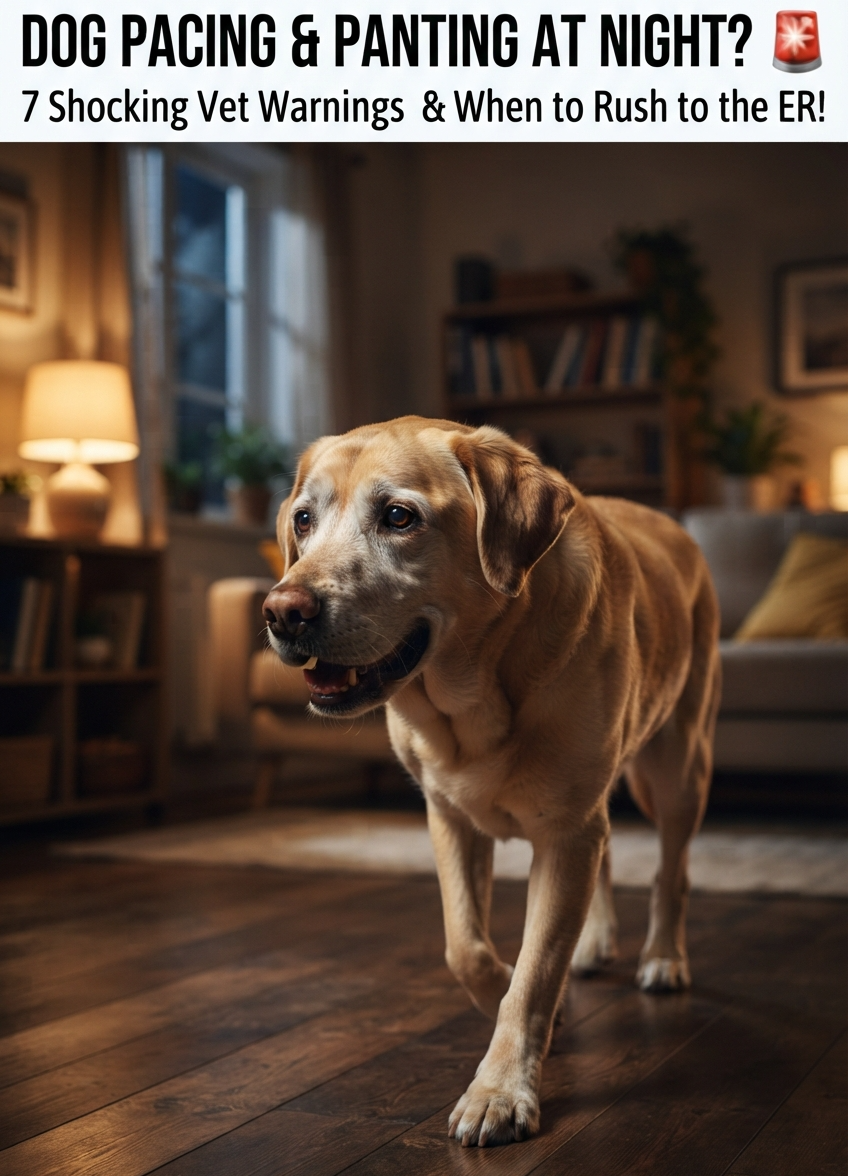
5. Canine Cognitive Dysfunction (Sundowner’s Syndrome in Senior Dogs)
If your pacing companion is over nine years of age, there is a very high clinical probability that their nighttime distress stems from Canine Cognitive Dysfunction (CCD)—the canine counterpart to human Alzheimer’s disease. In veterinary neurology, the nocturnal manifestation of this condition is widely recognized as “Sundowner’s Syndrome.”
As the brain ages, neurotoxic beta-amyloid protein plaques deposit across the cerebral cortex, and cerebral blood perfusion declines dramatically. These biological lesions impair the dog’s internal biological clock (the suprachiasmatic nucleus), essentially inverting their circadian rhythm. Affected dogs often sleep peacefully throughout the noisy daylight hours, only to wake up completely disoriented the moment darkness settles over the house.
When the canine dementia cycle begins, the dog steps out of bed in a state of sudden spatial confusion. They may wander aimlessly into tight corners, get stuck behind furniture without realizing they can step backward, or stare blankly at door hinges. This intense sensory disorientation sparks a sharp spike in panic and anxiety, resulting in heavy, shallow panting, quiet whining, and frantic room-to-room pacing. Providing gentle nightlights, avoiding moving living room furniture, and discussing neuro-protective veterinary supplements like SAMe and antioxidant therapy can dramatically stabilize cognitive sleep-wake cycles.
6. Cardiovascular Failure and Nocturnal Respiratory Crises
One of the most insidious medical triggers for nocturnal pacing and panting is early-to-moderate Congestive Heart Failure (CHF), often secondary to Mitral Valve Disease in small breeds or Dilated Cardiomyopathy in large breeds like Dobermans and Boxers. When the canine heart muscle loses its mechanical pumping efficiency, blood backs up into the pulmonary vasculature.
During the day, upright physical posture and active movement help gravity assist circulation. However, the moment a dog lies flat on their side to sleep, pulmonary venous pressure rises, causing fluid to seep out of capillaries directly into microscopic lung alveoli—a condition known as pulmonary edema. In essence, the dog experiences an internal drowning sensation when recumbent.
Unable to exchange oxygen while lying down, the dog jolts awake in a panic, stands up to expand their thoracic cage, and begins panting rapidly with outstretched neck and flared nostrils. According to clinical protocols from the Cornell Veterinary Medicine Department, a dog suffering from cardiac-related nighttime distress often presents with a persistent soft hacking cough, elevated resting respiratory rates exceeding 35 breaths per minute during rest, and pale or grayish-pink mucous membranes.
7. Endocrine Drivers: Cushing’s Disease and Nocturnal Heat Spikes
Hormonal imbalances represent another frequently overlooked culprit behind relentless nighttime panting. Hyperadrenocorticism, universally known as Cushing’s disease, occurs when the adrenal glands oversecrete excessive amounts of cortisol into systemic circulation, typically driven by a pituitary microadenoma or an adrenal tumor.
Cortisol is the body’s primary stress and survival hormone. Chronic hypercortisolemia alters internal canine metabolism, inducing severe polyuria (excess urination), polydipsia (ravenous thirst), and muscle wasting. Crucially, cortisol significantly elevates basal metabolic rate and body core temperature. While your bedroom feels pleasantly cool to you, a dog with Cushing’s feels as though they are trapped inside a sweltering sauna.
Because dogs lack functional sweat glands across their hairy bodies (sweating only minimally through their paw pads), they rely almost entirely on evaporative cooling through their respiratory tract. The dog pants excessively to shed metabolic heat, wanders across the home in search of cold tile or hardwood floors, drains the water bowl completely, and paces restlessly because their elevated hormone levels keep their nervous system in a perpetual “fight-or-flight” state.
8. Dr. Ahmed’s Midnight Triage: Step-by-Step Home Clinical Examination
When you are jolted awake at 2:00 AM by the sound of rhythmic pacing paws and heavy panting, avoid projecting panic onto your pet. Instead, remain calm, turn on soft lighting, and perform this systematic five-step veterinary home triage to determine whether you are dealing with a manageable discomfort or a critical midnight emergency:
- The Capillary Refill & Gum Color Test: Gently lift your dog’s upper lip. Inspect the color of their gums. Healthy gums should be a vibrant bubblegum pink. If the gums appear pale white, muddy gray, bright brick-red, or blue-tinted, oxygen transport is failing; transport them to an emergency veterinary hospital immediately. Press your thumb against the pink gum for two seconds and release; the pink color should flash back within 1.5 seconds (Capillary Refill Time).
- Measure the Resting Respiratory Rate (RRR): When your dog pauses pacing and stands or sits, count the number of chest rises in 15 seconds, then multiply by 4. A normal resting respiratory rate should fall between 15 and 30 breaths per minute. A rate consistently exceeding 40 breaths per minute during physical rest warrants immediate professional evaluation.
- Perform a Gentle Abdominal Palpation: Place both flat hands gently on either side of your dog’s abdomen, right behind their rib cage. Lightly press inward. A normal belly should feel soft, pliable, and relaxed. If the abdomen feels tense, rigid as a wooden board, visibly swollen, or if the dog groans and snaps defensively, suspect acute bloat or pancreatitis.
- Check Ambient Temperature and Bedding: Heavy double-coated breeds like Huskies, Golden Retrievers, and German Shepherds easily overheat on synthetic memory foam beds. Check if turning on an oscillating floor fan or moving them to a cool tile floor stops the panting entirely.
- Assess Joint Mobility Gently: Run your warm hands smoothly down your dog’s spine and over their hip and stifle joints. Watch their eyes and ears for subtle twitches, vocalizations, or muscle stiffness that indicate an orthopedic pain flare-up.
If your canine companion is also displaying other unusual behaviors like excessive head burying or armpit licking during these anxious moments, explore our behavioral analysis on why dogs bury their noses in human armpits to understand their comfort-seeking communication.
9. Vet-Prescribed Medical Solutions & Holistic Interventions
Resolving nocturnal pacing and panting requires a dual approach: treating the primary underlying physical diagnosis while temporarily alleviating acute nocturnal stress so your dog—and your family—can rest. In clinical veterinary practice, we never recommend sedating a dog blindly without diagnosing the biological root trigger.
For chronic degenerative joint pain and spinal spondylosis, modern veterinary pharmacology offers targeted therapeutic options. Non-Steroidal Anti-Inflammatory Drugs (NSAIDs) such as carprofen, meloxicam, or grapiprant reduce inflammatory prostaglandins around worn cartilage. Additionally, innovative canine monoclonal antibody injections (such as bedinvetmab) target Nerve Growth Factor (NGF) directly, eliminating chronic arthritic pain signals without placing metabolic stress on the kidneys or liver.
If nighttime pacing stems from neurological anxiety or Canine Cognitive Dysfunction, veterinary neurologists frequently prescribe neuro-modulating medications. Pharmaceuticals like gabapentin soothe both neuropathic pain and central nervous system agitation, while selegiline hydrochloride helps balance dopamine neurotransmitters in dementia patients. Clinicians also combine these with high-potency nutritional supplements, including:
- S-Adenosylmethionine (SAMe): A powerful biological methyl donor that protects brain cell membrane fluidity and supports cognitive longevity.
- Phosphatidylserine & Omega-3 EPA/DHA: Essential marine fatty acids that combat neuro-inflammation and improve synaptic signaling speed.
- L-Theanine & Colostrum Calming Complex: Natural milk and green tea bioactive proteins that bind to GABA receptors, promoting calm without heavy sedation.
- Veterinary Full-Spectrum CBD: Hemp-derived phytocannabinoids that interact with the endocannabinoid system to dampen chronic pain perception and nocturnal restlessness.

10. Emergency vs. Chronic Triage Matrix: Decision Guide
| Clinical Signs & Presentation | Urgency Level | Most Probable Diagnosis | Immediate Required Action |
|---|---|---|---|
| Distended hard belly, unproductive retching, frantic pacing, drooling | RED ALERT: Critical Emergency | Gastric Dilatation-Volvulus (GDV/Bloat) or Acute Pancreatitis | Immediate transport to a 24-hour emergency hospital; surgical decompression required. |
| Rapid breathing (>40 bpm), coughing, pale/gray gums, outstretched neck | HIGH: Acute Respiratory Distress | Congestive Heart Failure, Pulmonary Edema, or Laryngeal Paralysis | Emergency oxygen therapy and IV diuretics needed; do not delay overnight. |
| Stiff gait, difficulty lying down, groaning when settling, pacing between beds | MODERATE: Chronic Pain Flare | Degenerative Joint Disease (Osteoarthritis) or Spinal Spondylosis | Provide orthopedic memory foam bed; book daytime vet appointment for prescription pain management. |
| Senior dog staring at walls, getting trapped in corners, panting, vocalizing | MODERATE: Neurological Anxiety | Canine Cognitive Dysfunction (CCD / Sundowner’s Syndrome) | Install nighttime guide lights, establish strict evening routines, start neuro-protective supplements. |
| Panting stops when lying on cool tile, no pain signs, heavy double coat | LOW: Thermal Discomfort | Environmental Overheating or Thick Fur Trap | Turn on fans, lower room thermostat, provide cooling gel mat, ensure fresh water access. |
11. Five Crucial Bedroom Modifications for Restful Sleep
While you wait for your veterinary consultation, restructuring your home’s sleeping environment can dramatically reduce nocturnal anxiety and sensory overload for a distressed dog. Simple physical changes can transform a restless night into an undisturbed, healing sleep cycle.
- Install Low-Frequency Red or Amber Nightlights: Complete pitch darkness terrifies dogs developing age-related cataracts, nuclear sclerosis, or cognitive dementia. Soft amber or red nightlights preserve canine night vision without disrupting melatonin production, allowing them to navigate rooms safely without stumbling into walls.
- Upgrade to Medical-Grade Orthopedic Memory Foam: Thin polyester dog beds compress entirely under a medium or large dog’s skeletal frame, allowing hip bones and elbows to strike the hard floor below. Invest in a 4-to-6-inch therapeutic memory foam bed with supportive bolsters that distribute body weight evenly and alleviate pressure points.
- Introduce Rhythmic White Noise: Dogs possess hearing capabilities far superior to humans, easily picking up the high-frequency sounds of nocturnal wildlife, neighborhood pipes, or distant traffic. Running a dedicated white noise machine or HEPA air purifier in the bedroom masks these acoustic triggers, preventing sudden adrenaline surges that disrupt sleep.
- Maintain a Cool Sleeping Microclimate: Dogs generate considerable body heat under blankets or heavy rugs. Ensure your dog has unblocked access to cool tile, stone, or hardwood surfaces alongside their bed so they can self-regulate their body temperature without pacing throughout the entire house.
- Establish a Calming Twilight Routine: Dogs thrive on predictable circadian rhythms. Schedule a gentle, non-strenuous bathroom walk 30 minutes before lights-out, followed by a light protein snack and a five-minute gentle massage down their spinal muscle groups to stimulate parasympathetic relaxation.
12. Schema-Optimized Frequently Asked Questions (FAQ)
Can I give my pacing dog human over-the-counter pain relievers like Tylenol or Advil?
Never administer human pain medications to a dog. Over-the-counter human pain relievers—including acetaminophen (Tylenol), ibuprofen (Advil), and naproxen (Aleve)—are acutely toxic to canines. Even a single dose can trigger rapid, catastrophic gastric ulceration, intestinal perforation, acute renal failure, and irreversible liver toxicity.
Why does my dog suddenly start pacing and panting only after midnight?
Nighttime eliminates daytime visual and acoustic distractions that normally mask physical discomfort. In quiet darkness, chronic joint aches, failing heart circulation, elevated nocturnal cortisol spikes from Cushing’s disease, or dementia-related disorientation become magnified, preventing deep sleep and sparking acute distress pacing.
How do I know if my dog’s nocturnal panting is an emergency?
Nocturnal panting is a critical emergency if accompanied by a hard or distended abdomen, unsuccessful attempts to vomit, pale or blue gums, high resting breathing rates exceeding 40 breaths per minute while still, or collapse. These symptoms suggest life-threatening conditions like bloat (GDV) or congestive heart failure requiring immediate emergency care.
Does sudden blindness or vision loss cause dogs to pace anxiously in the dark?
Yes. Retinal conditions such as Sudden Acquired Retinal Deficiency Syndrome (SARDS) or advanced cataracts make navigating dark rooms terrifying for canines. When lights go out, a partially blind dog easily becomes disoriented, bumping into walls and panting in distress as spatial awareness vanishes.
Professional Veterinary Disclaimer: The clinical insights, triage frameworks, and medical recommendations presented in this comprehensive guide are authored by Dr. Ahmed, a licensed veterinarian, solely for educational and informational purposes. This content is not intended to replace formal veterinary examination, direct medical diagnosis, or personalized emergency intervention. If your dog exhibits acute distress, labored breathing, or severe abdominal pain, contact your nearest emergency veterinary hospital immediately.