
5. The Redirection Protocol: How to Swap Hands for High-Value Toys
The most common tactical error pet owners commit when a puppy lunges to nip their fingers is yanking their hands away quickly. In the canine predatory sequence, rapid erratic motion mimics the flight of small prey like rabbits or mice. Jerking your hands or feet away immediately triggers your puppy’s prey drive, compelling them to chase faster, leap higher, and clamp down harder.
Instead of pulling away, you must implement the Freeze and Redirect Protocol. The instant you feel sharp puppy teeth graze your skin, completely freeze your hands and body. Relax your posture, drop your gaze, and cease all vocal interaction. Moving limbs represent an exciting game; a completely motionless human instantly becomes boring and unrewarding to a puppy seeking play.
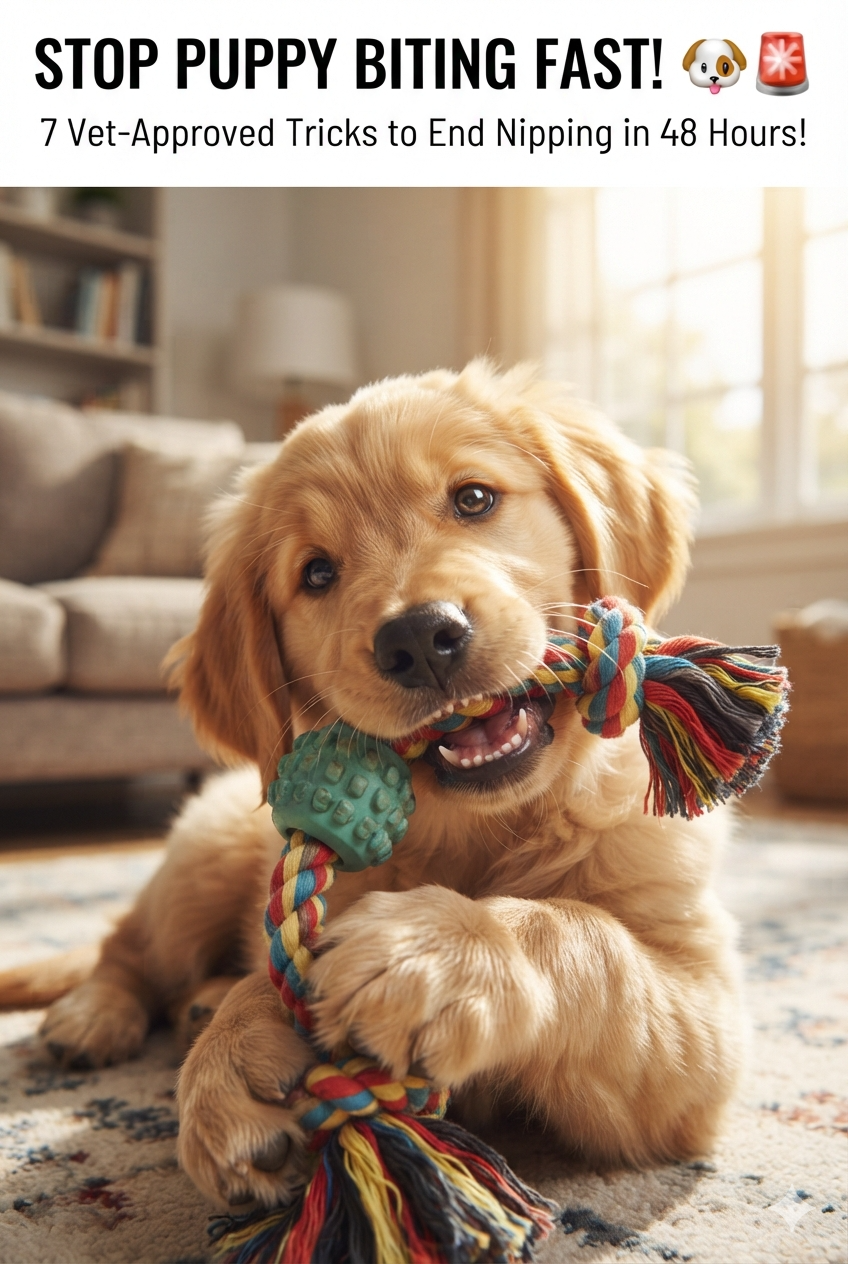
Simultaneously, you must always maintain a high-value redirection toy within arm’s reach during interactive playtime. Slide a durable, textured rubber toy or braided cotton rope directly between your puppy’s open jaws. The moment their teeth sink into the acceptable toy rather than your flesh, deliver enthusiastic vocal praise: “Yes! Good chew!” This clear communication teaches your puppy what they are allowed to chew rather than solely punishing what they cannot chew.
6. Clinical Teething Relief: Soothing Inflamed Puppy Gums
When puppies reach four to five months of age, intense teething discomfort turns otherwise sweet dogs into frantic chewing machines. The localized pressure generated by erupting adult canines creates hot, throbbing, swollen gingival tissue. Chewing hard drywall, furniture legs, or human hands provides counter-pressure that temporarily numbs these inflamed gums.
Instead of fighting your puppy’s biological urge to chew, you must fulfill this need using safe, therapeutic, temperature-controlled items. In clinical practice, cold temperatures provide the most effective natural analgesic (pain-relieving) relief for irritated canine gum tissue. Here are three vet-recommended home soothing solutions:
- The Frozen Organic Carrot Spear: Peel a large, whole organic carrot and freeze it solid. Carrots provide rich beta-carotene, dietary fiber, and a dense, crunchy texture that numbs inflamed gum lines safely. As the carrot thaws under canine saliva, it breaks down into digestible, soft fragments that pose zero toxic hazard.
- The Twisted Frozen Broth Rag: Soak a clean, 100% cotton washcloth in sodium-free bone broth diluted with water. Wring it out, twist it into a tight rope spiral, and place it in the freezer for three hours. Chewing on the chilled, textured fabric cools burning gums while providing an engaging olfactory scent that redirects mouthy energy.
- Chilled Rubber Teething Rings: Specialized natural rubber puppy toys with built-in crevices can be coated with plain, xylitol-free pumpkin puree and chilled in the freezer. The cold rubber massages gingival tissue while the dog licks, stimulating calming endorphin release in the brain.
If your puppy is also showing signs of nervous oral habits like licking furniture or repetitive air swallowing, explore our clinical diagnostic breakdown on why dogs lick the air and swallow repeatedly to rule out subtle esophageal irritation.
7. Five Fatal Mistakes Pet Parents Make When Disciplining Nipping
Modifying canine behavior requires surgical consistency. Unfortunately, many well-meaning owners follow outdated, internet-circulated punishment methods that exacerbate biting behaviors. Avoid these five dangerous mistakes:
- The Muzzle-Hold Myth: Clamping your hand around a puppy’s muzzle to force their jaws shut induces acute claustrophobic panic. This aggressive physical restraint does not teach bite inhibition; it teaches your puppy that human hands are unpredictable, threatening weapons, frequently creating hand-shy adult dogs that snap when reaching for collars.
- Tapping or Flicking the Nose: Tapping a puppy’s sensitive nose or flicking their snout is perceived as a playful, physical challenge. Puppies respond by barking, snapping sideways, and playing the “catch-my-face” game, turning a disciplinary moment into an escalated wrestling match.
- Squealing or Shouting “Ouch!” Too Loudly: While popular training manuals suggest squealing in a high-pitched voice like a littermate, high-energy working breeds (such as Belgian Malinois, German Shepherds, and Border Collies) interpret high-pitched human shrieks as the distress call of captured prey, driving arousal levels into frenzy.
- Rough Hand-Wrestling Games: Using your bare hands to roll a puppy on their back, playfully smack their chest, or tickle their belly teaches them that human skin is an acceptable chew toy. Save enthusiastic physical play for sturdy tug toys and flirt poles.
- Inconsistent Household Rules: If one family member allows playful wrist-gnawing on the couch while another scolds the puppy for ankle-biting in the kitchen, the puppy becomes utterly confused. Complete family consistency is non-negotiable.
Puppies that display frequent bouts of intense, uncontrollable nighttime biting often suffer from overtiredness rather than aggression. Check our sleep management guide on why dogs become restless and pace at night to ensure your puppy receives the 18 to 20 hours of daily sleep they biologically require.
8. Puppy Biting Decision Matrix: Play Mouthing vs. True Aggression
| Behavioral Trait | Normal Play Mouthing & Teething | Potential Defensive Fear / Aggression | Recommended Clinical Action |
|---|---|---|---|
| Body Posture | Loose, wiggly, curvy spine, bouncy play-bows. | Stiff, frozen posture, hard stare, raised hackles. | Freeze and redirect if loose; give space immediately if stiff and consult a veterinary behaviorist. |
| Facial Expressions | Soft relaxed eyes, open mouth, tongue lolling. | Curled lip, visible front incisors, whale eye (white showing). | Lip curling is an unambiguous warning; cease all physical handling and remove the stress trigger. |
| Vocalization | High-pitched happy barks, short playful growls. | Deep, low-frequency, sustained rumbling guttural growl. | Never punish a growl; growling is vital communication that prevents an immediate, unannounced bite. |
| Timing & Trigger | Occurs during active games, greeting, or teething discomfort. | Occurs when approached near food, toys, or touched when resting. | Resource guarding and handling sensitivity require structured counter-conditioning protocols. |