
Table of Contents
- Quick Summary: Key Takeaways for Pet Parents
- 1. Direct Clinical Answer: Why Does My Dog Lick My Hands Constantly?
- 2. The Biochemical Lure: Human Sweat, Sebum, and Salt Receptors
- 3. Neurochemistry of Affection: The Oxytocin Bonding Feedback Loop
- 4. Canine Pack Etiquette: Appeasement, Deference, and Respect
- 5. Scent Decoding & Sensory Investigation: Where Have You Been?
- 6. The Silent Medical Cry: Subclinical Nausea and Acid Reflux
- 7. Behavioral Compulsion: Stress, Boredom, and Canine OCD
- 8. Hand-Licking Diagnostic Matrix: Normal Affection vs. Medical Concern
- 9. Dr. Ahmed’s Behavioral Protocol: How to Gently Extinguish Obsessive Licking
- 10. Schema-Optimized Frequently Asked Questions (FAQ)
- 11. Professional Veterinary Disclaimer
🩺 Dr. Ahmed’s Urgent Behavioral Summary
- Direct Answer: Constant hand-licking is primarily driven by three factors: tasting natural mineral salts in human sweat, releasing calming neurochemicals (oxytocin and endorphins), and seeking reassurance.
- The Sensory Drive: Human hands touch hundreds of objects daily; your dog’s vomeronasal organ uses licking to gather a detailed chemical report of your daily activities, diet, and emotional state.
- Medical Warning: Sudden, frenzied, or rhythmic hand-licking accompanied by lip-smacking or air-swallowing often signals acute gastrointestinal nausea, acid reflux, or visceral abdominal pain.
- Extinction Technique: To stop obsessive licking without damaging trust, never scold or push your dog away; immediately remove your hands, freeze all eye contact for 20 seconds, and redirect their jaws to an interactive chew toy.
1. Direct Clinical Answer: Why Does My Dog Lick My Hands Constantly?
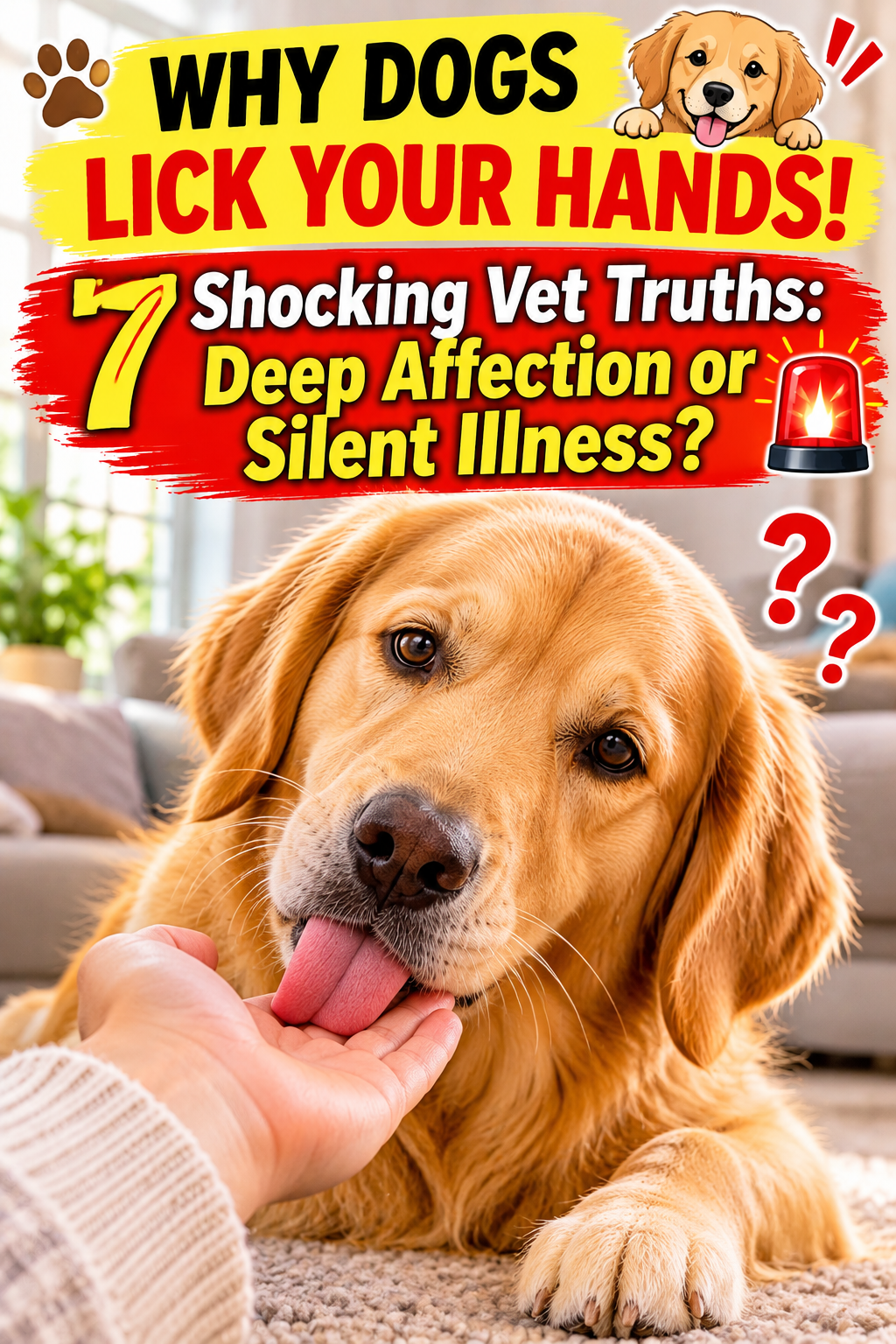
Dogs lick human hands constantly because human hands provide a rich cocktail of natural mineral salts, comfort-inducing pheromones, and sensory data, while the physical act of licking stimulates the release of soothing endorphins in the canine brain. In my years of clinical practice and behavioral consultations, pet parents frequently enter my exam room asking whether their dog’s relentless hand-bathing is a sincere declaration of unconditional love or an irritating behavioral obsession that needs correction.
The short answer is that canine hand-licking is rarely a random quirk. It is an instinctual, multi-faceted biological language inherited directly from wild ancestral canines. When your dog licks your palms, fingers, and wrists, they are combining dietary sensory exploration, social bonding, and stress regulation into a single rhythmic behavior. In canine communication, the tongue functions as both an emotional paintbrush and a sophisticated chemical laboratory.
However, context determines everything. While relaxed, intermittent licking during quiet evening cuddles is a healthy sign of social intimacy, rapid, frantic, or compulsive hand-licking can point to unmanaged internal distress—such as subclinical gastrointestinal nausea, severe generalized anxiety, cognitive decline in senior dogs, or learned attention-seeking behavior. In this comprehensive veterinary guide, we will unpack the biochemical, neurological, and evolutionary mechanisms driving your dog’s tongue, identify crucial medical red flags, and provide proven behavioral strategies to restore balanced boundaries.

2. The Biochemical Lure: Human Sweat, Sebum, and Salt Receptors
To fully grasp why human hands are so utterly irresistible to dogs, we must examine the biological composition of human skin. The human hand is an anatomical marvel containing the highest density of eccrine sweat glands anywhere on the human body. Throughout the day, these microscopic glands continuously secrete moisture containing sodium chloride, potassium, urea, lactic acid, and trace minerals.
Canine taste buds are remarkably specialized. Unlike humans, who possess around 9,000 taste buds, dogs possess approximately 1,700 taste receptors. While they are far less sensitive to salty flavors than humans (because their evolutionary ancestral diet of fresh prey provided abundant natural salts), canines have evolved dedicated gustatory receptors that are intensely tuned to water and trace electrolytes. To a dog, the subtle layer of natural sweat and microscopic sebum oils coating your clean hands tastes like a delicious, savory mineral broth.
Furthermore, human hands constantly retain aromatic residues from the foods we prepare, the soaps we use, and the surfaces we touch. Even after you wash your hands with unscented soap, your dog’s ultra-sensitive olfactory receptors can effortlessly detect the microscopic lipids of that morning’s breakfast sandwich, the hand lotion applied two hours ago, or the scent of the family cat you petted earlier. In essence, your hands are walking culinary buffets packed with intriguing biological flavors.
If your canine companion also displays an intense obsession with licking other bare human extremities, explore our specialized dermatological guide on why dogs lick human feet and ankles obsessively to understand their electrolyte-seeking drives.
3. Neurochemistry of Affection: The Oxytocin Bonding Feedback Loop
Beyond taste and minerals, the most profound biological driver of hand-licking is neurochemical reward. In evolutionary neuroscience, the physical act of licking triggers an immediate, measurable surge of feel-good neurotransmitters within the canine central nervous system.
When a dog rhythmically strokes their tongue across human skin, sensory receptors in the canine oral cavity stimulate the hypothalamus and pituitary gland to release substantial quantities of oxytocin (frequently referred to by endocrinologists as the “cuddle chemical” or bonding hormone) alongside beta-endorphins. Oxytocin is the exact same biochemical hormone responsible for bonding human mothers to newborn infants during nursing. It actively slows respiratory rates, reduces blood pressure, dampens systemic cortisol (stress hormone) levels, and induces deep parasympathetic calmness.
Remarkably, this neurochemical cascade is not a one-way street. Rigorous comparative animal studies demonstrate that when a dog licks their human guardian, oxytocin levels spike simultaneously in both the dog and the human. Over thousands of years of domestic co-evolution, canines learned that licking human hands acts as a biological bridge, eliciting soft smiles, gentle head scratches, and warm vocal praise from their human handlers. This positive feedback loop permanently reinforces the licking habit, transforming your hands into safe psychological anchors.
Does your dog also display profound physical bonding behaviors, like curling up against your torso or burying their head in your clothes? Read our touching clinical analysis on why dogs bury their noses in human armpits to decode their scent-seeking comfort habits.
4. Canine Pack Etiquette: Appeasement, Deference, and Respect
To understand hand-licking through the lens of pure canine ethology, we must look at the natural behavioral repertoire of wild wolf packs and domestic canine litters. In pack social structures, facial and paw licking represents fundamental social etiquette rather than submissive groveling.
When wild wolf pups welcome adult hunters returning to the den from a successful hunt, they frantically lick the muzzles and lips of the adults. This muzzle-licking serves two distinct evolutionary purposes: it mechanically stimulates the returning adults to regurgitate partially digested, nutrient-rich food for the weaning pups, and it communicates peaceful greeting and social affiliation. As canines mature, muzzle-licking transforms into an active appeasement gesture.
Because domestic dogs cannot easily reach human faces when standing on all four paws (unless invited onto furniture), human hands serve as the functional anatomical equivalent of human lips. When your dog approaches you with lowered ears, a soft wagging tail, and gently licks your outstretched fingers, they are communicating: “I acknowledge you as my benevolent caregiver, I harbor zero hostile intentions, and I seek reassurance and connection.” Punishing or yelling at a dog during an appeasement lick causes severe emotional confusion, often escalating their anxiety and prompting them to lick even harder to appease their perceived anger.

5. Scent Decoding & Sensory Investigation: Where Have You Been?
Canines do not perceive the world primarily through visual acuity; they experience reality through a dense, multi-layered chemical landscape. A domestic dog possesses up to 300 million olfactory receptor cells in their nasal cavity (compared to a paltry 6 million in adult humans), and the olfactory cortex in their brain is forty times larger than ours.
Crucially, canines possess an extraordinary sensory organ known as the vomeronasal organ, or Jacobson’s organ, located immediately above the hard palate of the mouth behind the front incisors. The vomeronasal organ is specifically designed to decode non-volatile liquid chemical compounds, primarily hormones and pheromones, that cannot be detected by standard nasal breathing.
When you return home from work, the grocery store, or the gym, your hands carry an intricate chemical diary of everywhere you have traveled, every surface you have touched, and every animal or person you have interacted with. When your dog licks your palms and wrists, their tongue draws liquid molecules directly into the duct of the vomeronasal organ. Through this biological mechanism, your dog instantly learns where you have been, whether you handled raw meat at the market, whether you petted a strange neighborhood dog, and even whether your personal stress or blood sugar levels shifted during your absence.
If you recently welcomed a sensitive young puppy who uses their mouth and tongue to constantly explore every inch of your hands, review our foundational behavioral guide on how to stop puppy biting and mouthiness fast using gentle redirection techniques.
6. The Silent Medical Cry: Subclinical Nausea and Acid Reflux
While the majority of hand-licking scenarios are rooted in normal behavior and biology, clinical veterinarians always maintain a high index of suspicion for underlying medical pathology. In internal veterinary medicine, sudden-onset, frantic, or repetitive hand-licking is a classic clinical indicator of subclinical gastrointestinal nausea.
When a dog experiences gastric hyperacidity, bilious vomiting syndrome, inflammatory bowel disease (IBD), or pancreatitis, nausea stimulates intense salivation. The dog’s salivary glands produce copious, watery saliva to protect the esophagus and oral cavity from acidic backflow. Dogs naturally seek to swallow this excess saliva or wipe their mouths, leading to a frenzied behavioral pattern known as Licking of Inanimate Objects (LIO), which frequently targets their owner’s hands, carpets, or walls.
According to clinical gastroenterology studies published by the American Veterinary Medical Association (AVMA), dogs suffering from silent acid reflux or gastric ulceration often exhibit distinct cluster behaviors alongside hand-licking:
- Repetitive Lip-Smacking and Gulping: The dog constantly smacks their lips together as if chewing peanut butter and repeatedly gulps down pooled saliva.
- Air Licking and Tongue Flicking: The dog extends their tongue straight outward into empty air rhythmically between bouts of licking human hands.
- Early-Morning Grass Eating: The dog exhibits a frantic drive to graze on coarse outdoor grass, followed by regurgitating small pools of yellowish or clear foamy fluid.
- Audible Stomach Borborygmi: The dog’s abdomen produces loud, gurgling or rumbling sounds that can be heard across the room.
Does your dog exhibit loud digestive sounds or refuse breakfast alongside intense hand-licking? Review our emergency clinical guide on dog stomach gurgling and loss of appetite to address gastrointestinal inflammation before it develops into acute vomiting.

7. Behavioral Compulsion: Stress, Boredom, and Canine OCD
In behavioral medicine, when an innate biological behavior like licking becomes detached from its original evolutionary function and is performed continuously, repetitively, and out of context, it enters the realm of a stereotypic compulsive disorder (Canine Compulsive Disorder / OCD).
Dogs that lack adequate daily mental enrichment, physical exercise, or structured social interaction frequently experience chronic, low-grade boredom and frustration. To cope with this internal deficit, the brain seeks self-reinforcing displacement behaviors. Because licking releases transient bursts of dopamine and endorphins, the dog begins licking human hands obsessively whenever they feel under-stimulated, anxious, or insecure.
Similarly, environmental stressors—such as loud household renovations, the introduction of a new baby or pet, or severe separation anxiety—can amplify licking behaviors. In extreme cases, if human hands are pulled away, an anxious dog will redirect their tongue onto their own front carpal joints, licking their legs until the skin becomes raw, ulcerated, and chronically infected—a condition known as an acral lick granuloma.
Is your companion also exhibiting pacing, panting, or nighttime restlessness alongside compulsive grooming? Explore our comprehensive behavioral triage on why dogs pace and pant restlessly at night to address unmanaged chronic pain and cognitive disorientation.
8. Hand-Licking Diagnostic Matrix: Normal Affection vs. Medical Concern
| Licking Presentation & Context | Underlying Biological Driver | Accompanying Clinical Signs | Recommended Action |
|---|---|---|---|
| Gentle, slow licks during evening petting, easily distracted | Social Affection & Oxytocin Bonding | Soft relaxed eyes, wagging tail, loose curved posture, deep sighing. | Completely healthy. Enjoy the bonding moment; offer gentle chest scratches in return. |
| Eager, excited licking immediately upon greeting owner at front door | Appeasement & Information Gathering | Lowered head, bouncy greeting leaps, sniffing pockets, vocal whining. | Normal canine greeting. Ask for a calm ‘Sit’ command before offering hands to avoid over-arousal. |
| Frantic, rhythmic, non-stop licking; cannot be easily interrupted | Gastrointestinal Nausea / Acid Reflux | Frequent lip-smacking, air licking, swallowing, stomach rumbling, eating grass. | Schedule a veterinary wellness exam to evaluate for IBD, gastritis, or dietary food intolerances. |
| Compulsive licking whenever hands are near; redirects to own paws if blocked | Canine Compulsive Disorder (Anxiety/OCD) | Restlessness, hyper-vigilance, hair loss on carpal joints, pacing, noise sensitivity. | Consult a certified veterinary behaviorist; introduce food puzzle toys and daily mental enrichment. |
9. Dr. Ahmed’s Behavioral Protocol: How to Gently Extinguish Obsessive Licking
If your dog’s hand-licking has crossed the line from sweet affection into an exhausting, wet habit that makes hosting guests uncomfortable, punishing the dog is the absolute worst approach. Slapping hands away, pushing the dog’s snout, or shouting “No!” is interpreted by a canine as passionate physical engagement. Even negative attention is rewarding to an attention-deprived dog.
To safely extinguish unwanted hand-licking while preserving your companion’s emotional trust, implement this four-step veterinary behavioral protocol:
- The Total Freeze & Attention Removal: The exact millisecond your dog’s tongue makes contact with your hand, execute a complete physical freeze. Do not speak, do not make eye contact, and do not pet the dog. Tuck your hands securely into your armpits or stand up and turn your back completely. Licking must result in the total, immediate disappearance of human attention.
- The 20-Second Reset Boundary: Maintain your neutral, turned posture for exactly 20 seconds. Once your dog steps back, sits, or sighs in calm defeat, immediately turn back around and reward them with gentle verbal praise and a soft chest scratch. This establishes a crystal-clear cognitive cause-and-effect rule: Tongue on skin makes human attention vanish; calm sitting brings human affection back.
- Implement an Incompatible Behavior (The Hand Target): You cannot successfully eliminate a natural behavior without providing an acceptable physical replacement. Train your dog to perform a closed-mouth “Hand Touch” (targeting their wet nose against your flat palm without opening their jaws or extending their tongue). When they touch their nose to your hand on cue, reward them with a high-value treat. They cannot lick your hand while simultaneously performing a closed-mouth nose boop.
- Provide Species-Appropriate Licking Outlets: Dogs biologically need to lick; it is an essential calming mechanism. Instead of letting them lick your hands, provide dedicated interactive licking enrichment daily. Spread pure pumpkin puree, plain unsweetened Greek yogurt, or wet canine food across a textured silicone Lickimat or inside a frozen rubber KONG. Giving your dog 20 minutes of daily licking enrichment satisfies their oral drive safely without soaking your skin.
Looking for safe, veterinary-approved whole foods to spread onto your dog’s enrichment lick-mats? Discover nutrient-dense treat ideas in our clinical guide on how to feed blueberries to dogs safely.
10. Schema-Optimized Frequently Asked Questions (FAQ)
Is it medically dangerous or unhygienic to let my dog lick my hands?
For healthy adults with intact, unbroken skin, allowing a dog to lick hands poses minimal health risks, provided you wash your hands afterward. However, canine saliva naturally contains zoonotic bacteria such as Capnocytophaga canimorsus, Pasteurella, and Salmonella. If you have open cuts, scrapes, eczema, or are immunocompromised, you must never allow a dog to lick your skin, as bacteria can enter the bloodstream and trigger severe systemic infections.
Why does my dog aggressively lick my hands after I apply lotion or sunscreen?
Human skin lotions, moisturizers, and sunscreens contain rich emollient oils, fatty acids, and aromatic fragrances that smell delicious to a dog’s keen nose. However, allowing dogs to lick cosmetic products is extremely dangerous. Many human lotions contain chemical zinc oxide, synthetic perfumes, or toxic topical non-steroidal anti-inflammatories (such as flurbiprofen) that can cause acute kidney failure or severe gastrointestinal ulceration in canines.
Does constant hand-licking mean my dog has a nutritional or salt deficiency?
While dogs certainly enjoy the salty flavor of human sweat, true dietary sodium deficiencies are exceptionally rare in modern pets fed complete and balanced commercial dog foods. If your dog is eating an AAFCO-compliant diet, their hand-licking is almost certainly driven by behavioral communication, oxytocin bonding, or olfactory exploration rather than an actual metabolic mineral deficit.
Why does my senior dog suddenly lick my hands for hours without stopping?
Sudden, repetitive, non-stop licking in elderly dogs is a frequent early indicator of Canine Cognitive Dysfunction (CCD / canine dementia). As neurodegenerative changes alter cerebral pathways, senior dogs lose environmental awareness and default to repetitive, trance-like displacement behaviors like licking hands or furniture to soothe their internal confusion.
Professional Veterinary Disclaimer: The behavioral analyses, physiological data, and training protocols detailed in this comprehensive guide are authored by Dr. Ahmed, a licensed veterinarian, strictly for educational and informational purposes. This content is not intended to serve as a substitute for professional veterinary examination, personalized behavioral triage, or clinical diagnosis. If your dog exhibits frantic licking accompanied by vomiting, severe lethargy, or signs of abdominal pain, consult your licensed primary veterinarian immediately.