
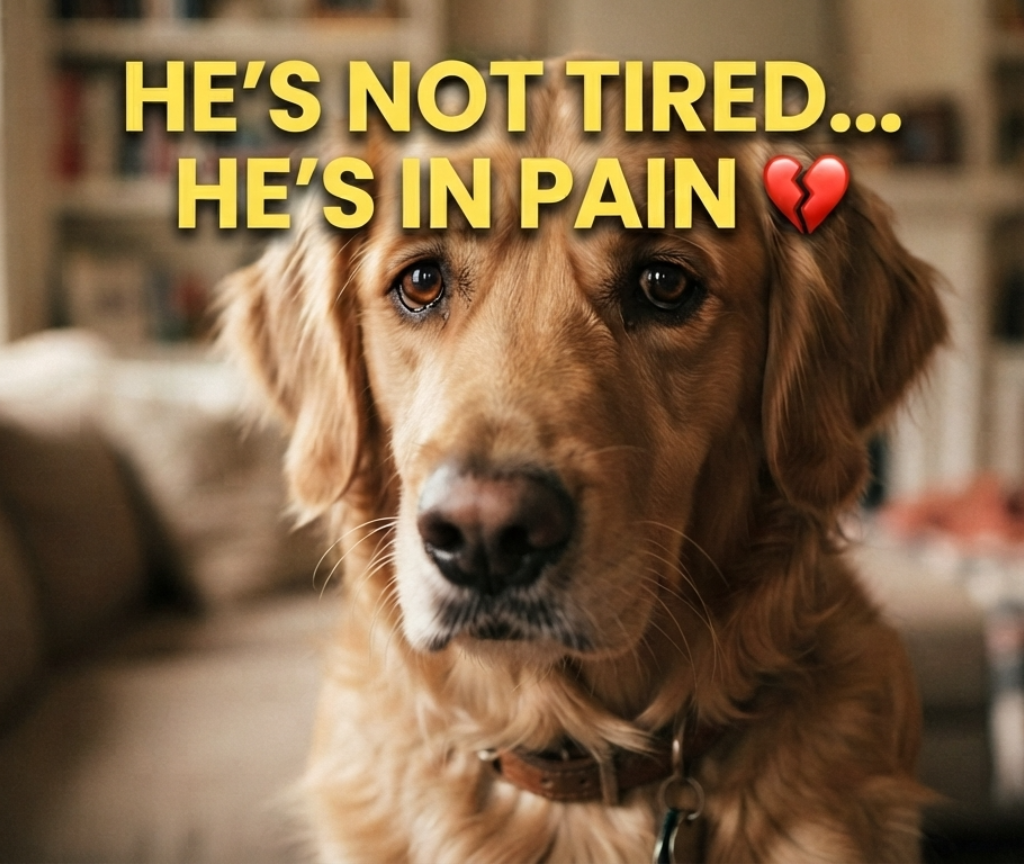
3. The Canine Pain Grimace: Squinting & Flattened Whiskers

Veterinarians utilize standardized clinical “Grimace Scales” to evaluate canine suffering without vocal cues. A healthy dog possesses bright, wide eyes and relaxed facial muscles. A dog enduring silent chronic pain displays distinct micro-expressions:
- The “Pain Brow”: Tense furrows between the ears and forehead.
- Glazed or Squinted Eyes: Half-closed eyelids accompanied by enlarged pupils (mydriasis) caused by internal adrenaline surges.
- Tense Whisker Pads: Whiskers pulled tightly back against the muzzle rather than fanning forward naturally.
4. Hesitation on Stairs or Sofas (The Early Arthritis Red Flag)

Does your dog suddenly pause at the base of the stairs, looking upward before taking the first step? Do they pace back and forth before jumping into the back of your car or onto their favorite spot on the couch? Owners often dismiss this as “stubbornness” or “getting lazy with age.”
In reality, this hesitation represents anticipatory pain. The dog remembers that landing or pushing off their hind legs triggers sharp nerve or joint pain. If your dog has stopped greeting you at the front door with their usual bounce, do not ignore it. Review our guide on dog breeds and joint sensitivities to understand breed-specific risks.
5. Heavy Panting at Rest or in Cool Rooms (Adrenaline Spikes)
Panting is normal after a vigorous game of fetch on a hot summer day. However, rapid, shallow panting while lying down in an air-conditioned living room is an unmistakable biochemical distress flag. Severe physical pain stimulates the adrenal glands to flood the bloodstream with cortisol and adrenaline, drastically elevating respiratory and heart rates.
🚨 Critical Behavioral Shifts:
Signs #6 & #7 (Nighttime Restlessness & Sudden Snapping) continue on the next page.