
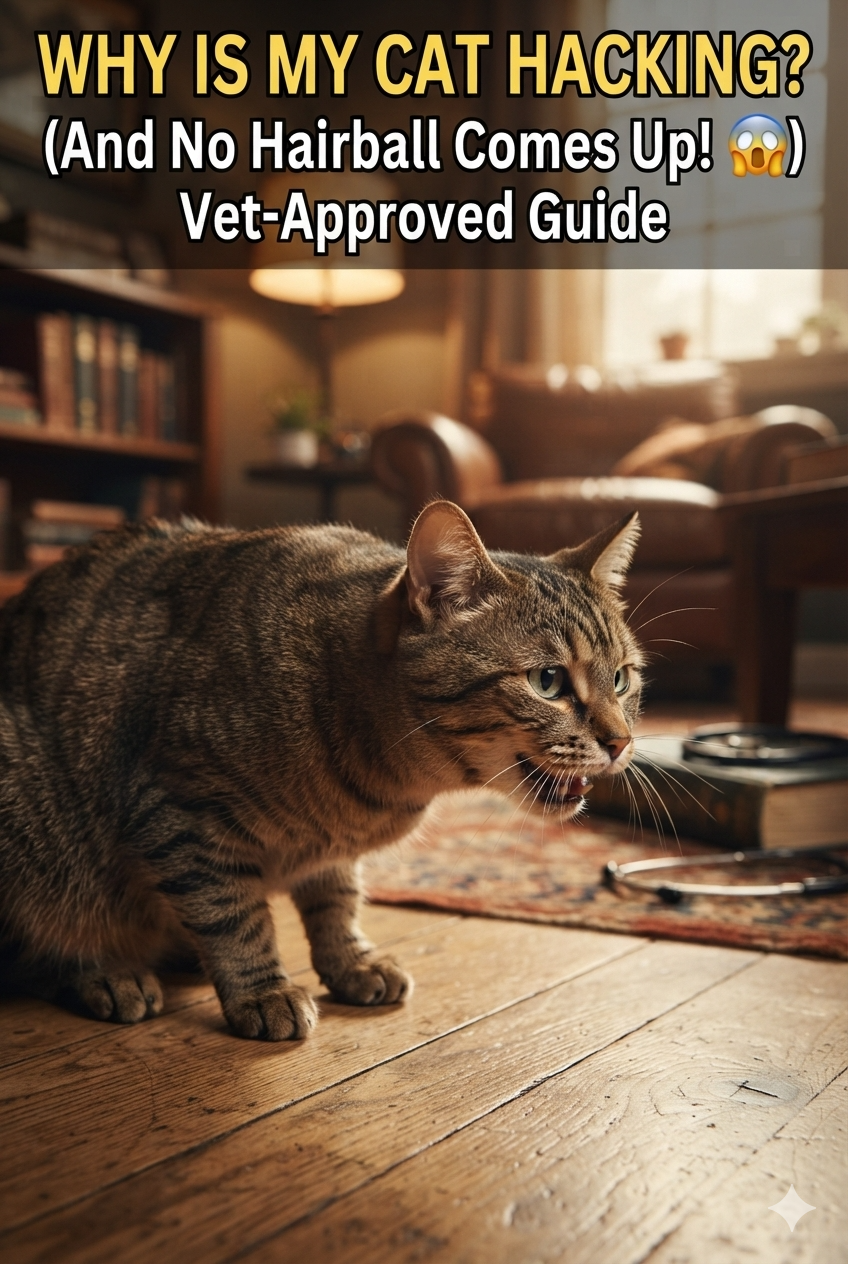
Table of Contents
The Direct Veterinary Answer
A cat making a dry hacking sound without bringing up a hairball is coughing due to lower airway irritation, not dealing with stomach fur. While hairballs cause deep abdominal heaving that ends with bile or a wet cylindrical wad, dry hacking indicates inflamed bronchial tubes, dynamic airway spasms, or an inhaled physical obstruction.
In clinical practice, nine out of ten cats brought to my hospital for “hairballs that will not come up” actually have an underlying respiratory disease. Dismissing this dry, wheezing cough as a digestive hiccup delays critical therapy and allows progressive lung damage to take root.
Understanding what happens inside your cat’s chest during these episodes helps you distinguish a temporary dust tickle from an emergency airway crisis.
Coughing vs. Vomiting vs. Gagging: The Visual Triage
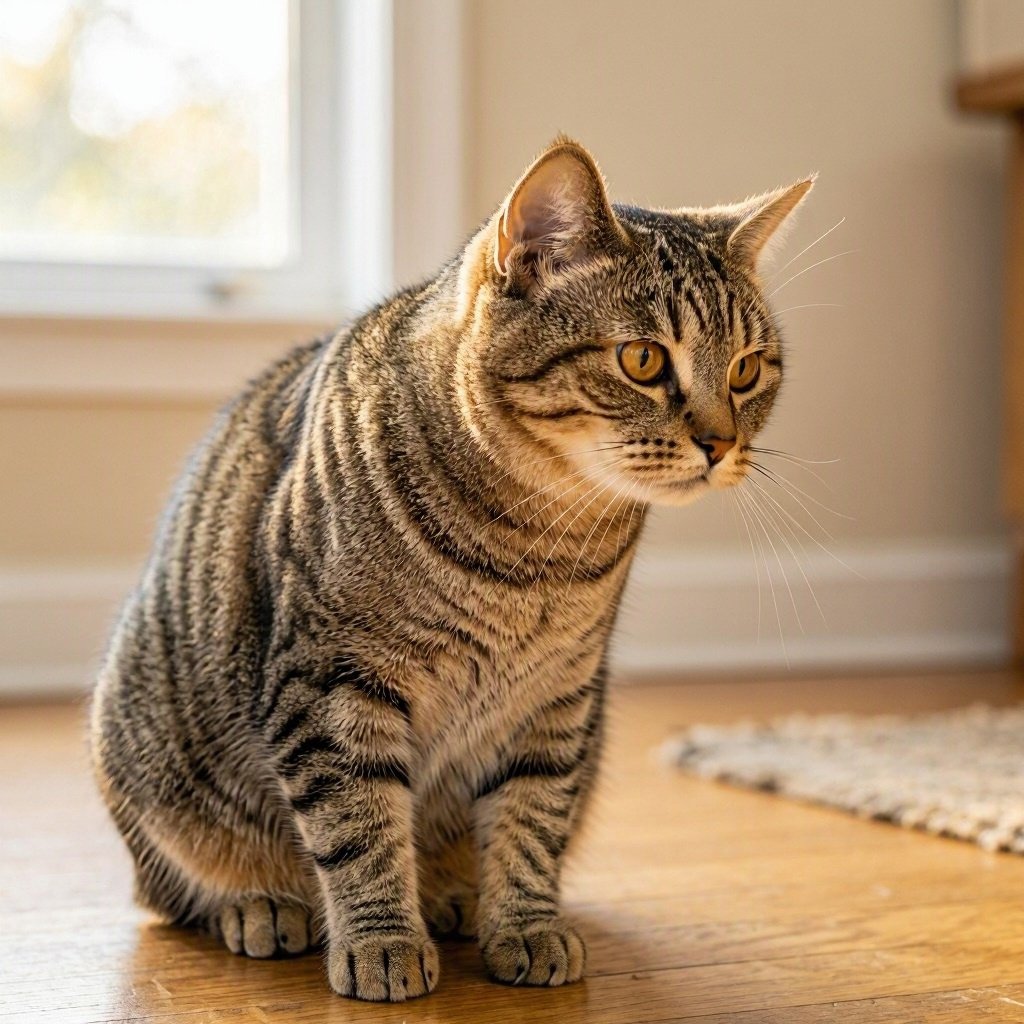
Telling the difference between a feline cough, a gag, and a true vomit requires observing your cat’s spine, neck, and abdominal wall. Cats exhibit completely distinct biomechanical movements depending on whether the distress originates in the lungs or the digestive tract.
When a cat coughs, they adopt a low-to-the-ground crouched stance often called the “sphinx position.” The neck extends horizontally forward, the chin hovers barely an inch above the floor, and the elbows flare outward to maximize chest expansion.
During this coughing posture, the chest contracts rapidly while the abdomen remains relatively passive. The resulting sound is a harsh, raspy, or wheezing hack that frequently ends with a sudden dry swallow as the cat clears tiny flecks of bronchial mucus.
Vomiting presents an entirely different physical performance. A vomiting cat stands upright with a rounded back, exhibiting dramatic, rhythmic abdominal pumping motions that physically rock their entire torso back and forth.
Before the stomach contents emerge, you will often notice prodromal nausea cues such as frantic lip-licking, excessive drooling, and anxious meowing. Vomiting always expels liquid, stomach acid, partially digested kibble, or a dense mass of compressed fur.
Gagging, by contrast, is an abrupt, open-mouthed retch triggered by mechanical irritation in the back of the throat or larynx. A gagging cat opens their jaw wide, extends their tongue, and shakes their head violently as if attempting to dislodge something stuck to the roof of their mouth.
7 Underlying Medical Culprits Behind Dry Hacking
Now that we have separated airway coughing from stomach retching, we must examine the specific diseases that irritate feline airways. The following seven medical conditions represent the vast majority of non-productive hacking cases evaluated in veterinary clinics.
1. Feline Asthma and Chronic Bronchitis
Feline asthma is the leading medical reason behind recurring dry hacking spells in adult cats. It is an allergic, immune-mediated disorder characterized by chronic inflammation of the lower airways and sudden, involuntary smooth muscle spasms.
When an asthmatic cat inhales an allergen, mast cells lining the bronchial tissues degranulate, flooding the lungs with histamine and inflammatory cytokines. This chemical cascade causes the delicate airway walls to swell while stimulating goblet cells to produce copious amounts of thick, sticky mucus.
Because feline airways are tiny, this sudden swelling and mucus accumulation narrows the passage through which air can travel. The cat hacks forcefully to shove trapped air past these narrowed passages, producing the classic dry, raspy wheeze owners confuse with a hairball.
Cats do not spit up this bronchial mucus like humans do. Instead, they cough it up into the back of the pharynx and immediately swallow it, leading owners to believe the episode was an unsuccessful attempt to vomit.
Left untreated, chronic asthma causes permanent airway remodeling. Over months and years, the smooth muscles thicken, elastic tissue turns fibrous, and the lungs lose their ability to oxygenate blood efficiently, setting the stage for sudden, life-threatening respiratory collapse.
2. Esophageal Obstructions and Trapped Foreign Material
Cats explore the physical world with their mouths, and their backward-facing, barbed tongue papillae make spitting objects out nearly impossible. Once a cat licks a thread, string, or blade of coarse grass, their tongue naturally forces that item down the throat.
Fine materials like holiday tinsel, dental floss, sewing thread, or sewing needles can lodge partially behind the soft palate or inside the upper esophagus. These objects generate relentless mechanical irritation against the delicate mucous membranes of the pharynx.
The trapped object tickles the sensitive nerve endings that govern the cough reflex, prompting repetitive, violent hacking spells. You may see the cat paw frantically at their muzzle or tilt their head sideways while dry heaving.
Blades of outdoor lawn grass represent another frequent foreign culprit. The barbed edges of rough grass blades easily slide into the nasopharynx behind the soft palate, acting as a permanent mechanical tickler until a veterinarian removes them under sedation.
Linear foreign bodies trapped at the base of the tongue or in the esophagus carry a grave risk of gastrointestinal perforation. Any sudden onset of hacking accompanied by distress, drooling, or food refusal requires an immediate physical exam.
3. Inhaled Environmental Irritants and Chemical Toxins
Feline respiratory systems are exceptionally sensitive to airborne particulate matter and aerosolized synthetic chemicals. Modern indoor living environments subject cats to a steady cocktail of airborne lung irritants that trigger acute chemical bronchitis.
Traditional clay cat litter is one of the most widespread household triggers. Pouring dusty, sodium bentonite clay creates clouds of microscopic silica dust that settle straight into your cat’s terminal bronchioles during daily digging sessions.
Scented candles, plug-in chemical air fresheners, carpet deodorizing powders, and aerosol hairsprays release volatile organic compounds (VOCs) that irritate feline airways. Essential oil diffusers are dangerous because cats lack the glucuronidation liver enzymes needed to safely metabolize airborne phenols and terpenes.
Cigarette and cannabis smoke pose severe respiratory hazards to indoor pets. Passive smoke exposure causes chronic mucosal inflammation, paralyzes the tiny microscopic cilia that sweep dirt out of the lungs, and directly triggers dry, spasmodic coughing attacks.
If your cat’s hacking fits happen right after using the litter box or following a deep house cleaning routine, airborne particulates are driving the airway spasms. Switching to unscented, dust-free litter and eliminating artificial fragrances often provides swift relief.
4. Feline Heartworm-Associated Respiratory Disease (HARD)
Many pet owners believe heartworms only threaten dogs, but cats are equally vulnerable to mosquito-borne heartworm larvae. In cats, this parasite triggers a distinct clinical condition known as Heartworm-Associated Respiratory Disease (HARD).
Unlike dogs, who can host dozens of mature, foot-long heartworms inside their cardiac chambers, cats rarely allow the parasites to reach full adulthood. Instead, juvenile heartworm larvae die prematurely within the small pulmonary arterioles about three to four months after the initial mosquito bite.
The sudden death of these immature worms unleashes an intense, localized inflammatory reaction inside the lung vasculature and surrounding lung tissue. This severe inflammatory surge causes acute bronchoconstriction and intense, dry hacking fits that look identical to severe asthma attacks.
Even an infection with a single juvenile worm can trigger substantial lung lesions in a cat. Routine heartworm tests frequently miss feline infections because these tests look for adult female worm antigens, which may not be present during HARD.
Cats suffering from HARD may develop coughing, lethargy, intermittent vomiting, and acute dyspnea months after an infected mosquito bite. Strict year-round heartworm prevention remains the only dependable clinical defense against this incurable syndrome.
5. Pleural Effusion and Congestive Heart Failure
While dogs with congestive heart failure cough persistently due to an enlarged heart pressing on the main stem bronchus, cats rarely cough from heart disease alone. When a heart problem makes a cat hack, the underlying cause is usually pleural effusion
Pleural effusion develops when abnormal fluid pools inside the thoracic cavity, filling the space between the lungs and the inner chest wall. In cats, this fluid build-up stems most commonly from Hypertrophic Cardiomyopathy (HCM), a silent heart muscle disease that causes blood to back up into the pulmonary vasculature.
As fluid steadily fills the chest cavity, it exerts heavy hydrostatic pressure on the delicate lung lobes, preventing them from expanding normally during inhalation. The cat struggles against this compression, producing shallow, stifled hacking sounds paired with rapid abdominal movements.
Unlike dogs, who present with loud, moist cardiac coughs, a cat dealing with congestive heart failure often hides their distress until pleural effusion severely compromises their lung volume. If you notice a muffled hack paired with a respiratory rate exceeding 40 breaths per minute while your cat is resting, treat it as a critical cardiovascular emergency.
6. Bacterial and Mycoplasmal Upper Respiratory Infections
Primary and secondary microbial infections can inflame the upper and lower feline respiratory tracts, triggering persistent, dry coughing bouts. While feline herpesvirus and calicivirus typically produce sneezing and ocular discharge, specific bacterial pathogens target the bronchi directly.
Bordetella bronchiseptica and Mycoplasma felis are notorious culprits capable of setting up housekeeping deep within feline lung tissue. These organisms attach to the microscopic cilia lining the respiratory mucosa, paralyzing their natural sweeping action and stimulating heavy mucus secretion.
Without functional cilia to clear away cellular debris, the cat relies entirely on the mechanical force of the cough reflex to keep their airways clear. This produces frequent, dry hacking fits that can easily be mistaken for an unresolved hairball issue.
Left untreated, simple bacterial bronchitis can progress into severe bronchopneumonia. Young kittens, senior cats, and shelter rescues with compromised immune defenses face the highest risk of developing rapid complications from these bacterial pathogens.
7. Tracheal Collapse and Nasopharyngeal Polyps
Structural abnormalities within the feline airway produce mechanical friction that sounds remarkably like a cat attempting to hack up a stubborn hairball. While tracheal collapse occurs far more frequently in small-breed dogs, middle-aged and senior cats can develop weakened, flattening tracheal rings.
Every time a cat with dynamic tracheal collapse takes a deep, hurried breath, the weakened cartilage rings flatten, slapping together like a limp straw. This physical collision generates an abrupt, honking cough that pet parents often mistake for retching.
Young cats and kittens, on the other hand, frequently suffer from nasopharyngeal polyps. These benign inflammatory growths sprout inside the lining of the middle ear or eustachian tube, steadily growing downward until they dangle directly over the soft palate.
A dangling polyp acts like a physical valve, partially blocking airflow into the windpipe and tickling the sensitive tissues of the larynx with every swallow. Affected cats present with heavy snoring sounds, voice changes, chronic throat-clearing hacks, and intermittent head shaking.
Red Flags: When Does Dry Hacking Become a Medical Emergency?
While an occasional mild hacking fit warrants a scheduled veterinary appointment, certain clinical signs indicate an acute, life-threatening airway crisis. Feline respiratory distress escalates rapidly because cats possess very small metabolic reserves when oxygen levels fall.
Seek immediate care at an accredited emergency animal hospital if you observe any of the following clinical warning signs:
- Open-Mouth Breathing or Panting: Cats only breathe through an open mouth when their respiratory compensation mechanisms have failed completely.
- Cyanosis (Blue or Purple Mucous Membranes): Inspect your cat’s gums and tongue; a blue, gray, or pale hue indicates severe tissue hypoxia and oxygen deprivation.
- Orthopneic Posture: The cat refuses to sit or lie down comfortably, standing with elbows pointed outwards and neck stiffly extended to force air into their chest.
- Elevated Resting Respiratory Rate: Count your cat’s breaths while they are completely asleep; a rate exceeding 30 to 40 breaths per minute signals lung pathology.
- Extreme Lethargy and Collapse: Weakness in the hind legs or sudden collapse during or immediately following a hacking fit indicates an acute loss of oxygen to the brain.
What to Do Immediately: Safe At-Home Triage Protocol
Watching your cat struggle to breathe triggers severe anxiety, but panicking will only elevate your pet’s stress and worsen their airway bronchospasms. Follow these calm, step-by-step triage actions right from home.
- Record a Clear Video of the Episode: Cats almost never cough on command inside a veterinary clinic exam room. Pull out your smartphone and capture a 30-second video of the hacking stance, the neck angle, and the exact sound produced to show your vet.
- Eliminate Instant Environmental Irritants: Extinguish scented candles, turn off oil diffusers, stop burning incense, and open windows to cycle fresh air through the home. Switch immediately to a low-dust, unscented litter formula.
- Avoid Force-Feeding Hairball Pastes or Oils: Never attempt to squirt mineral oil, butter, or commercial petroleum hairball gels into your cat’s mouth during or right after a hacking fit. If your cat is coughing due to an open airway spasm, liquids can accidentally enter the trachea and trigger fatal aspiration pneumonia.
- Minimize Stress and Restrict Movement: Move children and other pets away from the room to create a quiet, dark, and calm resting environment. High stress spikes adrenaline, which constricts feline airways even further.
- Track Sleeping Respiratory Rate (SRR): When your cat falls sound asleep, count the rise and fall of their chest wall for 30 seconds, then multiply that number by two. Keep a daily log of this number; any sudden rise above 30 breaths per minute provides early warning of lung trouble.
Diagnostic Comparison: Hairball Attempt vs. Feline Asthma vs. Choking
Use this handy diagnostic reference table to help identify what your cat is experiencing before you arrive at the clinic:
| Clinical Feature | Hairball Retching | Feline Asthma Attack | Airway Obstruction (Choking) |
|---|---|---|---|
| Body Posture | Standing tall, back hunched upward | Crouched flat, neck extended horizontally | Frantic pacing, head shaking, pawing face |
| Abdominal Motion | Deep, rolling abdominal contractions | Rapid chest movement, passive belly | Violent whole-body retching spasms |
| Sound Produced | Wet, rhythmic, heavy gurgles | Dry, raspy, wheezing hack | Silent gasps, squeaking, high-pitched stridor |
| End Result | Bile, clear foam, or hair plug | Hard swallow, licking lips, nothing produced | Distress, collapse, or dislodged foreign item |
| Urgency Level | Low (Unless daily) | Moderate to High | Immediate Emergency |
Clinical Veterinary Workup and Safe Medical Treatments
When you bring your cat to the clinic for chronic dry hacking, your veterinarian will execute a systematic diagnostic evaluation to pinpoint the source of airway irritation. Never accept a simple guess without diagnostic confirmation.
The diagnostic foundation starts with three-view thoracic radiographs (chest X-rays). In an asthmatic cat, X-rays reveal classic “donuts” and “tram tracks,” which represent thickened, inflamed bronchial walls seen on end and in cross-section.
X-rays also reveal subtle lung hyperinflation, flattened diaphragms, parasitic granulomas, enlarged cardiac silhouettes, and early pleural fluid collections. In complex cases, a bronchoalveolar lavage (BAL) allows the vet to sample cellular fluid directly from the airway to check for eosinophils, bacterial cultures, or cancer cells.
Once a diagnosis of feline allergic asthma or chronic bronchitis is confirmed, modern veterinary medicine focuses on gentle targeted therapies rather than heavy systemic medications:
- Inhaled Corticosteroids (Fluticasone Propionate): Administered via an aerosol spacer designed specifically for cats (such as the AeroKat chamber), inhaled steroids deliver anti-inflammatory medication straight to the lungs with minimal systemic side effects.
- Inhaled Bronchodilators (Albuterol): Used as a fast-acting rescue inhaler to open tightly constricted airways during sudden, acute hacking attacks.
- Short-Term Oral Steroids (Prednisolone): Used during the initial stabilization phase to rapidly knock down severe, widespread airway inflammation.
- Empirical Deworming Protocols: Many vets prescribe broad-spectrum antiparasitic treatments like fenbendazole to eradicate cryptic lungworm infections that routine fecal floats miss.
Frequently Asked Questions
How often is it normal for a cat to cough or hack?
A healthy cat should almost never cough on a regular basis. While an isolated hacking fit once every few months from inhaling dust or cat litter is harmless, any cough occurring multiple times a week or lasting longer than a couple of days requires veterinary evaluation.
Can I give my cat over-the-counter human cough medicine?
No, never administer human cough medications to a cat. Human cough syrups frequently contain acetaminophen, pseudoephedrine, or dextromethorphan, which are lethal to felines even in tiny fractions of a dose due to feline liver metabolism deficiencies.
Can dry food cause my cat to make a hacking sound?
Yes, eating dry kibble too quickly can cause mechanical irritation or temporary esophageal lodging. Cats that inhale kibbles whole without chewing may experience brief spasms and dry hacking immediately after eating as the esophagus clears the bolus.
How can I tell if my cat’s cough is turning into an emergency?
A hacking fit becomes an immediate medical emergency if your cat breathes with an open mouth, pants like a dog, displays blue or gray gums, pants heavily while lying down, or collapses from physical exhaustion after coughing.
Professional Veterinary Medical Disclaimer: The clinical information provided in this article is for educational, informational, and triage guidance purposes only and does not substitute for hands-on veterinary medical examination, diagnosis, or treatment. If your cat demonstrates signs of breathing distress, open-mouth panting, lethargy, or blue-tinted gums, contact your nearest emergency veterinary clinic immediately.