

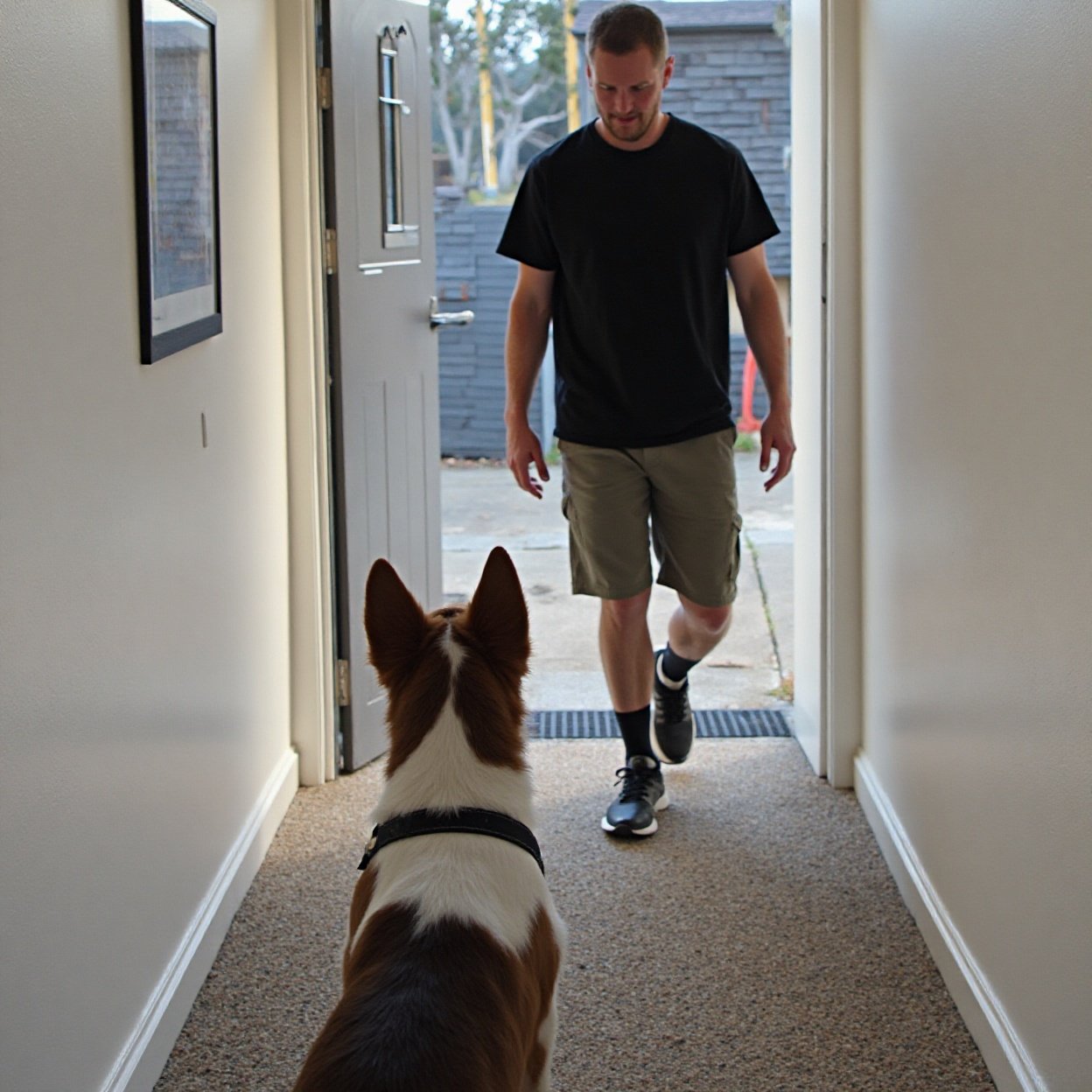
Have you ever tried to use the bathroom in peace, only to find a cold, wet nose nudging the door open? Or perhaps you’ve turned around in the kitchen and nearly tripped over your four-legged shadow? If you are constantly asking yourself, why does my dog follow me everywhere, you are certainly in good company. In my years of working with pet parents, this is perhaps the most frequent behavioral observation I hear. While it can be incredibly endearing to feel so needed, it can also become a bit overwhelming when you can’t even move from the sofa to the fridge without a full-blown escort. It raises a lot of questions about what is going on inside that furry head.
The short answer is that your dog follows you because of a complex cocktail of evolutionary instincts, learned behaviors, and deep-seated emotional bonding. Dogs are ancestral pack animals, and in their biological history, being alone often meant being in danger. However, in our modern homes, this “Velcro dog” behavior can range from pure, healthy affection to a sign of underlying stress or separation anxiety. In this comprehensive 2,000-word guide, we are going to unpack the science behind your dog’s shadow-like behavior, identify the specific triggers for different breeds, and show you how to encourage a healthy bit of independence. Let’s dive deep into the mind of your constant companion.
Article Roadmap:
- 1. The Biological Root: Pack Mentality and Survival Evolution
- 2. Positive Reinforcement: How We Accidentally Train Our Shadows
- 3. The Role of Breed: Velcro Breeds vs. Independent Thinkers
- 4. Healthy Bonding vs. Separation Anxiety: Spotting the Difference
- 5. Sensory Loss in Senior Dogs: Following for Security
- 6. The Bathroom Mystery: Why Do They Watch You There?
- 7. How to Encourage Independence and Build Confidence
- 8. Common Mistakes Owners Make with Clingy Dogs
- 9. Frequently Asked Questions (FAQ)
1. The Biological Root: Pack Mentality and Survival Evolution
To truly understand why does my dog follow me everywhere, we have to travel back thousands of years to the campfire of our ancestors. Dogs are descendants of wild canids that lived in highly structured, cooperative packs. In a pack environment, the group is everything. Hunting together, sleeping together, and moving together wasn’t just a social choice—it was a life-or-death requirement. Solitude in the wild was essentially a death sentence.
When your dog follows you from room to room, they are tapping into this ancient DNA. They view you as the “resource holder” or the pack leader. In their primitive brain, staying close to the leader is the safest, most logical place to be. Even though your hallway is free of lions and your kitchen is safe from rival packs, your dog’s instincts are still whispering, “Stay with the provider.” This is why even the most pampered pup still feels that magnetic pull to keep their human in sight at all times. It is a biological survival contract that has been signed over millennia.
2. Positive Reinforcement: How We Accidentally Train Our Shadows
Sometimes, the answer to why does my dog follow me everywhere is found by looking in the mirror. Dogs are absolute masters at reading human patterns and identifying “paydays.” If your dog follows you into the kitchen and you occasionally drop a scrap of food, or if you pet them every time they nudge your leg while you’re on the phone, you have effectively paid them to follow you.
This is called positive reinforcement. Your dog has learned that proximity to you leads to “good things”—treats, ear scratches, or even just a warm word. Over time, this becomes a hardwired habit. They aren’t just following you for protection; they are following you because you are a walking jackpot of affection and snacks. If your dog’s shadowing behavior is paired with physical signs like a dog throwing up yellow foam in the morning, they might be following you specifically because they feel nauseous and are looking to you for a “cure” or comfort during their distress.
3. The Role of Breed: Velcro Breeds vs. Independent Thinkers
In the world of canine genetics, some breeds are literally “manufactured” to be clingy. We often call them “Velcro dogs” because of their desire to be physically attached to their owners. If you own a herding breed like a Border Collie or an Australian Shepherd, their “job” for centuries was to watch the movements of a handler. For them, following you is a professional duty. They are watching where you go to see if you need help with a “stray sheep” (which might just be the cat in the laundry room).
Working breeds like Dobermans or Boxers often follow because they view themselves as personal security details. On the other hand, companion breeds like the Maltese, Bichon Frise, or Poodle were developed specifically to be lap dogs. Their entire evolutionary purpose has been to stay within three feet of a human. If you have one of these breeds, the question of why does my dog follow me everywhere is answered by their pedigree. They are doing exactly what they were designed to do. Contrast this with independent livestock guardians like the Great Pyrenees, who might love you from across the yard but don’t feel the need to join you in the shower.
4. Healthy Bonding vs. Separation Anxiety: Spotting the Difference
As a pet care specialist, I often have to help owners distinguish between a dog that loves them and a dog that is terrified to be without them. Healthy following (shadowing) is characterized by a relaxed posture. The dog follows you, settles down when you stop, and can eventually be lured into a nap in another room. This is a sign of a strong, secure bond.
However, when the behavior is fueled by anxiety, it looks very different. If your dog is panting, pacing, or whining the second they can’t see you, we are likely looking at separation anxiety. This is a panic disorder. For these dogs, following you isn’t about affection; it’s about avoiding psychological pain. In extreme cases, a dog might even scratch at doors so frantically that they develop small scabs on dog skin or broken nails. If the “Velcro” behavior is accompanied by destruction when you leave, it’s time to stop thinking it’s “cute” and start looking at it as a medical concern.
5. Sensory Loss in Senior Dogs: Following for Security
If you have an older dog that has suddenly started following you more than they did in their youth, the cause is often physical. As dogs age, they frequently experience a decline in vision and hearing. For a senior dog, the world becomes a place of shadows and muffled sounds. This is understandably frightening.
In this state of sensory loss, you become their “anchor.” They follow you because your scent and your presence are the only things that feel safe and familiar. They are essentially using you as a guide. If you notice your senior dog seems particularly clingy at night, it might be related to the same stress that causes why is my dog panting at night—a mix of physical discomfort and the anxiety of navigating in the dark. Being patient with a senior “shadow” is one of the kindest things a pet parent can do.
1 thought on “Why Does My Dog Follow Me Everywhere? The Science of “Velcro Dogs” Explained”
Comments are closed.