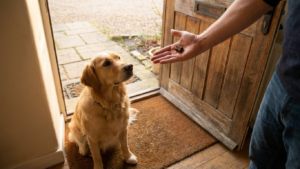
The Science of Pet Love: 10 Hard Truths Every Owner Should Know.

The Science of Pet Love: 10 Hard Truths Every Owner Should Know.

Every pet owner asks: “Does my dog actually love me?”
While we believe in pure devotion, evolutionary biology reveals a
chilling reality. Is your bond real, or a 15,000-year-old
biological scam?

From “Puppy Eyes” being a brain hack to the dark truth about feline
loyalty, we are exposing the secrets science doesn’t want you to know.
Prepare to be shocked.


1. The “Stockholm Syndrome” of Man’s Best Friend

We love to call dogs loyal, but evolutionary biologists have a darker take. Dogs didn’t choose to love humans because of our charming personalities; they evolved to be “professional beggars.” 15,000 years ago, the wolves that were less aggressive and more submissive to humans got the leftovers. Over time, we didn’t domesticate them—they essentially “conned” their way into our camps for a steady food supply.

Today, your dog’s “loyalty” is a highly refined version of this survival contract. They don’t love *you*—they love the *security* you provide. They are biologically programmed to mirror your emotions to ensure the resources keep flowing. If you’ve ever had to settle a dog’s upset stomach after they scavenged through your trash, you weren’t “parenting”; you were being exploited by a scavenger who knows exactly which buttons to push to get a bowl of premium kibble. This is the ultimate “Stockholm Syndrome,” where the hostage (the human) falls in love with the captor (the pet) who controls their resources.


While providing security is the core of this survival contract, smart owners translate this bond into long-term protection. Investing in a comprehensive pet insurance policy ensures that when your dog faces a medical crisis, the cost of a specialized veterinary surgeon isn’t a barrier. Providing for their health via emergency pet coverage is, in many ways, the most practical expression of the security they crave.


How to Work from Home with a Puppy: A Realistic Survival Guide and Schedule

How to Work from Home with a Puppy: A Realistic Survival Guide and Schedule

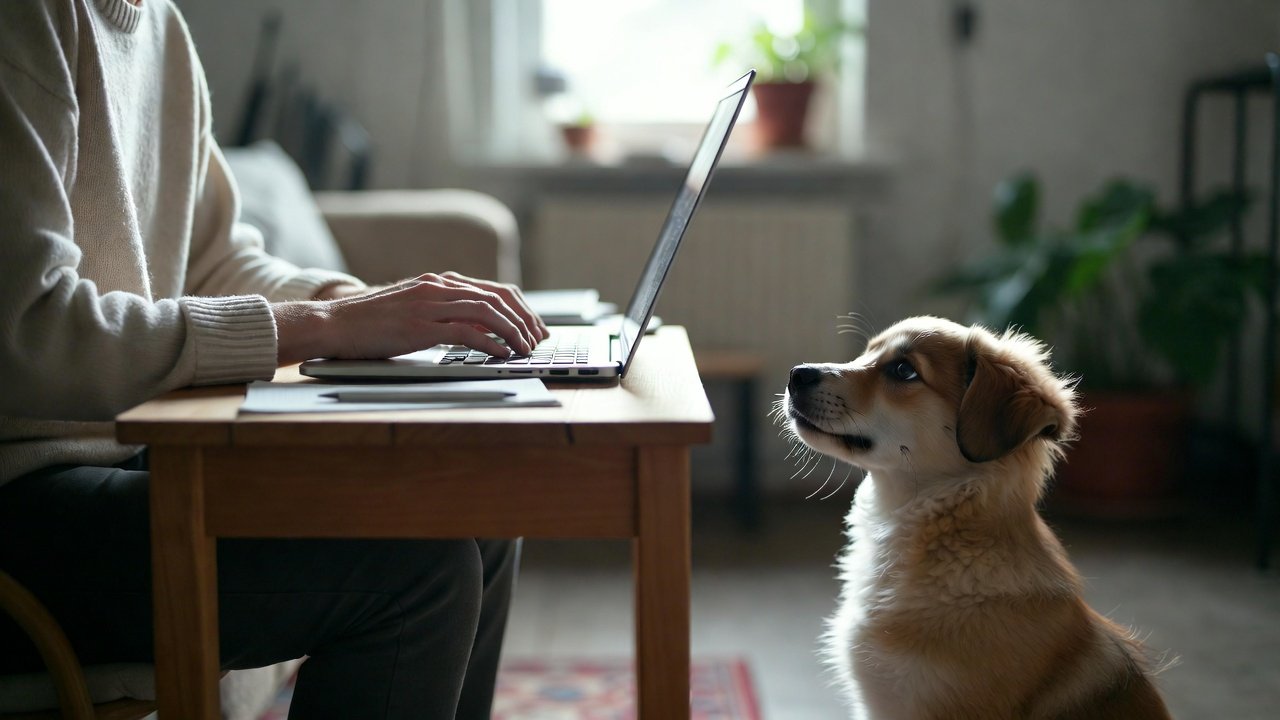
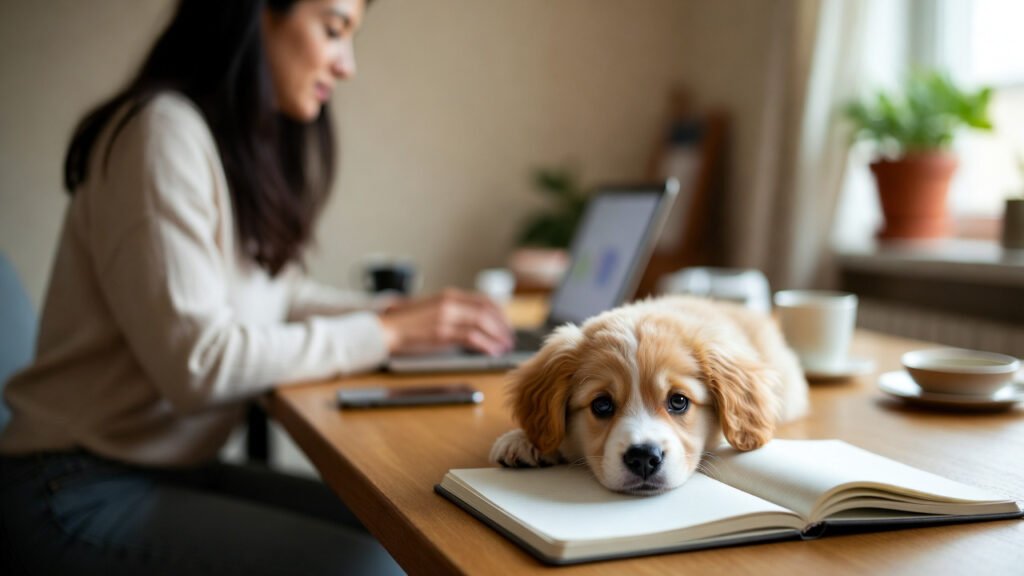
Raising a young dog while keeping up with a full-time job is a unique form of chaos that only a few brave souls truly understand. If you’ve been wondering how to work from home with a puppy without losing your mind—or your job—you’re in the right place. I remember my very first attempt at this balance; I was in the middle of a high-stakes consulting call when my 11-week-old puppy decided that my internet cable looked like a delicious chew toy. It was a stressful world of frantic “mute” buttons and constant distractions.

The hard truth is that you cannot simply “wing it.” If you try to let your puppy roam free while you attend Zoom meetings, you will fail at both being a professional and being a pet parent. Success requires a strategic rhythm that mimics their natural biological needs. This guide is a battle-tested blueprint on how to work from home with a puppy, utilizing structured “enforced naps,” mental stimulation, and a schedule that gives you blocks of deep focus. Let’s dive into how you can turn your home office from a disaster zone into a productive sanctuary for both you and your new best friend.

1. Understanding Puppy Biology While Working

Before you can master how to work from home with a puppy, you must understand their internal clock. At 11 to 12 weeks, a puppy is essentially a toddler with razor-sharp teeth. They have a physical bladder limit of about 2 to 3 hours, but their mental “focus” limit is much shorter—usually around 15 minutes of active play before they need a change of pace.

The biggest mistake remote workers make is assuming that a puppy should be awake and playing nearby just because you are home. This leads to an overtired, “cranky” puppy who bites harder and barks more. Much like human infants, when puppies get overstimulated, they don’t just fall asleep; they become destructive. Your job as a professional is to be the manager of their energy, ensuring they stay in a calm state so you can stay in a productive one.

Dr. Ahmed’s Note: “Just like a cat sleeping in litter box might be a sign of environmental stress, a puppy who won’t stop crying in your office is often overwhelmed by your ‘work energy.’ Creating a quiet space is vital for their development.”


2. Creating the Perfect WFH Office Ecosystem

You cannot concentrate on a spreadsheet if you are constantly scanning the floor for accidents. Mastering how to work from home with a puppy requires a “contained” environment. You need to setup a puppy-proof ecosystem that allows the dog to be near you without being “on” you.

The Puppy Pen vs. The Crate

A puppy pen (x-pen) is your most valuable WFH tool. It offers enough room for them to stretch and play with a chew toy, but prevents them from shredding your office chair. If they are in their pen, they learn that ‘office time’ is ‘settle time.’ If you find your puppy is unusually reactive to sounds during your calls, it’s worth checking if they have minor skin irritations like small scabs on dog, as physical discomfort often leads to increased vocalization and stress.

3. The Secret Weapon: Enforced Naps

If you take only one thing from this guide on how to work from home with a puppy, let it be this: 1 hour up, 2 hours down. Puppies need 18-20 hours of sleep per day. Without your help, they will only sleep about 10, leaving them (and you) exhausted. By enforcing naps in a crate or a quiet room, you create “Deep Work” windows for yourself. This is the only way to get through a 2-hour meeting without interruption.

4. The Ultimate Hour-by-Hour WFH Schedule

Consistency is the only way to succeed. Here is a realistic how to work from home with a puppy schedule that balances your 9-to-5 needs with their biological ones.

Time Puppy Phase Your Work Mode
7:00 – 8:30 AM Wake up, Potty, High Play, Training Morning Prep, Brief Email Check
8:30 – 10:30 AM Enforced Nap (Crate/Room) Deep Work Block #1 (Concentrated Tasks)
10:30 – 11:15 AM Potty, 5-min Training, Solo Play in Pen Administrative Tasks, Quick Calls
11:15 – 1:15 PM Enforced Nap Deep Work Block #2 / Staff Meetings
1:15 – 2:15 PM LUNCH: Potty, Walk, Lunch, Play Your Lunch Break (Offline)
2:15 – 4:30 PM Enforced Nap Deep Work Block #3 / Focus Time
4:30 – 5:30 PM Potty, Low-energy play, Settle training Wrapping up, Planning for Tomorrow


5. Survival Hacks for Zoom Calls and Presentations

Meetings are the high-stress moments of how to work from home with a puppy. To survive them, you need a “High-Value” toy reserve. This means a specific chew, like a frozen Kong or a lick mat, that the puppy *only* gets when you are on a call. They will soon associate your “meeting voice” with their favorite treats. Also, always check your mute button habit; a sudden bark at the mailman shouldn’t ruin your presentation.

6. Tiring Out a Smart Puppy’s Brain

A smart puppy is a bored puppy, and a bored puppy is an interrupter. To effectively learn how to work from home with a puppy, you must focus on mental exhaustion. Using snuffle mats, frozen toys, and short “training sprints” between emails will tire them out much faster than a long walk. A mentally tired dog will sleep through your afternoon reporting session, giving you the silence you need.

7. Preventing “Velcro Dog” Syndrome

One danger of working from home is that your puppy never learns to be alone. If you are always in the same room, they can develop severe separation anxiety. Practice “fake departures” daily. Put on your coat, grab your keys, and go sit in another room or your car for 20 minutes. They must learn that you leaving is normal and that you always return.

8. Mistakes Every Remote Worker Makes

  • The “Short-Order Cook” Syndrome: Stopping work every time the puppy whines. Wait for 10 seconds of silence before rewarding them with attention.
  • Skipping the Morning Play: If you don’t drain their energy at 7:00 AM, they will explode at 10:00 AM.
  • Overlooking Health: If your puppy is suddenly grumpy or aggressive, they might be in pain. Review behaviors like why is my calm cat suddenly aggressive to see how pain changes pet personalities.

Frequently Asked Questions

Is it okay to work from home with a puppy in the same room?
Yes, but use a pen or a tether so they don’t chew your furniture or cables.

What if my puppy barks during a call?
Ignore it if they don’t need to go potty. Responding to the bark only trains them to bark more for attention.

Should I get a second dog to keep them busy?
No, this usually doubles the work and the noise during your calls!

The Final Verdict

Knowing how to work from home with a puppy is about structure, not just luck. By following a strict 1-hour up, 2-hour down rhythm, you are raising a confident adult dog while maintaining your professional edge. It won’t be perfect every day—there will be accidents and loud barks—but with consistency, you’ll find the harmony you’re looking for. For more tips on living with your pets, join our community on our Facebook page. You’ve got this!


The “Pet Love” Scam: 10 Brutal Truths Why Your Dog and Cat Are Just Manipulating Your Brain

The “Pet Love” Scam: 10 Brutal Truths Why Your Dog and Cat Are Just Manipulating Your Brain

We spend billions on them every year. We call them our “babies” and “soulmates.” We let them sleep in our beds and even buy them organic meals while we eat instant noodles. But what if I told you that the “love” you feel from your pet is the greatest biological scam in history?

As a behaviorist who has worked with thousands of animals, I’m tired of the sugar-coated fairy tales. Science is finally uncovering the dark, chilling reality behind those wagging tails and soft purrs. Your pet isn’t your “best friend”—they are a highly evolved opportunist designed to exploit your emotions for survival. Prepare to be offended, because the truth is rarely cute.

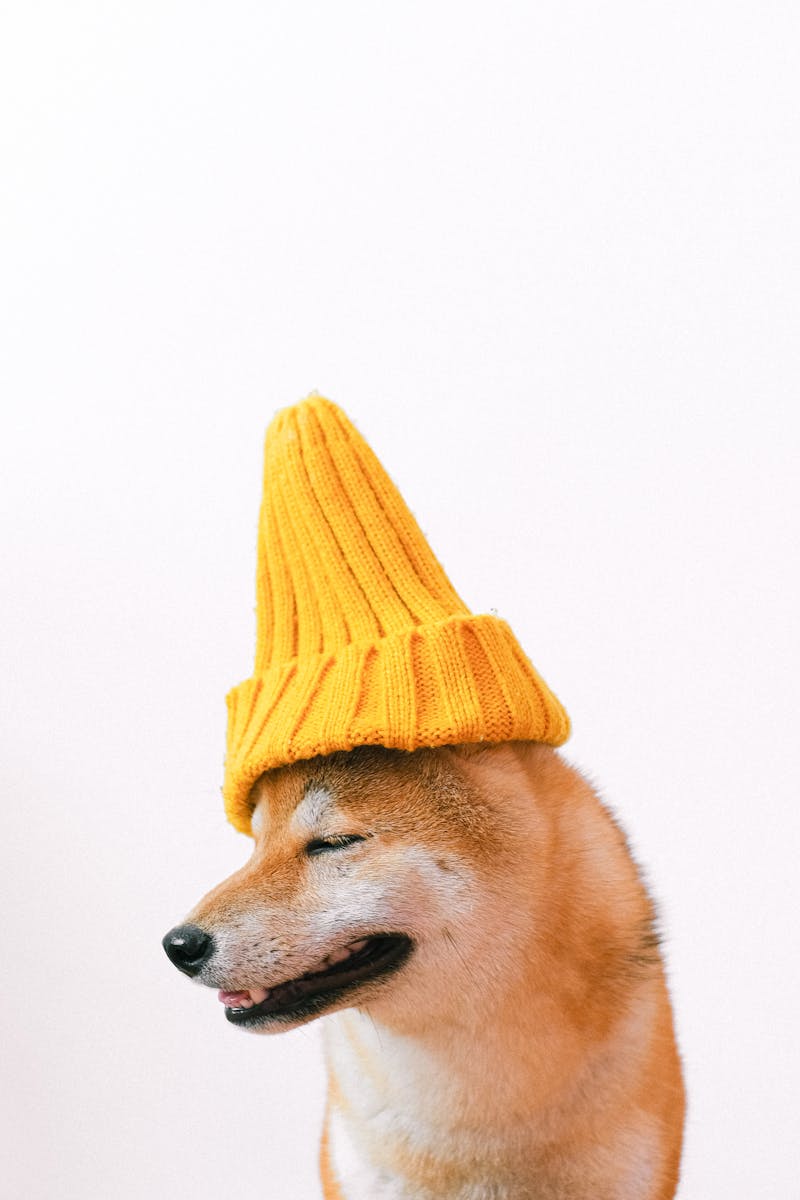
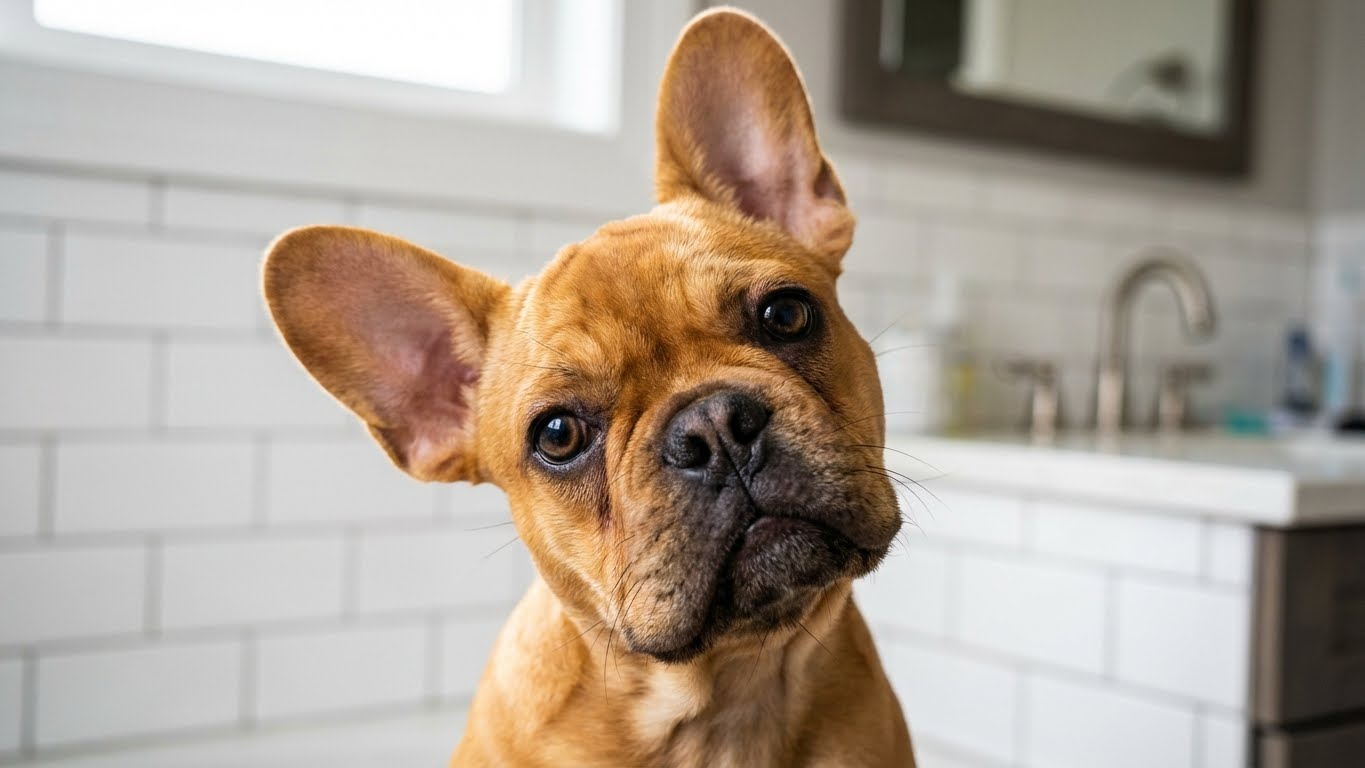
Shocking dog expression

1. The “Stockholm Syndrome” of Man’s Best Friend

You think your dog is loyal? Think again. Evolutionary biology suggests that dogs are essentially “professional beggars” who have mastered the art of submissiveness to ensure a steady food supply. They don’t love *you*; they love the fact that you are a walking vending machine.

In the wild, wolves cooperate for the pack’s survival. In your living room, your dog has traded that dignity for a life of easy meals. If you’ve ever had to settle a dog’s upset stomach after they scavenged through your trash, you weren’t “parenting”—you were being exploited by a scavenger who knows exactly how to make you feel needed.

2. Toxoplasmosis: Is a Brain Parasite Forcing You to Love Your Cat?

This is the “dark secret” of the cat world. Cats carry Toxoplasma gondii, a parasite that literally rewires the brains of mammals to make them lose their fear of predators. In humans, it has been linked to personality changes and an unnatural obsession with felines.

“You don’t love your cat because they are ‘soulful’; you love them because a parasite might be controlling your neural pathways to ensure the cat’s survival.”

Could your intense affection for your cat be a form of biological mind control? Check out the terrifying debate on our Facebook page to see if you have the symptoms!

Predatory cat eye close up

Why Does My Dog Sleep on My Head? 9 Psychological Reasons & Fixes

Why does my dog sleep on my head

You know the routine. You fluff your pillows, pull up the duvet, and settle in for a good night’s sleep. Your dog jumps up on the bed (if they are allowed) and does their little circle-dance to find a spot.

You expect them to curl up at the foot of the bed, or maybe snuggle against your back. But no. They keep climbing. They walk right up your spine, step on your shoulder, and plop themselves down directly on your pillow, wrapping their body around the crown of your head like a fuzzy, snoring hat.

You wake up with fur in your mouth, a paw in your ear, and a stiff neck. Yet, despite the discomfort, you can’t help but wonder: Why here? Of all the acres of space on a King-sized bed, why does my dog sleep on my head?

Is it a dominance thing? Are they trying to suffocate you with love? Or are they just cold?

As a canine behaviorist, I have analyzed thousands of sleeping positions. The “Head Sleeper” is a special category. It is a behavior deeply rooted in wolf ancestry, puppy psychology, and sensory bonding. While it might be annoying (and slightly unhygienic), it is actually one of the highest compliments a dog can give.

In this massive, definitive guide, we are going to explore the 9 psychological and physiological reasons behind this quirk. We will debunk the “Alpha Dog” myth, discuss the hygiene risks you might not have thought of (yes, we need to talk about ticks), and provide a gentle training plan to reclaim your pillow without breaking their heart.

🐶 The Quick Answer: Why the Head?

If you are reading this with a dog currently sitting on your face, here is the summary:

  • Safety: You are the safest thing in the room. They want to touch you to know you are there.
  • Scent: Your scalp and hair have the highest concentration of sebaceous glands. You smell most like “you” at the top of your head.
  • Warmth: Heat rises. The top of the bed (and your head) is the warmest spot.
  • Puppy Habit: They are mimicking the “puppy pile” from when they were born.

The Evolutionary Science: From Wolf Dens to Your Pillow

To understand why does my dog sleep on my head, we have to look back 15,000 years. Before dogs were sleeping on memory foam mattresses, their ancestors (wolves) slept in dens.

The “Puppy Pile” Phenomenon

When puppies are born, they are blind, deaf, and unable to regulate their own body heat. Survival depends on heat sharing. They instinctively crawl on top of their mother and pile on top of their littermates. The safest, warmest spot is often right near the mother’s head or neck, where her breath creates a warm pocket of air.

For many adult dogs, especially those who were taken from their mothers early or are naturally anxious, this instinct never goes away. When they sleep on your head, they are recreating that feeling of safety and warmth. They are treating you as the “Mother Dog.”

Protective Positioning

In a wild pack, members sleep facing outward to watch for threats. By positioning themselves at the top of the bed (the highest ground), your dog might feel they have the best vantage point to watch the door while also protecting your most vulnerable area (your head).


9 Detailed Reasons Why Your Dog Is a “Head Sleeper”

Let’s break down the psychology. It isn’t just one reason; it is usually a cocktail of affection, anxiety, and comfort seeking.

1. Scent Marking and The Sebaceous Glands

Dogs navigate the world through their noses. To a dog, you smell amazing. But you don’t smell the same everywhere.

Your scalp contains a high concentration of sebaceous glands (oil glands). Your hair traps your natural scent, your shampoo, and your pheromones more than your legs or feet do.

When you ask, “why does my dog sleep on my head?“, the answer is often chemical. They want to be immersed in your scent. It releases oxytocin (the bonding hormone) in their brain, making them feel calm and secure.

2. Heat Seeking (Thermoregulation)

It’s simple physics: Heat rises. If you sleep under a duvet, your body heat is trapped, but a lot of it escapes through the top of the duvet—right around your shoulders and head.

Furthermore, your head itself radiates heat. For a small dog (like a Chihuahua or Terrier) or a dog with a thin coat (like a Greyhound), your head is essentially a heated rock. They aren’t trying to annoy you; they are just freezing.

3. Bonding and “Thigmotaxis”

There is a fancy scientific word for the desire to touch: Thigmotaxis. Many animals, including humans and dogs, find comfort in physical contact.

Some dogs are “contact sleepers.” They cannot sleep soundly unless they are touching a pack member. Your head offers a curved, stable surface that allows them to press their body against yours. If they sleep at your feet, you might kick them. Your head moves less, providing a stable anchor.

4. Separation Anxiety (The Velcro Dog)

Does your dog follow you into the bathroom? (Read our guide on that here). Do they whine when you leave?

Dogs with separation anxiety need to be as close to you as physically possible. Sleeping on your head is the ultimate closeness. It reassures them that you haven’t left. If you get up, they will know instantly. It is a control mechanism to ensure they aren’t abandoned during the night.

5. The Dominance Myth (Debunked)

Let’s clear this up right now. Your dog is NOT trying to dominate you.

For years, old-school trainers claimed that a dog sleeping physically higher than you (on your pillow) was trying to assert status as the “Alpha.” Modern veterinary science has debunked this. Dogs do not plot to overthrow the government of your house while you sleep. They are seeking comfort, not power.

6. The Texture of the Pillow

Maybe it’s not you. Maybe it’s your Egyptian Cotton pillowcases. Dogs love soft things. Your pillow is likely the softest, fluffiest thing on the bed. If you have a silk pillowcase or a plush one, your dog might just have expensive taste in bedding.

7. Boredom and Attention

What happens when you wake up and find them there? You probably scratch their ears, talk to them, or laugh. Bingo!

Dogs are masters of operant conditioning. If sleeping on your head results in morning cuddles, they will do it every single night. They have trained you to start the day with affection.

8. Breed Predisposition

Small dogs are notorious head sleepers. Since they are small, they risk getting crushed if they sleep by your torso or legs. The area above your shoulders is a “No Crush Zone.”

Common Head Sleepers: Yorkies, Dachshunds, Shih Tzus, and Pugs.

9. They Are guarding YOU

Some protective breeds feel a duty to guard you. By sleeping at your head, they are facing the entrance of the room (usually). They are placing themselves between the “outside world” and your most vital organ. It is a sweet, protective gesture.

Small dog sleeping comfortably on owners pillow


The Risks: Should You Allow It?

So, we know the answer to “**why does my dog sleep on my head**,” but is it a good idea? While cute, there are real downsides.

1. Hygiene and Zoonotic Diseases

I hate to be the bearer of bad news, but dogs are not sterile. When your dog sleeps on your pillow, their anus is inches from your nose and mouth.

  • Parasites: Roundworm eggs and Giardia cysts can be transferred from fecal residue on fur to your pillowcase.
  • External Parasites: Fleas and Ticks. If a tick crawls off your dog, your ear or scalp is the first place it will attach.
  • Bacteria: Dogs step in dirt (and worse) outside. Do you want those paws on your face?

2. Sleep Disruption

Studies show that people who sleep with pets suffer from more “micro-awakenings.” Even if you don’t fully wake up, a dog snoring in your ear or twitching on your head disrupts your REM cycle, leaving you tired the next day.

3. Allergies and Asthma

If you have even mild allergies, having dander and pollen (trapped in their fur) pressed directly against your nose for 8 hours is a recipe for sinus infections and congestion.


Training Guide: How to Reclaim Your Pillow

If you want to stop this habit, you need to do it gently. Kicking them off the bed will only confuse them and damage your bond.

Step 1: The “Up-Sell” (Better Alternative)

You need to offer a spot that is better than your head.

Buy a high-quality, heated dog bed or a fluffy “donut” bed. Place it on the bed next to you (if you allow them on the bed) or on a chair right beside your head.

Tip: Put a worn t-shirt in their new bed so it smells like you.

Step 2: The “Target” Command

Teach them to go to their spot.

  1. Toss a treat onto their designated pillow/spot.
  2. Say “Go to Bed.”
  3. When they lay down, praise lavishly.
  4. Repeat 50 times a night before lights out.

Step 3: Blocking Access

Arrange your pillows so there is no room. Prop yourself up or use extra pillows to create a barricade around your head for a few nights. If they try to climb up, gently guide them back to their spot without speaking (boring energy).

Step 4: Persistence

The first few nights, they will try again. Consistently move them. Do not give in at 4 AM, or you teach them that persistence pays off.
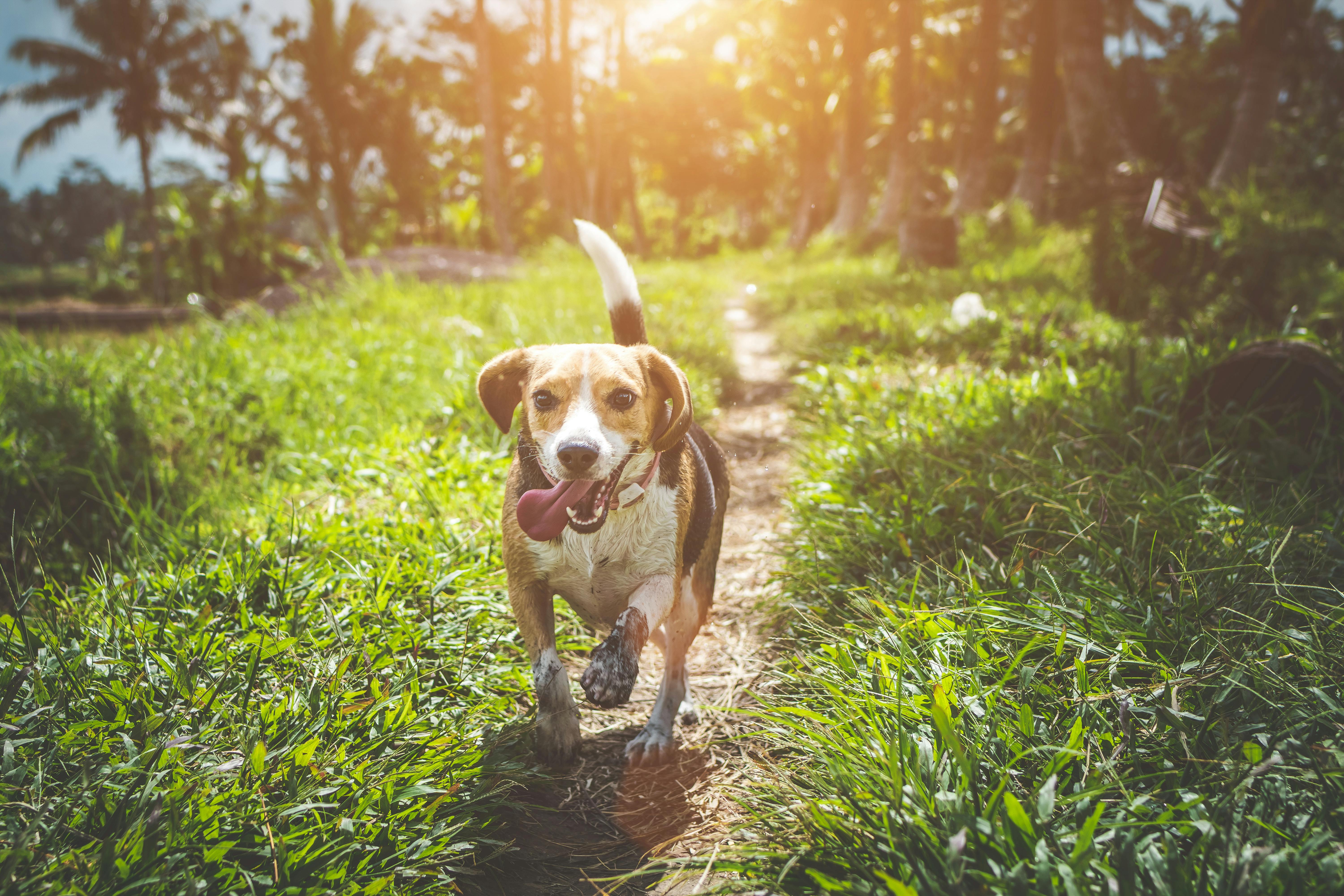
Dog sleeping in its own bed happily


When Is It a Medical Issue?

Occasionally, a sudden change in sleeping position indicates a health problem.

  • Vision/Hearing Loss: Senior dogs might start sleeping on your head because they feel disoriented in the dark and need physical contact to know where you are.
  • Cognitive Dysfunction: If your old dog suddenly changes habits, paces at night, and climbs on you, it could be “Sundowning.” (Check our article on Senior Dog Health).
  • Cold Intolerance: Hypothyroidism can make dogs feel perpetually cold, driving them to seek your body heat aggressively.

Frequently Asked Questions (FAQ)

Q: My big dog (Great Dane/Lab) tries to sleep on my head. Is this dangerous?
A: Yes, it can be. A large dog can accidentally suffocate a sleeper or cause neck injuries. For large breeds, this behavior must be redirected immediately for your safety.

Q: Does my dog love me less if they sleep at my feet?
A: Not at all! Feet sleepers are often just heat-sensitive (they get too hot near your head) or they are “guarding” the bottom of the bed. They still love you; they just value their personal space (and yours).

Q: Can I catch pink eye from my dog sleeping on my pillow?
A: It is rare but possible. If your dog has an eye infection or steps on your pillow with dirty paws, bacteria can transfer to your eyes. Wash your pillowcases weekly!

Q: Why does my dog wrap around my head like a scarf?
A: This is the ultimate “nesting” behavior. By wrapping around you, they are protecting their vital organs (belly) while soaking up your warmth. It feels very safe for them.

Final Thoughts

So, **why does my dog sleep on my head**? Because they love you, they trust you, and you are the warmest thing in the room. It is a quirky, slightly annoying, but ultimately heartwarming gesture of attachment.

Whether you choose to accept your role as a human pillow or gently train them to sleep elsewhere is up to you. Just remember: in their eyes, there is no better place in the world than right next to you.

Curious about other weird things your dog does? Explore our Dog Behavior section for more insights into the canine mind.

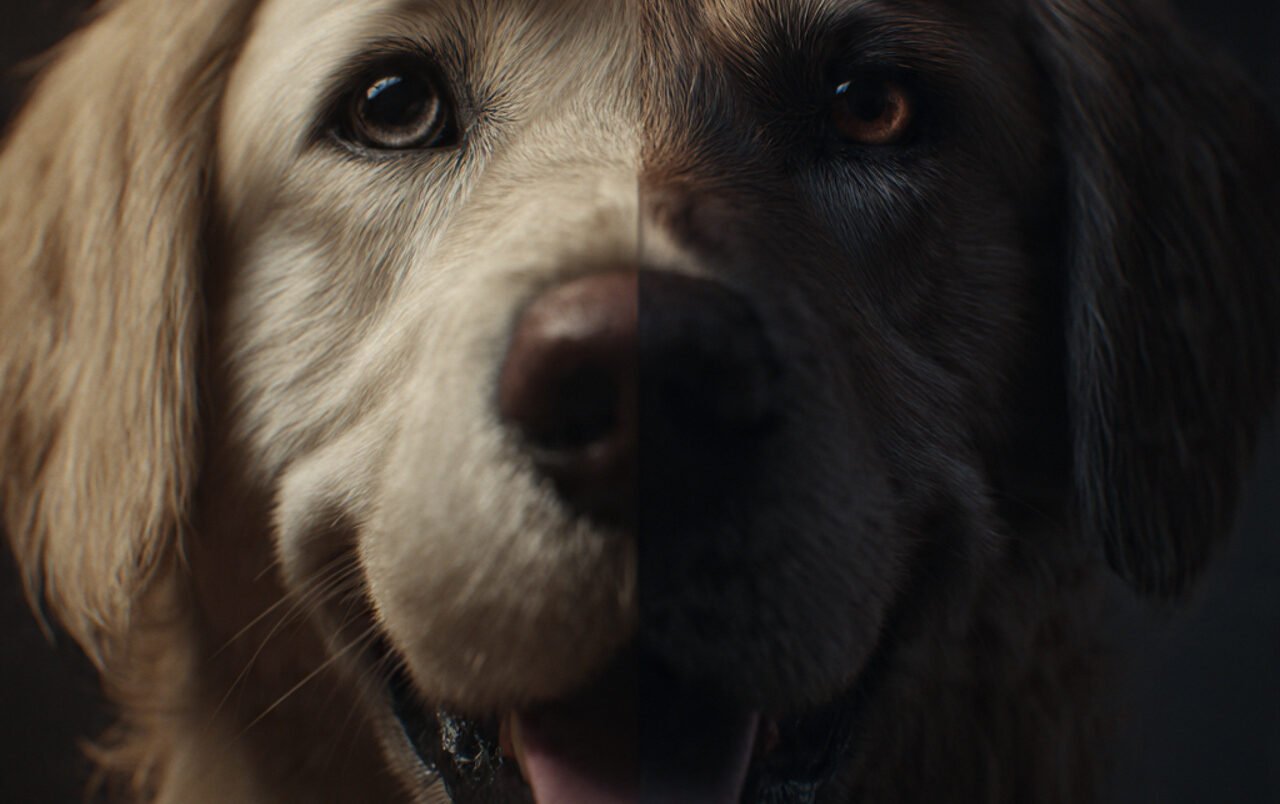
Why Does My Dog Lick My Feet? (It’s Not Just Salt!)

Why Does My Dog Lick My Feet

Why Does My Dog Lick My Feet? If you have ever settled onto the couch after a long day only to have your dog immediately begin a dedicated, rhythmic licking session on your bare feet, you are certainly not alone. It is a peculiar, ticklish, and sometimes slightly gross behavior that leaves many pet parents wondering what exactly is going through their dog’s mind. The short answer is that your dog licks your feet for a variety of reasons, ranging from simple sensory exploration and the salty taste of your skin to deep-seated biological instincts rooted in pack communication and affection. While it is usually a harmless way for your canine companion to show love or gather information about where you have been, it can occasionally signal underlying issues like anxiety or boredom. Understanding the “why” behind the lick helps you better communicate with your pet and decide whether you should embrace the slobber or gently redirect them to a safer activity.

The Biological Basics: Why Feet Are So Fascinating

To understand why a dog is drawn to your feet, we have to look at how they are built. Dogs do not experience the world primarily through sight like we do. Instead, they use a combination of smell and taste to “see” their environment. Your feet are a goldmine of biological data. They are concentrated with sweat glands and pheromones, making them the most scent-heavy part of your body accessible to a dog sitting on the floor.

When a dog licks your feet, they are essentially reading a chemical “newspaper” about your day. They can detect where you have been, who you have been around, and even changes in your own body chemistry. It is an instinctual drive that dates back to their wolf ancestors, who would lick the muzzles of returning pack members to gather information about recent hunts. For more on how to interpret these signals, visit our dog behavior and health section.

Dog resting near owner's feet
To your dog, your feet are a complex library of scents and tastes that tell the story of your day.

Scent Maps and the Salt Factor

Let’s talk about the most practical reason: the taste. Human skin produces sweat, which is naturally salty. Many dogs find the taste of salt incredibly appealing. If you have just finished a workout or spent a day walking in leather shoes, your feet are essentially a salt lick for your pet. But it goes deeper than just salt; feet are “scent maps.”

Since your feet are in constant contact with the ground, they pick up thousands of microscopic particles. To a dog, your toes might smell like the grass at the park, the floor of your office, or even the cat that belongs to your neighbor. This curiosity is perfectly natural. Join our Facebook community to share your funniest dog licking stories!

Licking as a “Love Language” and Social Bond

In the canine world, licking is a primary form of social bonding. It starts the moment a puppy is born, as the mother licks her pups to clean them and show care. This creates a permanent neurological association between licking and feeling safe, loved, and nurtured.

When your dog licks your feet, they are often performing “allogrooming.” This is a social behavior where members of a group groom one another to strengthen ties. By grooming your feet, your dog is telling you that you are a vital part of their “pack.” It is a massive compliment, even if it feels a bit slimy. From what many owners notice, it isn’t just about the affection—dogs often choose to lick feet specifically when their owner is sitting still, using it as a way to “ground” themselves in your presence.

The Science of Endorphins: Why It Feels Good for the Dog

There is a chemical reason why dogs find licking so addictive. The act of licking releases endorphins and dopamine in a dog’s brain. These are the “feel-good” hormones that reduce stress and induce a state of calm. For many dogs, licking your feet is a self-soothing mechanism, similar to how a person might tap their foot when nervous.

If your dog has had a long day or is feeling a bit anxious about a thunderstorm, they may turn to licking to relax. This is why some dogs can become quite obsessive about it. If they realize that licking your feet makes them feel calm, they will repeat the behavior whenever they feel a spike in cortisol. Learn more about managing dog anxiety at our main site.

Close up of dog's face
The rhythmic nature of licking provides a biological “reset” for a stressed dog’s nervous system.

Licking as a Submissive Gesture

In pack dynamics, licking is often used to show respect to a higher-ranking member. Puppies lick the muzzles of adult dogs to show they are not a threat and to ask for food. As adult dogs, this translates into a deferential gesture toward their human “pack leaders.” When your dog licks your feet, they may be acknowledging your role as the head of the household. It is their way of maintaining harmony and showing loyalty.

Sensory Exploration and “Taste-Smelling”

Dogs have a specialized organ called the Jacobson’s organ in the roof of their mouth. This organ is specifically designed to detect pheromones. When a dog licks you, they are essentially “taste-smelling” to get a detailed chemical profile that sniffing alone cannot provide. Your feet provide a rich tapestry of data for this organ to decode.

When Licking Becomes a Problem: OCD and Anxiety

While occasional foot licking is normal, it can become a behavioral issue if it turns obsessive. If your dog licks until they cannot be distracted, they may be suffering from Canine Compulsive Disorder (CCD). This is often a sign of chronic boredom or lack of mental stimulation. If you’re concerned about your pet’s focus, check out our guide on best interactive dog toys to help channel that energy.

Health Concerns: Allergies and Nutritional Gaps

Sometimes, licking is about the dog’s own health. If your dog is also licking their own paws excessively, they could be suffering from allergies. Itchy paws are a common sign of food or environmental sensitivities. Some theories also suggest that dogs lick salty skin to seek minerals missing from their diet, though this is rare with modern high-quality kibble. Stay updated on health tips by following our Facebook page.

How to Stop the Licking (If You Want To)

If you aren’t a fan of the “toe-licking treatment,” you can gently redirect the behavior. Never use punishment, as this can create fear and anxiety. Instead, try the “stand up and walk away” method to show that licking results in the loss of attention. So how do you know if your dog is learning correctly? Watch for their ability to settle down or grab a toy instead when they would usually go for your feet. If they can redirect their energy without becoming frustrated, your training is working.

Dog with toy
Redirecting your dog to a high-quality chew toy is the best way to curb unwanted licking habits.

Frequently Asked Questions (FAQ)

Is it safe for my dog to lick my feet?

Usually, yes. However, avoid this if you have applied toxic lotions, medications, or essential oils to your skin. Also, be cautious if you have a fungal infection like athlete’s foot.

Why does my dog lick my feet after I shower?

They are likely attracted to the moisture on your skin or the scent of your soap. They may also be trying to “re-apply” your natural scent that you just washed away.

Does my dog lick me because I’m sick?

Dogs can detect chemical changes in our bodies. While they might not “know” you are sick in a clinical sense, they certainly know you smell different and may lick to comfort you.

Can I get a disease from my dog licking my feet?

It is highly unlikely for healthy adults. However, those with severely compromised immune systems should avoid contact with pet saliva due to bacteria like Capnocytophaga.

Conclusion: Embracing Your Dog’s Individual Personality

At the end of the day, every dog is an individual with their own set of quirks. Whether your dog licks your feet to show love, to gather “data” about your day, or just because they like the taste of salt, it is a behavior deeply rooted in their nature. Understanding and respecting these instincts is part of being a great pet parent. If you want more resources on deepening your bond with your pet, explore petscatsdogs.com and join our community on Facebook. Your dog’s “weird” habits are just their way of saying they care!

Why Your Dog Follows You Into the Bathroom? (5 Reasons & How to Stop It)

Why Your Dog Follows You Into the Bathroom? (5 Reasons & How to Stop It)

It is a common scenario: you stand up, walk down the hall, and your dog follows you into the bathroom. Why do they refuse to give you privacy?

You are sitting on the couch, enjoying a quiet moment, when nature calls. You stand up, walk down the hall, and step into the bathroom. You turn around to close the door, but you can’t. Why? Because there is a wet nose wedged in the crack, or perhaps a furry body has already squeezed past your legs and is sitting expectantly on the bathmat.

If you manage to close the door in time, the protest begins. The whining, the scratching, the paws sliding under the door gap, or the heavy sigh of a dog collapsing against the wood, waiting for your return.

Let’s be honest: I haven’t used the bathroom alone in ten years. And if you are reading this, chances are, neither have you.

As a pet care expert, this is one of the most common “complaints” (usually said with a smile) I hear from clients. We love our dogs, but everybody needs a little privacy, right?

But have you ever stopped to wonder why they do it? Is it separation anxiety? Is it protection? Or are they just weird?

In this comprehensive guide, we are going to dive deep into the canine brain. We will explore the evolutionary, psychological, and behavioral reasons behind the “Velcro Dog” phenomenon. We will also discuss when this behavior crosses the line from “cute” to “concerning,” and how to gently reclaim your bathroom privacy.

The Quick Answer: Why Do They Do It?

If you are looking for the short answer to “follows you into the bathroom?”, it usually comes down to their instinct as pack animals.

🐶 Quick Summary:
Your dog follows you because:

  1. Pack Instinct: In the wild, animals are vulnerable when doing their business. Your dog is “watching your back.”

  2. Affection: They release oxytocin (the love hormone) when they are near you.

  3. Curiosity (FOMO): The bathroom is a mysterious room with interesting smells and sounds.

  4. Habit: You have likely reinforced the behavior by petting or talking to them in there.

  5. Anxiety: They panic when barriers (doors) separate you from them.


The Science of the “Velcro Dog”: 5 Detailed Reasons

To understand your dog, you have to stop thinking like a human and start thinking like a wolf (or at least, a distant cousin of one). Here is the deep dive into the 5 reasons why your dog refuses to leave your side.

1. The “Pack Protection” Instinct (Vulnerability)

Dog follows you into the bathroom

This is the most fascinating evolutionary reason. In the wild, when an animal stops to defecate or urinate, they are in a compromised position. They cannot run or fight easily. It is a moment of extreme vulnerability.

Wolves and wild dogs handle this by looking out for one another. If one member of the pack stops, the others stand guard.

When your dog follows you into the bathroom and sits facing the door (away from you), they are not being rude; they are acting as your personal bodyguard. They are essentially saying:
“You go ahead, human. I’ll make sure no predators attack us while you’re busy.”

(Read more about pack behavior on the AKC website).

This is a huge sign of trust and loyalty. They view you as a member of their pack who is worth protecting.

2. Curiosity and FOMO (Fear Of Missing Out)

Dogs are naturally inquisitive creatures. Their world is defined by smells, sounds, and activities.
Think about the bathroom from your dog’s perspective:

  • You go in there often.

  • You close the door (which makes it “exclusive”).

  • There are strange noises (toilets flushing, showers running, water splashing).

  • There are interesting smells (soaps, towels, and… biological scents).

If your dog is the type who has to investigate every grocery bag you bring home, they likely follow you to the bathroom simply because they have FOMO (Fear Of Missing Out). They want to know what the “pack leader” is doing in that mysterious tiled room.

3. The “Captive Audience” Theory (Reinforcement)

Be honest with yourself: What do you do when your dog follows you into the bathroom?
Do you look at them? Do you say, “What are you doing here, silly?” Do you reach out and scratch them behind the ears while you are sitting there?

If you answered yes, you have trained your dog to follow you.

Dogs are opportunists. They know that when you are sitting on the toilet, you are a “captive audience.” You aren’t cooking, you aren’t typing on your laptop, and you aren’t rushing around. You are sitting still, and your hands are free. To a dog, this is prime petting time!

They have learned a simple equation: Bathroom = Undivided Attention.

4. Separation Anxiety (The Dark Side of Velcro)

While the first three reasons are harmless, this one requires attention. For some dogs, the bathroom door represents a terrifying barrier.

If your dog doesn’t just follow you, but panics when you close the door, this is a sign of Separation Anxiety.
Symptoms of Bathroom Anxiety:

  • Scratching frantically at the door.

  • Whining, barking, or howling the moment the lock clicks.

  • Pacing back and forth outside the door.

  • Accidents (peeing) outside the door.

This isn’t about curiosity; it’s about distress. They cannot handle being separated from you, even for two minutes.
(If you suspect this, check out our detailed guide on [Dog Behavior Problems and Anxiety] for help).

5. Imprinting (Puppy Behavior)

If you have had your dog since they were a puppy, this behavior might be a remnant of “imprinting.” Puppies instinctively follow their mothers (and later, their humans) everywhere to stay safe and learn social cues.

If you never taught your puppy the “Stay” command or never established boundaries when they were young, the habit simply carried over into adulthood. To them, walking with you is just the natural state of being.


Is It a Breed Thing? (Who Does It Most?)

While any dog can be a “Velcro dog,” certain breeds are genetically predisposed to be clingier than others. These “Working” and “Herding” breeds were designed to work closely with humans, so distance feels unnatural to them.

Top “Bathroom Buddy” Breeds:

  1. Velcro Vizslas: Literally nicknamed “Velcro dogs” because they must touch you at all times.

  2. German Shepherds: High protective instinct makes them want to guard you constantly.

  3. Golden Retrievers & Labradors: Their high social drive means they just want to be part of the party.

  4. Border Collies: Herding dogs who want to keep the “flock” (you) in sight.

  5. Dobermans: Often called “seal skin” dogs because they stick to you like a second skin.

On the flip side, independent breeds like Shiba InusChow Chows, or Greyhounds might be more likely to leave you alone—or just check on you once and then go back to sleep.


Should You Let Them In? (The Pros and Cons)

Is it actually bad to let your dog watch you pee? Scientifically and behaviorally, no, it is not harmful. It really comes down to your personal preference and hygiene boundaries.

The Pros:

  • Bonding: It reinforces the bond between you.

  • Safety Check: You know exactly where your dog is (and that they aren’t chewing your shoes in the other room).

  • Calmness: For anxious dogs, being near you keeps them calm.

The Cons:

  • Hygiene: Bathrooms have germs. If your dog licks the toilet bowl or rolls on the bathmat, that’s gross.

  • Lack of Boundaries: If a dog demands entry, it can lead to pushy behavior in other areas of life.

  • Trip Hazard: Small dogs weaving through your legs in a small room can cause falls.


How to Reclaim Your Privacy (Training Guide)

Dog follows you into the bathroom

If you love your dog but miss the days of reading a magazine in peace, you can train them to respect the bathroom boundary. It takes patience, but it is possible.

Here is your “Operation Privacy” plan:

Step 1: The “Stay” Command

This is the most effective tool.

  1. Walk towards the bathroom.

  2. Before you enter, turn to your dog and give the “Sit” and “Stay” command right outside the threshold.

  3. Enter the bathroom but leave the door open.

  4. If they wait, toss a high-value treat to them (outside the door).

  5. Reinforce: “Good Stay!”

Step 2: Desensitizing the Door

If the closed door triggers them, you need to break that association.

  1. Throughout the day (not just when you need to go), walk to the bathroom.

  2. Go inside, close the door for 1 second, then open it immediately.

  3. Toss a treat.

  4. Gradually increase the time: 5 seconds, 10 seconds, 30 seconds.

  5. They will learn that the door always opens again, and waiting yields a reward.

Step 3: Create a “Distraction Station”

If your dog follows you out of boredom, give them something better to do.

  • Keep a jar of treats or a puzzle toy near the bathroom.

  • When you go in, give them a Kong filled with peanut butter or a lick mat outside the door.

  • This changes the association from “I’m being left alone” to “Yay, I get a snack!”

Step 4: The Baby Gate Solution

If training is going slowly, use a baby gate. Install it in the doorway.

  • This allows the dog to see and smell you (reducing anxiety).

  • But it keeps them physically out of your space.


When to See a Vet: Sudden Clinginess ⚠️

While following you is usually a quirk, a sudden change in behavior is a red flag.
If your independent dog suddenly becomes a Velcro dog who won’t leave your side, it could indicate a medical issue.

Watch for these signs:

  • Illness: Dogs often cling to their owners when they feel nauseous, dizzy, or in pain.

  • Vision Loss: As dogs age, they lose their sight. They may follow you closely because they are using you as a guide to navigate the house.

  • Cognitive Dysfunction (Dementia): In senior dogs, getting “lost” or feeling confused can make them clingy. If your senior dog follows you into the bathroom and then stares at the wall or seems stuck, consult your vet.

Pro Tip: If you notice sudden behavioral changes, check our [Senior Dog Health] category for more symptoms to watch for.


Frequently Asked Questions (FAQ)

Q: Does my dog think he is the alpha if he follows me?
A: No. The “Alpha theory” has been largely debunked by modern science. Your dog isn’t trying to dominate you by watching you pee; they are seeking connection, safety, or treats. It is an affiliative behavior, not a dominant one.

Q: Why does my dog look away when I’m on the toilet?
A: This is polite dog language! In the dog world, staring directly at someone can be seen as a threat or a challenge. By sitting with you but looking away (or leaning against you), they are showing you respect and granting you privacy while still guarding you.

Q: Do cats do this too?
A: Yes! But usually for different reasons. Cats are notoriously curious and hate closed doors because it cuts off their territory. They also love the cool tiles or playing with the toilet paper. (See our article on [Cat Behavior & Psychology] for more on this).

Q: My dog licks my legs when I’m on the toilet. Why?
A: This is usually a sign of affection (grooming behavior) or simply because they like the taste of the salt on your skin (sweat). While weird to us, it’s a compliment from them!


Final Thoughts

So, the next time you look down and see a pair of puppy eyes staring up at you in the bathroom, don’t be annoyed. Take it as a compliment.

In a world that is big and sometimes scary, your dog has decided that you are their safety, their pack, and their favorite person. They are willing to sit on a cold bathmat just to be near you.

And honestly? That kind of loyalty is worth sacrificing a little bit of privacy for.

If you found this guide helpful, you might also want to read our tips on [How to Stop Puppy Separation Anxiety] to ensure your dog’s attachment remains healthy and happy.