
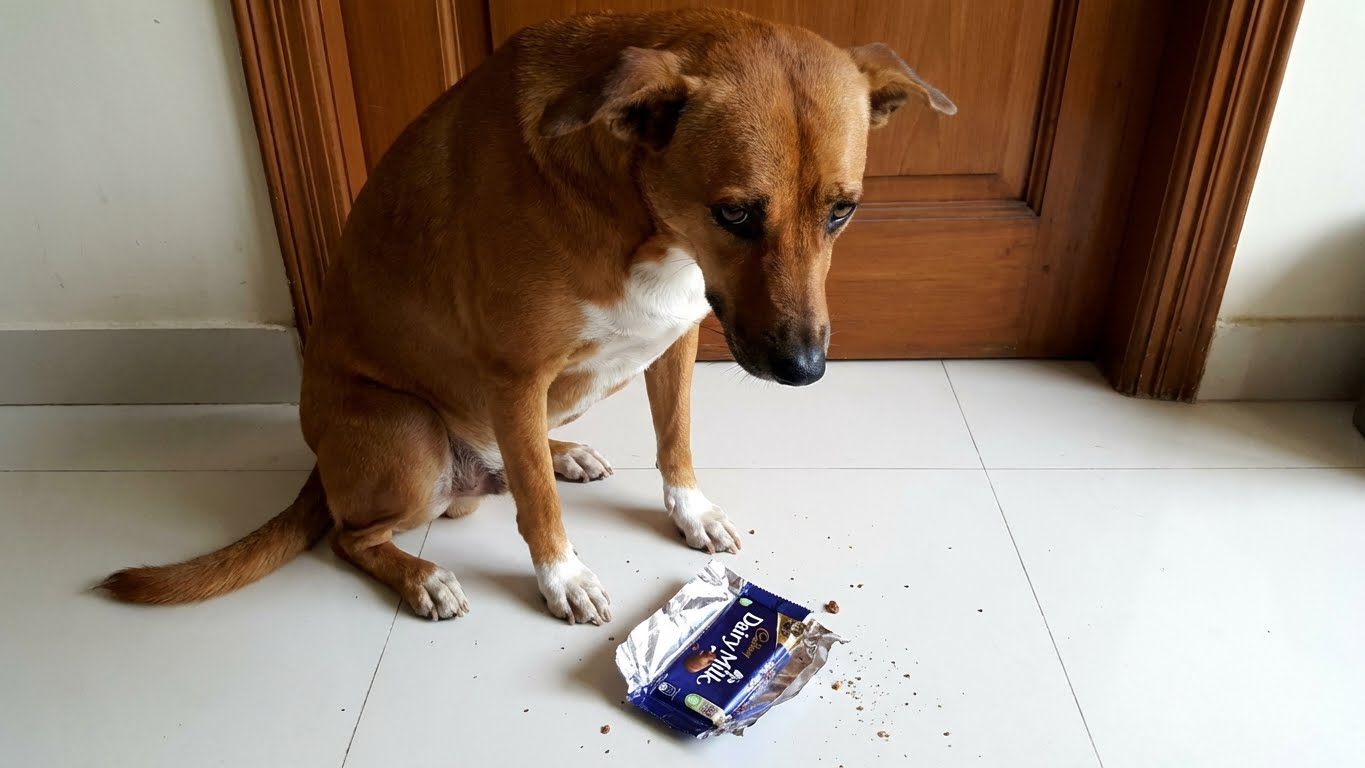
Help! My Dog Ate Chocolate It is the moment every dog owner dreads.
I walked into the kitchen after a long day at the clinic, expecting to be greeted by a wagging tail. Instead, I was greeted by the rustling sound of a wrapper and a guilty look. On the floor lay the shredded remains of a dark chocolate bar I had been saving for myself. My Golden Retriever, Bailey, sat there licking his lips, looking remarkably proud of his “hunt.”
My heart sank. Even as a veterinarian, that initial wave of panic hit me hard. How much did he eat? What kind was it? How long ago did this happen?
If you are reading this right now, your heart is probably racing just like mine was. You are likely staring at an empty candy wrapper and a very satisfied-looking pup, wondering if you need to rush to the emergency room.
Take a deep breath. You are in the right place.
While chocolate toxicity is serious, it is also treatable if caught early. In this comprehensive guide, we will move past the panic. I will walk you through exactly why dog ate chocolate scenarios happen, how to calculate the danger level, the symptom timeline you need to watch for, and the immediate steps you must take to keep your best friend safe.
The Quick Answer: What Should I Do Right Now?
If you just caught your dog in the act, do not wait for symptoms to appear. Time is of the essence.
🚨 Emergency Action Plan:
Stop them: Remove any remaining chocolate from their reach immediately.
Identify: Find the wrapper. Check the type (Dark, Milk, White) and the weight (how many grams/ounces?).
Calculate: A 50lb dog eating one milk chocolate bar is usually fine. A 10lb dog eating dark chocolate is in critical danger.
Call the Vet: If you suspect they ate a toxic amount, call your vet or the ASPCA Poison Control Center (888-426-4435) immediately.
Do NOT induce vomiting unless a professional tells you to. Some dogs can aspirate vomit into their lungs.
The Science: Why Is Chocolate Toxic to Dogs?
To understand the urgency when a dog ate chocolate, we need to look at the chemistry. We humans love chocolate because it gives us a little boost of energy and happiness. That boost comes from a compound called Theobromine (and to a lesser extent, Caffeine).
Human bodies process theobromine quickly and easily. Dogs, however, do not.
When a dog ingests chocolate, the theobromine stays in their system for a very long time (up to 72 hours). It acts as a powerful stimulant, affecting their:
-
Central Nervous System (causing tremors and seizures).
-
Cardiovascular System (causing racing heart rates and arrhythmias).
-
Kidneys (causing excessive urination).
It’s Not Just About the Sugar
Many owners think the sugar is the problem. While sugar isn’t good for them, the real killer is the theobromine. This is why the type of chocolate matters more than the amount.
The Danger Scale: Not All Chocolate is Created Equal

This is the most critical section of this guide. If you are panicking because your dog ate chocolate, you need to know what kind. The darker and more bitter the chocolate, the more dangerous it is.
1. White Chocolate (Low Risk)
-
Theobromine Content: Negligible.
-
The Verdict: If your dog ate white chocolate, they are unlikely to suffer from chocolate poisoning. However, the high fat and sugar content can still cause Pancreatitis (severe inflammation of the pancreas) or an upset stomach. Expect vomiting and diarrhea, but likely no seizures.
2. Milk Chocolate (Moderate Risk)
-
Theobromine Content: ~44-58 mg per ounce.
-
The Verdict: Dangerous for small dogs or in large quantities. A Great Dane eating one M&M is fine. A Chihuahua eating a whole Hershey’s bar is an emergency.
3. Dark / Semi-Sweet Chocolate (High Risk) ⚠️
-
Theobromine Content: ~150 mg per ounce.
-
The Verdict: This is serious. Even small amounts can cause toxicity in medium-sized dogs. If your dog ate chocolate labeled “Dark” or “50% Cocoa,” call the vet immediately.
4. Baking Chocolate / Cocoa Powder (Critical Emergency) ☠️
-
Theobromine Content: ~400 mg per ounce.
-
The Verdict: This is highly concentrated. A very small amount (just a few spoonfuls of cocoa powder) can be lethal to a dog. This is a “drive to the vet now” situation.
The Symptom Timeline: What to Watch For
If you didn’t catch your dog in the act, or if you are “waiting and seeing” (which I generally advise against for dark chocolate), you need to know the timeline. Symptoms don’t appear instantly; they progress as the toxin absorbs.
Stage 1: The First 0–2 Hours (Early Signs)
As the chocolate hits the stomach, the body tries to reject it.
-
Vomiting: Often smells like chocolate.
-
Diarrhea: May be loose or uncontrollable.
-
Hyperactivity: Your dog might seem “caffeinated.” Pacing, panting, and unable to settle.
-
Excessive Thirst: Drinking water bowl after water bowl.
Stage 2: 2–4 Hours (Cardiac Issues)
As the theobromine enters the bloodstream, it hits the heart.
-
Racing Heart Rate: You might feel their heart pounding through their chest.
-
Restlessness: Why is my dog ate chocolate symptom list including pacing? Because their heart feels like it’s exploding.
-
Muscle Tremors: Shaking or shivering (not from cold).
Stage 3: 12–24 Hours (Severe Toxicity)
If left untreated, the toxins attack the nervous system and kidneys.
-
Seizures: Full body convulsions.
-
Collapse: Inability to stand.
-
Coma: In severe cases, this can lead to heart failure.
Note: The half-life of theobromine is long. Symptoms can last for days, and the toxin can be re-absorbed from the bladder, which is why frequent potty breaks are essential.
5 Emergency Steps to Take Immediately

You’ve confirmed it: your dog ate chocolate, and it was a dangerous amount. Here is your step-by-step action plan.
Step 1: Secure the Dog and the Evidence
Remove the remaining chocolate immediately. Dogs will often keep eating even if they are already feeling sick. Put the rest in a high cupboard or a locked trash can.
Do not throw away the wrapper. You will need it to tell the vet the exact cocoa percentage.
Step 2: Perform the “Math”
Estimate how much they ate.
-
Did they eat the whole bar or just half?
-
Was it a 100g bar or a “Fun Size”?
Be honest. It is better to overestimate than underestimate.
Step 3: Call the Professionals
Do not rely on Facebook groups for this. Call your veterinarian or an emergency animal hospital.
You can also use the ASPCA Poison Control Center. They charge a fee, but their toxicologists can tell you exactly if the dose was lethal based on your dog’s weight.
Step 4: Induce Vomiting (ONLY if Instructed)
Warning: Never do this without vet approval.
If the ingestion happened within the last hour, your vet might tell you to induce vomiting using 3% Hydrogen Peroxide.
-
The Dose: Usually 1 teaspoon per 5-10 lbs of body weight.
-
The Method: Squirt it into the back of their mouth with a syringe or turkey baster.
-
The Risk: If your dog is already lethargic or having tremors, inducing vomiting can cause them to inhale the vomit, leading to aspiration pneumonia. Never force a seizing dog to vomit.
Step 5: Head to the Vet
If the dose is high, home remedies aren’t enough. Your dog needs IV fluids and Activated Charcoal.
What Happens at the Vet? (Don’t Be Scared)
Many owners hesitate to go to the vet because they are afraid of the cost or the procedure. Let me demystify it for you so you know what to expect.
When you arrive with a dog ate chocolate case:
-
Decontamination: If they haven’t vomited yet, the vet will give them an injection (like Apomorphine) which works instantly and is safer than hydrogen peroxide.
-
Activated Charcoal: This is a black liquid that acts like a magnet. It binds to the toxins in the stomach and intestines, preventing them from entering the bloodstream. Your dog will drink this (or be fed via a tube).
-
IV Fluids: This is crucial. Fluids flush the kidneys and help push the toxins out of the body faster through urine.
-
Heart Monitoring: An ECG might be hooked up to watch for irregular heartbeats.
Most dogs who receive treatment within 2-4 hours make a full recovery and are back to their happy selves within a day.
Hidden Sources of Chocolate: It’s Not Just Candy Bars
We often think of candy bars, but chocolate lurks in places you might not expect. As a vet, I have seen toxicity cases from:
-
Protein Bars & Shakes: Often contain high amounts of cocoa powder.
-
Cocoa Mulch: Some gardening mulch is made from cocoa bean shells. It smells delicious to dogs but is incredibly toxic.
-
Baked Goods: Brownies and chocolate cake are double trouble (chocolate + high fat).
-
Espresso Beans: Chocolate-covered coffee beans are a “double whammy” of caffeine and theobromine.
Prevention: How to “Chocolate-Proof” Your Home
We can’t watch our dogs 24/7. Bailey ate my chocolate because I left it on the counter for just a minute. To prevent a future dog ate chocolate scare:
-
The “Counter Surfing” Rule: Never leave food on low counters or coffee tables. Dogs are opportunists.
-
Secure the Trash: Use a trash can with a locking lid or keep it in a cupboard.
-
Teach “Leave It”: This is the most valuable command a dog can learn. It can literally save their life if they drop something toxic on the floor.
(Check out our guide on [Puppy Training and Obedience] to master this command). -
Educate Guests: During holidays like Easter or Halloween, remind guests not to leave candy bags on the floor or sofas.
Frequently Asked Questions (FAQ)
Q: My dog ate one M&M. Will he die?
No. One M&M contains a tiny amount of chocolate. Unless your dog weighs 1 pound, they will be fine. Monitor for an upset stomach, but panic is unnecessary.
Q: Can I give my dog milk to help flush out the poison?
No. Milk does not neutralize chocolate. In fact, dairy can cause more diarrhea and vomiting, making dehydration worse. Stick to water.
Q: How long does it take for chocolate to leave a dog’s system?
Theobromine has a long half-life. It can take up to 72 hours (3 days) to completely leave their body. This is why symptoms can linger or reappear if the dog re-absorbs toxins from their bladder.
Q: Why can humans eat chocolate but dogs can’t?
It comes down to liver enzymes. Humans have enzymes that break down theobromine very fast. Dogs lack these specific enzymes, so the toxin builds up to dangerous levels instead of being digested.
Q: My dog ate chocolate yesterday and seems fine. Am I in the clear?
Not necessarily. While the acute danger phase (heart attack) might have passed, kidney damage can be silent. It is always worth a vet checkup for blood work just to be safe.
Final Thoughts: Don’t Beat Yourself Up
If you are reading this while sitting in the waiting room of an emergency vet, please stop blaming yourself.
Accidents happen. Dogs are fast, clever, and driven by their noses. I am a vet, and it happened to me with Bailey.
The important thing is that you are taking action. By understanding the risks when a dog ate chocolate and acting quickly, you are giving your pet the best chance of survival.
Most dogs bounce back quickly with the right care. So, take a deep breath, trust your vet, and maybe switch to vanilla cake for a while!
For more urgent safety tips, bookmark our [Safety Center] category to keep your furry family safe from household hazards.