How to Encourage Independent Play in Cats: A Deep Dive into Feline Self-Sufficiency

How to Encourage Independent Play in Cats: A Deep Dive into Feline Self-Sufficiency

I’ve seen it time and again: a well-meaning cat owner spends their entire evening waving a wand toy until their arm aches, only for their cat to sit by the door and scream the moment the “official” play session ends. It’s a common frustration, especially for those of us working from home or juggling a busy schedule. We want our cats to be happy, but we can’t be their 24/7 cruise directors. When people ask me how to encourage independent play in cats, they are usually dealing with a “Velcro cat”—a feline that has forgotten how to be a solitary hunter.

Let’s be honest: in the wild, a cat doesn’t have a human to wiggle a feather string for them. They are biologically designed to find their own “fun” (which usually involves stalking insects or leaves). Somewhere in the transition to our cozy living rooms, many cats have lost this spark. If your cat refuses to touch their toys unless you are holding them, it isn’t because they are lazy; it’s because they’ve been conditioned to view play as a social-only event. In this 2,000-word guide, we will break down the neurobiology of feline play, the environmental hacks you need, and the specific strategies to help your cat rediscover their inner independent hunter. If you’ve noticed your cat becoming frustrated or even seeing an indoor cat suddenly aggressive during your work calls, this guide is your path back to peace.

How to Keep a Cat Entertained While at Work

The standard workday is the biggest hurdle for cat parents. We leave (or retreat to our home offices) for 8 hours, and for the cat, time essentially stops. Many cats enter a state of “passive waiting”—they sleep or stare at the door, building up a massive reservoir of predatory energy. When you finally emerge, that energy explodes in the form of “zoomies” or, worse, ankle-biting. If you want to know how to keep a cat entertained while at work, you have to make the house “alive” even when you are silent or absent.

The first step is visual stimulation. I always recommend a “Cat TV” setup. This doesn’t necessarily mean a digital screen (though YouTube loops of squirrels can help). A better natural alternative is a window perch with a bird feeder placed directly outside. This creates “high-stakes” visual enrichment. The cat isn’t just looking at a tree; they are actively stalking a real target. This burns mental energy, which is significantly more exhausting than physical running. If your cat is the type to get so frustrated they lash out, you might want to review why is my calm cat suddenly aggressive to ensure this visual stimulation doesn’t turn into redirected frustration.

Dr. Ahmed’s Insight: “Cats are crepuscular, meaning they are most active at dawn and dusk. To master how to keep a cat entertained while at work, you must front-load their day with a vigorous 15-minute play session *before* you start your shift. This sets them up for a successful mid-day nap.”

Indoor Cat Suddenly Aggressive for No Reason? 7 Hidden Causes and What to Do

Indoor Cat Suddenly Aggressive for No Reason? 7 Hidden Causes and What to Do

Living with a cat is usually a journey of quiet companionship and soft purrs. But what happens when that peace is shattered? I have spoken with countless pet owners who describe the same terrifying scene: their sweet, indoor cat—who has never spent a day outside—suddenly lashes out, hissing or attacking like a wild animal. The most common phrase I hear is, “It happened for no reason.” As a pet care specialist, I want to gently challenge that thought. While it feels random to us, cats are highly logical creatures. In their world, there is always a reason, even if it is hidden beneath the surface of their domestic life.

When an indoor cat suddenly aggressive shift occurs, it is often a sign that their environment, their health, or their stress levels have reached a breaking point. An indoor home can sometimes become a “pressure cooker” of bottled-up instincts. In this deep-dive guide, we are going to explore the 7 hidden causes of sudden feline aggression, ranging from the psychological toll of boredom to the silent agony of undiagnosed medical issues. If you are currently walking on eggshells in your own home, take heart. By the end of this article, you will have a clear roadmap to understanding your cat’s behavior and, more importantly, a plan to restore the harmony you both deserve.

Why Would an Indoor Cat Become Aggressive Suddenly?

how to calm an aggressive cat naturally

The term “indoor cat” often gives us a false sense of security. We assume that because they are safe from cars and predators, they are perfectly happy. However, the four walls of a house can be a source of intense psychological stress if a cat’s needs aren’t being met. When an indoor cat suddenly aggressive reaction happens, we have to look at the three main pillars of feline stability: security, stimulation, and health.

Stress triggers inside the home

Cats thrive on predictability. Even small changes that seem trivial to us can be catastrophic for them. A new baby, a guest staying over, or even a neighbor getting a loud new dog can shatter a cat’s sense of safety. I once worked with a client whose cat became aggressive simply because they moved the sofa. To the cat, the “scent map” of their home had been rewritten, leaving them feeling exposed and vulnerable. If your why is my calm cat suddenly aggressive journey started after a household change, stress is the likely culprit.

Boredom and lack of stimulation

Imagine being a world-class athlete forced to sit in a small room with nothing to do for 15 years. That is essentially the life of an indoor cat without enrichment. They are born hunters, built to stalk and pounce. When they have no outlet for this energy, it turns into “frustration aggression.” They may attack your ankles or bite your hand during petting simply because their predatory drive is overflowing. This isn’t malice; it is a desperate need to “do” something.

Territorial frustration

Indoor cats can still see the outside world through windows. If a stray cat wanders onto your lawn, your indoor cat sees an intruder in their territory that they cannot reach. This creates intense “redirected aggression.” Since they can’t attack the cat outside, they turn and attack the closest thing to them—usually you or a fellow pet. It is a biological “glitch” in their defense system.

Dr. Ahmed’s Observation: “I’ve seen many owners blame the cat’s personality when the real issue was a lack of vertical space. Cats feel safest when they are high up. A house without cat trees is a house where a cat feels constantly cornered.”

Medical Reasons Behind Sudden Cat Aggression

I cannot stress this enough: aggression is a clinical symptom. In my experience, nearly half of the cases where a cat “suddenly” turns mean are actually due to undiagnosed physical suffering. Before you try to train your cat, you must ensure they aren’t hurting. If you suspect your pet is ill, reviewing the medical causes of cat aggression should be your absolute priority.

Pain and hidden injuries

Cats are evolutionarily designed to hide pain. If your cat has a pulled muscle, an abscess from a small scratch, or arthritis, they won’t cry out. Instead, they will swat at your hand if you accidentally touch the sore spot. Chronic pain makes the “fuse” of their patience much shorter. A cat that was gentle yesterday may bite today simply because their pain threshold has been breached.

Dental problems

Oral pain is agonizing. Feline resorptive lesions (where the body dissolves the tooth) are incredibly common and often invisible to the naked eye. If your cat’s teeth are throbbing, they will be head-shy and irritable. They may hiss when you approach their face or try to pet their head. It is a defensive reaction to protect an agonizingly sensitive mouth.

Hormonal imbalance

Conditions like hyperthyroidism can flood a cat’s body with excess hormones, leading to what we call “thyroid rage.” The cat feels physically “revved up,” with a racing heart and high blood pressure. This makes them hyper-reactive to everything in their environment. A simple blood test can often reveal why your sweet cat has become a tiny tiger.

Behavioral Causes of Indoor Cat Aggression

If your vet has given your cat a clean bill of health, we then move into the psychological and behavioral territory. Most behavioral aggression in indoor cats falls into three main categories.

Redirected aggression

This is perhaps the most misunderstood behavior. It occurs when a cat is agitated by a stimulus they can’t reach—like a bird or a stray cat outside. Their adrenaline spikes, and they stay in a “ready to fight” state for hours. If you walk by or touch them during this window, they explode. It isn’t personal; you just happened to be in the “splash zone” of their adrenaline.

Overstimulation from petting

This is often called “petting-induced aggression.” Every cat has a limit for how much physical touch their nervous system can handle. After a few minutes, the petting becomes irritating or even painful. If you miss the subtle signs that they’ve had enough, they will use their teeth to say “stop.” Learning how to calm an aggressive cat naturally often involves discovering your cat’s specific touch boundaries.

Fear-based reactions

Fear is a powerful motivator. If a cat feels cornered—even by someone they love—their instinctual “fight or flight” response may tilt toward “fight.” This is common in homes with young children who might accidentally startle or corner a cat. A fearful cat will make themselves look small, tuck their tail, and eventually strike if they feel they have no exit route.

Warning Signs Before an Attack

Cats are actually incredibly communicative; they just don’t use words. They use a “silent language” that we often ignore until it’s too late. If you can learn to spot the **cat aggression warning signs**, you can prevent almost every attack before it happens.

  • **Tail twitching:** A thumping or lashing tail is a massive “red light.” It means the cat is loaded with frustration.
  • **Flattened ears:** Known as “airplane ears,” this indicates a cat is moving into a defensive or offensive state.
  • **Dilated pupils:** When the eyes go wide and black, the cat’s nervous system is highly aroused and ready for action.

I highly recommend studying our full guide on cat aggression warning signs to see photos and detailed descriptions of these subtle cues.

How to Calm an Aggressive Indoor Cat Safely

When the tension is high, your reaction determines the outcome. Do not yell, do not hit, and do not use a spray bottle. These “punishments” only confirm to the cat that you are a threat, which will make the aggression worse over time.

Give space immediately

The most respectful thing you can do for an angry cat is to leave them alone. Stop all movement, look away, and slowly exit the room. Close the door if you have to. They need at least 2 to 4 hours for their adrenaline to return to zero. Silence and distance are your best natural tools.

Create enrichment activities

To prevent “boredom aggression,” you must turn your home into a feline playground. Use wand toys for interactive play that drains their predatory energy. Add vertical space like cat trees or shelves so they can monitor their territory from a position of safety. A “tired” cat is a “calm” cat.

When to consult a professional vet

If the aggression is becoming a daily occurrence, or if you suspect pain is involved, it is time for a professional. A vet can rule out illness or even suggest temporary anti-anxiety medication to help “reset” your cat’s nervous system while you work on behavioral changes. If you are also noticing strange behaviors like your cat sleeping in the litter box, this is a clear sign of high stress or illness that requires immediate attention.

Frequently Asked Questions

Why is my indoor cat suddenly aggressive toward my other cat?
This is often redirected aggression. One cat saw a “threat” outside and blamed the other cat for the stress. You may need to temporarily separate them and re-introduce them slowly.

Can catnip make aggression worse?
Yes. For some cats, catnip causes hyper-arousal. If your cat is prone to aggression, avoid catnip and try silver vine or valerian instead.

Is it true that indoor cats get bored easily?
Absolutely. Without windows to watch or prey to hunt, their brain becomes under-stimulated. They need interactive play and “brain games” to stay happy.

Should I hiss back at my cat?
No. Hissing is a challenge. It tells the cat you are an enemy, not a friend. Use quiet distance to de-escalate.

Final Thoughts

Living with an **indoor cat suddenly aggressive** situation is undeniably stressful. It damages the bond we share with our pets and makes our homes feel unsafe. But remember: your cat isn’t acting out of malice. They are reacting to a world that suddenly feels overwhelming, painful, or confusing. By being a “detective” instead of a judge, you can identify the root cause—whether it’s a stray cat outside or a sore tooth inside—and help them find their peace again. For more tips on mastering the complex bond between you and your pet, join our community on our Facebook page. You are not alone in this, and with patience, your sweet companion can return.


Cat Aggression Warning Signs: Mastering the Silent Language of Your Feline

Cat Aggression Warning Signs: Mastering the Silent Language of Your Feline

One of the most frequent complaints I hear from frustrated cat owners is that their pet attacked them “out of nowhere.” To a human, a sudden bite or scratch can feel like a random, unprovoked act of betrayal. However, after years of working with thousands of felines in various settings, I can tell you with absolute certainty that there is almost no such thing as an attack that happens without notice. Cats are incredibly expressive creatures; they just happen to use a language that we, as humans, often fail to translate. They rely on a high-speed, highly complex vocabulary of ear tilts, pupil dilations, tail vibrations, and muzzle tension. Learning to read **cat aggression warning signs** is the most critical skill any pet parent can possess. It is the fundamental key to preventing injuries and, more importantly, to building a relationship based on mutual respect and safety.

A cat rarely wants to engage in a physical fight. In the wild, fighting is a last resort because even the winner can walk away with an infection or injury that could be fatal. Because of this, cats have evolved a series of “yellow lights”—clear, distinct warnings designed to tell the “intruder” to back off before things turn physical. When we miss these subtle cues, the cat feels unheard and forced to move to the “red light” of a strike. If you have been looking for ways on how to calm an aggressive cat naturally, the very first step is learning how to stop pushing their buttons by recognizing when they are saying “no.” In this guide, we are going to break down the silent vocabulary of an angry cat so you never have to be surprised by a bite again. Let’s explore the nuances of the feline warning system in depth.

1. The Biological Instinct: Why Cats Warn Before They Strike

To understand **cat aggression warning signs**, we must first understand the feline mind. Cats are unique in the animal kingdom because they are both solitary hunters and potential prey for larger animals. This dual role makes them hyper-vigilant and extremely cautious about physical conflict. A cat that gets injured in a fight cannot hunt, and a cat that cannot hunt will starve. Therefore, the vast majority of feline communication is designed to *avoid* a fight.

When your cat gives you a warning, they aren’t being “mean” or “spiteful.” They are setting a boundary. Think of it like a human saying, “I’m having a really difficult day, please give me some space.” If someone ignores that verbal warning and tries to force a hug anyway, that human might snap. Cats are exactly the same. They rely on their owners to be literate in their body language so they don’t have to resort to their claws to be heard. If a cat feels their warnings are consistently ignored, they may eventually stop giving them, leading to a cat that truly does bite “without warning.” We must respect the whisper so we don’t have to deal with the shout.

2. The Eyes: Dilation, Constriction, and the “Death Stare”

The eyes are the quickest and most reliable indicators of a cat’s emotional state. One of the most immediate **cat aggression warning signs** is found in the movement of the pupils. When a cat is afraid or feeling defensive, their pupils will often dilate into large, black circles. This is a physiological response that allows them to take in as much visual information as possible about a potential threat. If you are petting your cat and their eyes suddenly go black, their nervous system is shifting into high arousal.

Conversely, when a cat is feeling offensive or ready to attack a “prey” (which might be your hand), their pupils may contract into tiny, sharp slits. This allows them to focus with laser precision on their target. Furthermore, we must talk about the “Fixed Stare.” In the cat world, a direct, unblinking stare is an act of aggression—it is a challenge. If your cat is staring at you without blinking, they are “locking on” to their target. If this behavior is coupled with medical causes of cat aggression, such as high blood pressure or vision loss, the cat may feel even more threatened by your presence.

Expert Tip: “If your cat is staring at you, never stare back. This escalates the challenge. Instead, perform a ‘slow blink’ and look away. This communicates in feline language that you are not a threat.”


3. The Ears: Understanding the “Airplane” Wing Effect

A cat’s ears are controlled by over 30 muscles, allowing them to pivot and rotate like radar dishes. They are often the very first thing to move when a cat’s mood shifts. Neutral, happy ears face forward and are slightly relaxed. However, when a cat becomes irritated, their ears will rotate outward, pointing to the sides. We call this “airplane ears.” It is a clear, “yellow light” sign that the cat’s patience is wearing thin.

If the ears flatten completely against the head, the cat is in a state of high alarm and defensive aggression. They are protecting their ears from a potential fight. When the ears go flat, the cat is 90% of the way to a strike. This is a “red light” sign that you must respect immediately. In my years of training, I’ve noticed that people often try to pet the head when the ears are back—this is the most dangerous time to reach for a cat. If you see the ears move, move your hand away.

4. The Tail: A Barometer of Rising Irritation

Unlike dogs, a wagging tail in a cat is *not* a sign of joy. This is perhaps the most common mistake new pet parents make. A cat’s tail is an emotional barometer that tells you exactly how much pressure is building up in their system.

  • **The Tip Twitch:** A tiny, rapid twitch at the very end of the tail means the cat is curious but starting to get annoyed.
  • **The Full Thump:** If the entire tail is thumping or lashing against the floor, the cat is “loaded” with frustration. This is one of the primary **cat aggression warning signs** seen during petting sessions.
  • **The Tucked Tail:** A tail tucked tightly between the legs or wrapped around the body indicates intense fear. A fearful cat is a dangerous cat because they feel they have no choice but to fight.

5. Vocalizations: Beyond the Hiss to the Guttural Growl

Most people wait until the cat hisses to stop what they are doing. While hissing is a great warning, it’s actually a defensive sound. The cat is saying, “I am terrified, I don’t want to fight, but I will if you keep coming.” However, a **growl** or a “yowl” is much more serious. A guttural growl is an offensive sound. When a cat starts growling, they have shifted from “fear” to “intent to attack.” If you hear a low, moaning yowl, do not approach. Any further movement toward them will be seen as an invitation to battle.

cat aggression warning signs


6. Facial Tension: Whiskers and Muzzle Cues

A cat’s face becomes very rigid when they are aggressive. Look at the muzzle; it may look “puffed up” or tense. The whiskers also provide a major clue. In a relaxed state, whiskers are out to the side. As a cat becomes aggressive, the whiskers may pull back tight against the cheeks to protect them from a fight. If you see the face go rigid and the whiskers disappear against the face, the cat is ready for a confrontation. This is a subtle but vital part of the **cat aggression warning signs** vocabulary.

7. Body Posture: The “Halloween Cat” vs. The Predatory Crouch

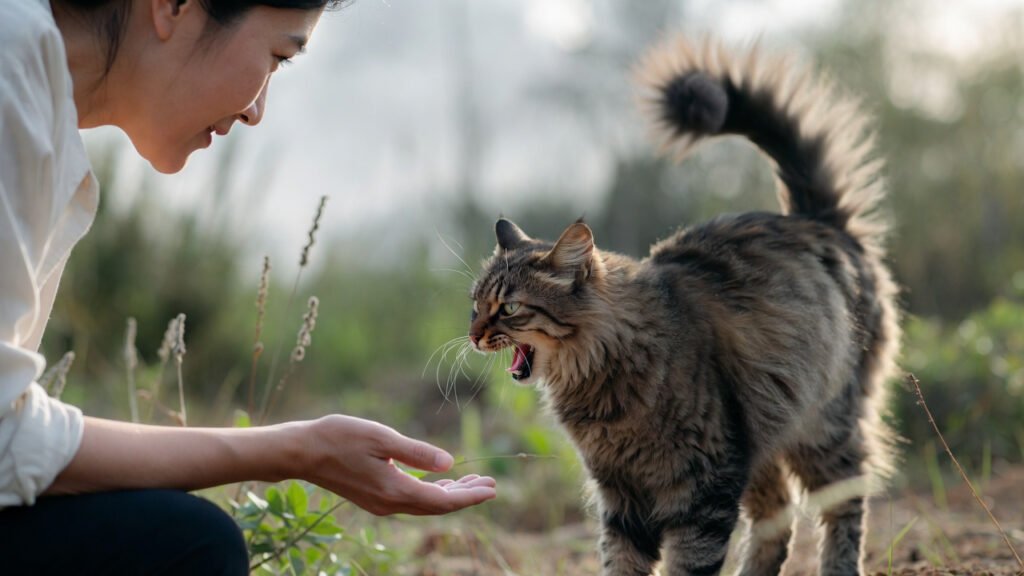
A cat’s posture tells you whether they are planning a defensive retreat or an offensive strike. A cat that arches its back and stands sideways (piloerection) is trying to look as large and intimidating as possible. They are “bluffing” to try and make you leave. On the other hand, a cat hunkered down with their weight shifted onto their back legs—the “crouch”—is ready to spring. This is a coiled kinetic spring, and it is a very dangerous posture for an owner to ignore.

8. The “Freeze”: The Most Dangerous Warning You are Missing

This is the sign that most owners miss, leading to the “out of nowhere” bite. You are petting your cat, they are purring, and then suddenly… they go completely still. The purring stops. Their body feels like a statue under your hand. The **”Freeze”** is a major warning. It means the cat’s brain has reached its limit and is now “evaluating” the threat. They are deciding whether to bite. If your cat suddenly goes stiff, **stop moving immediately.** Let your hand sit there for a second, then slowly retreat. If you continue to pet a “frozen” cat, they will strike.

9. Skin Rippling: The Sign of Sensory Overload

Have you ever seen the skin on your cat’s back “twitch” or “ripple” during petting? This is often a sign of sensory overload or feline hyperesthesia. Their nervous system is physically telling you that the stimulation has become too much to handle. If the skin is rippling, the cat is on the verge of a “snap” reaction. This is a common precursor to why is my calm cat suddenly aggressive during quiet moments. Respect the skin ripple and stop the interaction.

Frequently Asked Questions

Why does my cat bite me while I am sleeping?
This is usually either play-aggression (hunting moving toes) or redirected aggression from hearing something outside. They are in a state of high arousal and you are the closest target.

Should I hiss back at my cat?
No. Hissing is a challenge and a sign of enmity. It will only escalate the fear and the fight. Use silence and distance instead.

Can a new smell cause aggression?
Yes. If you smell like a strange cat or dog, your cat may not recognize you and react as if an intruder has entered their territory.

How long does it take for a cat to calm down after a warning?
Adrenaline can take up to 24 hours to leave a cat’s system. Give them at least 2-4 hours of total silence before interacting again.

Conclusion

Reading **cat aggression warning signs** is an act of empathy and respect. By learning the subtle language of the eyes, ears, and tail, you are telling your cat that they are safe and that their boundaries matter. Don’t wait for the bite to happen; listen to the “whispers” of their body language. For more tips on mastering the complex bond between humans and felines, join our community on our Facebook page. Let’s turn those hisses back into purrs.


Medical Causes of Cat Aggression: A Deep Dive into Pain and Illness in Felines

Medical Causes of Cat Aggression: A Deep Dive into Pain and Illness in Felines

When a normally affectionate cat suddenly starts hissing, swatting, or biting, the emotional toll on the owner is immense. We tend to view our pets through a human lens, wondering if they are “mad” at us or if they have suddenly developed a “mean” personality. However, as someone who has spent years observing feline behavior in both clinical and home settings, I can tell you that cats are rarely malicious. Instead, they are masters of concealment. In the wild, showing pain is a death sentence; it signals vulnerability to predators and competitors. In your living room, this evolutionary trait means your cat will hide a pulsing toothache or the grinding pain of arthritis until they simply cannot take it anymore. At that point, aggression becomes their only defensive tool. Understanding the **medical causes of cat aggression** is not just about fixing a behavior—it’s about relieving suffering.

If you’ve been asking yourself why is my calm cat suddenly aggressive, you must pause before reaching for a training manual or a spray bottle. Aggression that appears “out of nowhere” is almost always a physiological cry for help. A cat that lashes out when touched is often trying to protect a hurting part of their body from further discomfort. In this comprehensive guide, we are going to explore the various medical triggers that turn sweet cats sour, from silent joint decay to complex hormonal imbalances. By the end of this article, you will know exactly what physical signs to look for and why your vet’s diagnostic plan is the most important step in restoring your cat’s gentle nature.

1. Dental Disease: The Silent Agony of the Mouth

In my experience, dental pain is the single most overlooked **medical cause of cat aggression**. Cats suffer from a unique and agonizing condition called Feline Oral Resorptive Lesions (FORL), where the body literally begins to dissolve the tooth from the inside out, exposing the highly sensitive nerve endings. Imagine having an open nerve in your tooth and then having someone playfully scruff your head or try to pet your cheek. The pain is electric, sharp, and terrifying for a cat.

This pain often leads to what we call “head shyness.” The cat will flinch when you reach for them, or they may hiss at their food bowl because they associate eating with agony. If you notice your cat dropping food, drooling excessively, or pawing at their mouth, the aggression is a secondary symptom of a major dental crisis. A simple cleaning or an extraction can often take a cat from “aggressive” to “cuddly” in just a few days of recovery. Have you noticed your cat only biting when you pet near their jaw? That is a huge red flag for oral pain.

2. Arthritis and Joint Pain: Why Movement Hurts

We often think of arthritis as a “dog problem,” but recent studies suggest that up to 90% of cats over the age of 12 have some form of degenerative joint disease. Because cats are so light and agile, they hide their limp much better than dogs do. Instead of limping, they simply stop moving as much. They stop jumping onto the high counter, they stop grooming their back, and they become aggressive when picked up.

Arthritis makes a cat feel vulnerable. If they know their hips hurt, and they see a child or another pet approaching them quickly, they will preemptively hiss or swat to keep the “threat” away. They are creating a buffer zone of safety. If you’ve been monitoring cat aggression warning signs, look for a “hunched” posture or a tail that thumps whenever the cat has to change positions. Providing orthopedic beds and joint supplements can help, but ruling out chronic pain is essential for their mood stabilization.

Expert Observation: “I once saw a cat that was considered ‘unadoptable’ due to aggression. After a week of pain medication for a spinal injury, he became the sweetest lap cat in the shelter. Pain changes the brain’s chemistry.”

3. Hyperthyroidism: Understanding “Thyroid Rage”

When an older cat suddenly develops a “manic” energy—pacing at night, eating everything in sight, and attacking for no reason—we immediately look at the thyroid gland. Hyperthyroidism is a common **medical cause of cat aggression** where an overactive thyroid floods the body with hormones. This speeds up the heart rate, raises blood pressure, and puts the cat’s nervous system into a state of permanent “fight or flight.”

In the veterinary community, we sometimes call this “thyroid rage.” The cat isn’t choosing to be angry; their body is literally vibrating with excess energy and irritation. Everything feels louder, brighter, and more annoying to them. If your senior cat is losing weight despite a massive appetite and has become aggressive, a simple blood test can confirm this condition. Once the hormone levels are managed via medication or radioactive iodine therapy, the “rage” usually vanishes.

4. Urinary and Renal Distress: Bladder Pain and Toxins

Urinary issues are physically excruciating for felines. Whether it’s a bacterial infection (UTI) or sterile cystitis caused by stress, the bladder wall becomes inflamed and raw. Every movement can cause a sharp, stinging pain in the lower abdomen. If you pet a cat near their tail or flanks while they have a bladder issue, they may turn and bite with shocking speed.

Furthermore, as kidney function declines in older cats, metabolic toxins can build up in the bloodstream (uremia). These toxins can cause nausea, headaches, and a general feeling of malaise. A cat that feels constantly nauseated is not going to have much patience for petting or play. This is also why you might find your cat sleeping in the litter box; they are seeking comfort in a familiar place while their body feels like it’s failing them.

5. Feline Hyperesthesia Syndrome: The Rolling Skin Disease

If you have ever seen your cat’s skin “ripple” or “roll” along their back, followed by a sudden burst of frantic grooming or a seemingly unprovoked attack on their own tail, you may be seeing Feline Hyperesthesia Syndrome (FHS). This is a complex neurological and dermatological condition where the cat’s skin becomes hypersensitive to the point of pain.

For a cat with FHS, a gentle stroke along the spine can feel like an electric shock. They may suddenly hiss and bite at the air or your hand because their nervous system is misfiring. This is one of the most frustrating **medical causes of cat aggression** for owners because it looks so bizarre. Managing FHS often involves a combination of environmental enrichment, stress reduction, and sometimes anti-seizure or anti-anxiety medications to calm the overactive nerves.

Cat looking startled and aggressive


6. Neurological Glitches: Brain Tumors and Seizures

Sometimes the “aggression” isn’t a reaction to external stimuli, but a direct result of changes in the brain’s physical structure. Brain tumors, inflammatory diseases like FIP (Feline Infectious Peritonitis), or even lead poisoning can affect the part of the brain that governs impulse control and mood.

Neurological aggression often feels “different” to an owner. The cat may have a glazed look in their eyes, or they may attack a wall before turning on you. Some cats suffer from “partial seizures” where they remain conscious but lose control over their emotional responses for a few minutes. If the aggression is accompanied by circling, head pressing, or vision changes, it is a medical emergency that requires immediate veterinary imaging.

7. Sensory Loss: The Aggression of the Startled Cat

As cats age, they often lose their hearing and vision, much like humans do. A cat that can no longer hear you approaching or see your hand coming toward them is a cat that is constantly being “snuck up on.” If you startle a sleeping cat who is deaf and blind, their instinctual “startle reflex” is to use their claws.

This isn’t intentional aggression; it is a defensive reaction to being shocked. Owners of senior cats should learn to stomp their feet on the floor when entering a room so the cat can feel the vibrations, or use scent markers to help the cat navigate. If you find your senior friend becoming “grumpy,” consider that they might simply be living in a world of silence and shadows.

8. Gastrointestinal Issues: The Gut-Brain Connection

We are learning more every day about the connection between the gut and the brain. Chronic inflammation in the intestines (IBD) or food sensitivities can cause constant, low-level abdominal pain and nausea. Have you ever been “hangry” or had a stomach bug that made you want to be left alone? Cats experience this too. If their gut is constantly inflamed, they will be less tolerant of handling and more prone to irritability. Managing their diet is often the first step in calming their temperament.

Frequently Asked Questions

Can a cat become aggressive from a simple flea bite?
Yes. For cats with Flea Allergy Dermatitis, the itch is so intense it causes a state of high stress and “petting-induced” aggression as the skin is already raw and sensitive.

What is the most common medical cause of aggression in kittens?
Usually, it is related to parasites or teething pain, though play-aggression is more common at that age. However, ear mites can cause significant pain and irritability in kittens.

Will my cat’s personality return to normal after treatment?
In the vast majority of cases, yes. Once the underlying pain or hormonal imbalance is resolved, the behavioral aggression typically fades away within a few weeks.

Should I try behavioral training while my cat is ill?
No. Training an animal that is in physical pain is ineffective and can actually damage your bond. Focus on medical recovery first.

Final Thoughts

If your cat is lashing out, please don’t take it personally. They aren’t trying to hurt you; they are trying to survive a body that feels like it’s under attack from the inside. Ruling out the **medical causes of cat aggression** is the most loving, responsible thing you can do as a pet parent. By working closely with your vet and paying attention to subtle changes in their grooming, eating, and movement, you can give your cat the relief they deserve. For more advice on navigating the complexities of feline health, join our community on our Facebook page. We are here to help you and your kitty find the peace you both deserve.

Read also :Why Is My Calm Cat Suddenly Aggressive

How to Calm an Aggressive Cat Naturally: A Holistic Guide to Restoring Feline Peace

How to Calm an Aggressive Cat Naturally: A Holistic Guide to Restoring Feline Peace

Walking into your home and feeling like you are entering a battlefield is one of the most stressful things a cat owner can experience. I have worked with hundreds of feline parents who feel helpless when their once-sweet companion begins to lash out. It is heartbreaking to see the bond between a human and a pet fray due to fear or anger. When people ask me how to calm an aggressive cat naturally, they are often at their wit’s end, looking for solutions that don’t involve heavy sedation or harsh punishments. The good news is that cats are incredibly responsive to environmental and behavioral shifts—if you know how to speak their language.

Aggression in cats is never random. It is a calculated response to a perceived threat, internal discomfort, or a lack of environmental control. Before we jump into specific remedies, we have to understand that “natural” doesn’t mean “weak.” Natural solutions often involve restructuring the cat’s entire world to lower their stress hormones (cortisol) and boost their “feel-good” chemicals (oxytocin). In this guide, we are going to explore a multi-layered approach to feline peace, from herbal supports and pheromones to the psychological architecture of your home. If you’ve been wondering why is my calm cat suddenly aggressive, this holistic path is your next step in rebuilding that lost trust.

Immediate De-escalation: The “Space” Principle

When you are in the middle of a confrontation with an aggressive cat, your instincts might scream at you to soothe them or pick them up. This is a mistake. The most “natural” thing a cat wants when they are aggressive is **distance**. In feline language, distance is safety. If you are trying to figure out **how to calm an aggressive cat naturally**, the first step is to simply stop existing in their immediate vicinity.

Give them a “reset” room. This should be a quiet, dark space where they can stay for several hours. This isn’t a punishment; it is a neurological break. It takes time for adrenaline to leave a cat’s bloodstream—sometimes up to 24 hours. By removing the “trigger” (which might be you, another pet, or a loud noise), you allow their brain to return to its baseline state. Respecting their need for isolation is the most respectful, natural thing you can do for a stressed cat.

Dr. Ahmed’s Note: “Never stare at an aggressive cat. In the wild, a direct stare is a challenge. If you must be in the same room, use the ‘slow blink’ and look away. This communicates to their brain that you are not a predator.”


Synthetic Pheromones: Science-Backed Scent Support

If you want to know how to calm an aggressive cat naturally , you have to understand the power of their nose. Cats communicate through scent markers. When they rub their faces on your furniture, they are leaving “happy pheromones” that tell their brain, “This place is safe.” When a cat is aggressive, they have often lost this scent-based sense of security.

Synthetic pheromones, like Feliway, mimic these natural markers. While it isn’t a “cure-all,” it lowers the overall anxiety floor of your home. It works behind the scenes to convince the cat’s primitive brain that they aren’t in danger. For households dealing with medical causes of cat aggression, these diffusers can be a vital secondary support to help the cat cope with their internal physical discomfort.

Natural Herbs and Supplements for Calmness

There are several botanical and nutritional options that can assist in lowering feline stress without the side effects of traditional pharmaceuticals. However, always consult with your vet before introducing these to their diet.

  •  Silver Vine and Valerian: While catnip can actually make some cats *more* aggressive, silver vine and valerian root often provide a deep sense of euphoria and relaxation afterward.
  • L-Theanine and L-Tryptophan:  These are amino acids naturally found in green tea and turkey. They boost serotonin and dopamine levels, helping the cat feel more balanced.
  • Bach Flower Remedies: Specifically “Rescue Remedy” for pets. Many owners find that adding a few drops to the cat’s water bowl helps take the edge off their fear-based reactions.
  •  Cat Thyme: This isn’t actually thyme, but a plant that many cats find soothing. If your cat is a “stress-scratcher,” having cat thyme available can provide a sensory distraction.

Environmental Enrichment: The Vertical Solution

In the world of cat behavior, “floor space” isn’t the only territory that matters. In fact, for an aggressive cat, the floor is often where the danger is. To calm a cat naturally, you must think vertically. Cats feel safest when they are high up. From a high perch, they can monitor the “intruders” (kids, dogs, or even your feet) without feeling vulnerable to an attack.

Adding cat trees, wall shelves, or even clear space on top of a bookshelf can transform an aggressive cat’s personality. When they have a “highway” of high places to traverse the room, they no longer feel cornered. A cornered cat is an attacking cat; a cat with a “view from above” is a confident observer.

Play Therapy: Draining the Predatory Drive

A significant portion of aggression in indoor cats is simply “thwarted predatory drive.” Your cat is a hunter designed to stalk, pounce, and kill. If they don’t have an outlet for this energy, they will eventually “kill” your ankles.

To fix this naturally, you must implement **Interactive Play Therapy**. Use a wand toy (never your hands) to mimic the movements of a bird or mouse. Let the cat successfully “catch” the toy several times per session. This provides a psychological “win” and releases a flood of dopamine. Ending the play session with a small meal completes the “Hunt-Catch-Kill-Eat-Groom-Sleep” cycle, which is the natural biological rhythm of a happy cat. If you are struggling to read their cues during play, studying cat aggression warning signs can help you stop before they get overstimulated.

Counter-Conditioning: Rebuilding Trust with Food

If your cat is aggressive toward a specific person or pet, you need to change their emotional association. Right now, that person means “fear” or “annoyance.” We want that person to mean “tuna” or “chicken.”

This is a slow process. Start by having the “trigger person” toss high-value treats from a distance where the cat still feels safe. Don’t try to pet the cat. Just exist in the space and provide food. Over weeks, the cat’s brain will literally rewire itself: *”That person = the giver of the best food.”* This is the most effective natural way to rebuild a broken bond without force.

Frequently Asked Questions

Can catnip make aggression worse?
Yes. About 30% of cats become hyper-aroused or “mean” on catnip. If your cat is aggressive, stop using catnip and try Silver Vine instead.

How long does it take for natural remedies to work?
Environmental changes can have an immediate effect, but herbal supplements and behavioral training usually take 2-4 weeks to show significant results.

Is “CBD” safe for calming cats?
Many owners use pet-specific CBD, but it is vital to use brands that are THC-free and lab-tested. Always ask your vet first.

Should I hiss back at my cat?
No. Hissing back is a challenge. It escalates the conflict rather than calming it. Silence and distance are your best tools.

Final Thoughts

Learning **how to calm an aggressive cat naturally** is a journey of patience and empathy. You aren’t just fixing a “broken” pet; you are listening to a creature that is trying to tell you their world feels unsafe. By focusing on pheromones, vertical space, and proper play, you can transform your home from a place of tension into a sanctuary of peace. Remember, the goal isn’t just to stop the biting—it’s to make your cat feel so secure that they never feel the need to bite again. For more tips on feline behavior and health, visit our community on our Facebook page. You’ve got this, and so does your kitty.

Read also :Why Is My Calm Cat Suddenly Aggressive?

Why Is My Calm Cat Suddenly Aggressive? Causes, Warning Signs, and How to Stop It

Why Is My Calm Cat Suddenly Aggressive? Causes, Warning Signs, and How to Stop It

There is nothing quite as jarring as having a peaceful, purring companion suddenly turn into a hissing ball of fur and claws. I have spent years working with felines and their humans, and I can tell you that when owners ask me, why is my calm cat suddenly aggressive, they aren’t just looking for a quick training tip; they are usually in a state of genuine shock and hurt. It feels like a betrayal of trust. One day you are sharing a quiet nap on the sofa, and the next, you are walking on eggshells in your own hallway, wondering when the next strike will come.

But here is the truth I always share with my clients: cats don’t just “go bad.” They don’t have the capacity for spite, revenge, or planned malice. If your once-gentle cat is now lashing out, it is almost always a survival response to something we can’t immediately see. Whether it is hidden physical pain, a change in their environment that feels like an invasion, or even a stray cat outside a window that has triggered their predatory drive, your cat is communicating through the only intense language they have left. In this guide, we are going to walk through every possible reason for this shift and show you how to restore harmony to your home.

Why Is My Calm Cat Suddenly Aggressive?

When a personality shift happens overnight, we have to look deeper than just “behavior.” In my experience, a sudden change in a calm cat is usually a loud distress signal. Cats are masters at hiding their vulnerability. In the wild, showing pain makes you a target for larger predators, so our domestic friends have kept this instinct. Aggression is often the final stage of a problem they have been trying to cope with silently for weeks.

Hidden medical problems that cause aggression

Many owners don’t realize that several internal issues can lead to a cat lashing out. Hyperthyroidism is a huge culprit, especially in middle-aged to senior cats. It speeds up their metabolism and leaves them feeling constantly hungry, irritable, and “on edge.” Dental disease is another silent trigger; imagine having a pulsing toothache and then someone tries to pet your head. You’d probably swat at them, too. If you are noticing strange physical symptoms alongside the mood shift, such as changes in eating or litter box habits, you might want to read more about how to settle a cat’s upset stomach to see if digestive distress is playing a role in their irritability.

Pain is the number one cause of sudden aggression in formerly calm cats. It could be anything from an abscess from a small scratch to a pulled muscle. Because the cat can’t tell you where it hurts, they use their claws to say “don’t touch me there.” This is especially true if the aggression only happens when you pick them up or pet a specific area. Chronic conditions like feline hyperesthesia—where the skin becomes painfully sensitive to touch—can also cause a cat to suddenly snap during a petting session.

Hormonal and age-related behavior changes

In cats that haven’t been spayed or neutered, hormonal surges are a frequent cause of territorial and sexual aggression. However, even in fixed cats, changes in adrenal function or age-related shifts in brain chemistry can alter their threshold for frustration. As they age, their “patience bar” simply gets shorter, and things that didn’t bother them as kittens might become intolerable as adults.

Expert Observation: “I’ve often seen cats who were perfectly friendly suddenly become ‘mean’ because of an undiagnosed UTI or bladder stones. If your cat is aggressive AND avoiding the litter box, it’s almost certainly a medical issue, not a behavioral one.”

Indoor Cat Suddenly Aggressive for No Reason

It’s easy to think that an indoor cat has a “perfect” life, so why would they become aggressive? The truth is, the indoor environment can sometimes become a pressure cooker for a feline’s natural instincts. When we wonder why is my calm cat suddenly aggressive, we have to look at the world through their eyes—a world that is often static, predictable, and occasionally frustrating.

Lack of stimulation and boredom

Cats are hardwired to hunt, stalk, and pounce. If an indoor cat spends 23 hours a day staring at the same four walls with no mental stimulation, that predatory energy has to go somewhere. This often manifests as “play aggression,” where they ambush your ankles from behind a sofa or bite your hand during a petting session. It’s not malice—it’s a buildup of frustrated energy that has found a target.

Territory and environmental stress

Have you ever seen your cat staring intently out the window at a stray cat or even a squirrel? This can trigger “redirected aggression.” The cat sees an intruder they can’t reach, gets filled with adrenaline and “fight” instincts, and then turns that aggression toward the closest thing to them—usually you or a fellow pet. To keep their environment safe, ensure you aren’t leaving out common household items toxic to cats that could be adding physical stress to their already high mental anxiety.

Changes in routine or household

Cats are the ultimate creatures of habit. A new brand of litter, a guest staying over for the weekend, or even moving a piece of furniture can cause a sensitive cat to feel that their territory is no longer secure. When a cat feels insecure, they often resort to “offense as defense,” attacking to reclaim a sense of control over their space.

Cat Aggressive After Moving House – What to Do

Moving is one of the most stressful events in a cat’s life, often ranking higher than a vet visit. Their entire world is built on scent markers and territorial familiarity. When you move, you strip them of every “safe” scent they’ve spent years placing around the house.

How moving stresses cats

In a new house, every sound is a potential predator and every corner is an unknown. A cat that was once calm and social may hide under a bed and hiss at anyone who approaches. This is pure fear-based aggression. They aren’t trying to hurt you; they are trying to keep the “unknown monsters” of the new house at bay while they are in their most vulnerable state.

How long adjustment takes

Most cats take at least two to four weeks to feel even remotely comfortable in a new home. For some high-strung breeds, it can take months. If you are struggling with a cat that won’t stop hissing after a move, remember that patience is your only real tool. For more community stories and survival tips for moving with pets, feel free to join our discussion on our Facebook page where we share real-life advice from other pet parents.

Steps to help your cat feel safe again

  • The Base Camp Method: Keep your cat in one small, quiet room for the first few days with all their essentials.
  • Scent Sharing: Rub a clean sock on their cheeks and then rub it on corners of the new house to “pre-scent” the territory for them.
  • Pheromones: Use synthetic pheromone diffusers (like Feliway) to pump “happy scents” into the new air.
  • Predictability: Keep feeding and play times exactly the same as they were in the old house.


Why Is My Cat Hissing and Attacking Me Suddenly?

This is the point where owners feel the most afraid and confused. When your cat hisses at you—the person who provides their food and safety—it feels like a punch in the gut. But we have to look at the mechanics of why this happens. A hiss is rarely the beginning of the problem; it is usually the climax of a stressor you didn’t notice.

Fear-based aggression explained

A hiss is a defensive warning. It translates roughly to: “I am scared, I feel cornered, and I will use my weapons if you come one inch closer.” If your search for why is my calm cat suddenly aggressive led you here, ask yourself: did something startle them recently? A loud noise from the TV, a heavy object dropping in another room, or even a fast movement from you can trigger a defensive reflex in an already stressed cat.

Overstimulation from petting

I see this constantly in my behavior consultations. It’s called “petting-induced aggression.” Cats have incredibly sensitive nervous systems. A stroke that feels wonderful for 30 seconds might start to feel like an electric shock or static build-up by the 40th second. If your cat suddenly grabs your hand and bites after being petted, they have reached their physical stimulation threshold. They aren’t “mad” at you; they just physically cannot handle any more touch.

Recognizing warning signs before an attack

Cats rarely attack without warning; we just aren’t always great at reading the subtle cues of their language. Before the bite happens, look for:

  • The Thumping Tail: A tail that is thumping against the floor or sofa is a major red flag.
  • The Airplane Ears: Ears that rotate backward or flatten against the head indicate high arousal and irritation.
  • The Rippling Skin: If the skin on their back is twitching or rippling, their nervous system is overstimulated.

Older Cat Becoming Aggressive Suddenly

Aging brings a specific set of challenges that can turn a “sweet senior” into a “grumpy elder.” If your older cat is acting out, it is almost certainly a cry for help regarding their changing body and mind.

Arthritis and chronic pain

Arthritis is the “silent thief” of feline personality. It makes moving painful and makes the cat feel vulnerable because they know they can’t run away quickly if they need to. If a senior cat knows it hurts to be picked up or even to have their back touched, they will hiss to keep you away. It’s a preemptive strike to avoid the pain they associate with being handled.

Cognitive dysfunction (cat dementia)

Yes, cats can suffer from cognitive decline similar to Alzheimer’s in humans. This can cause them to become disoriented, especially at night or in low light. A disoriented cat is a scared cat, and a scared cat may lash out at “strangers”—even if that stranger is their lifelong owner. They simply don’t recognize their surroundings or the people in them for a few moments.

How to Calm an Aggressive Cat Safely

When the tension is high, your reaction determines the outcome. Here is how I handle an aggressive cat without getting hurt or making the behavior worse:

  • Give Space Immediately: Do not try to soothe an angry cat with pets or “sweet talk.” Walk out of the room. Close the door if necessary. They need 2-4 hours for their adrenaline to return to baseline levels.
  • Avoid Punishment: Never hit, yell, or spray water. This confirms their fear that you are a threat and can turn temporary aggression into a permanent behavioral trait.
  • The “Treat Toss”: Once they have cooled down, don’t try to pick them up. Toss a high-value treat toward them from a distance. Let them associate your presence with food, not fear.

When to See a Veterinarian

If you are still wondering why is my calm cat suddenly aggressive after checking the environment, it is time for a professional medical opinion. You should book an appointment if:

  1. The personality change was instant: Going from “cuddle bug” to “attacker” in a single day is a classic sign of internal pain.
  2. You see signs of illness: Hiding, changes in appetite, or poor grooming habits.
  3. The attacks are becoming frequent: If the behavior is a new pattern, it likely won’t resolve without medical intervention for pain or anxiety.

Frequently Asked Questions

Can a change in cat food cause aggression?

Yes, it can. Nutritional deficiencies or even a simple stomach ache from a new protein can make a cat feel “hangry” or irritable. If their belly hurts, their patience for petting disappears.

How long will my cat stay “mad” after an episode?

Cats don’t really hold grudges, but they do stay physically “aroused.” It takes a long time for cortisol and adrenaline to leave their system—sometimes up to 24 hours. Give them a full day of quiet before expecting them to be back to normal.

Is it true that some breeds are just “meaner”?

Not at all. While some breeds like the Siamese are more vocal and demanding, aggression is a symptom of an underlying issue, not a personality trait of a specific breed.

Final Thoughts for Pet Parents

Living with a suddenly aggressive cat is stressful and, at times, heartbreaking. But remember: your cat isn’t acting this way to be spiteful. They don’t have a hidden agenda. They are reacting to a world that has suddenly become painful, loud, or scary. By being a detective instead of a judge, you can identify the root cause—whether it’s a sore tooth, a scary neighbor cat, or just a boring living room—and help them feel safe again.

Be patient with them, and more importantly, be patient with yourself. It takes time to rebuild trust, but it is entirely possible. If you need more specific advice or want to share your success story, visit our website at petscatsdogs.com or join our community of fellow cat owners. Your bond with your feline friend is worth the effort it takes to heal it.


Why Is My Cat Aggressive All of a Sudden? The Complete Guide to Understanding Feline Mood Swings

Why Is My Cat Aggressive All of a Sudden? The Complete Guide to Understanding Feline Mood Swings

I’ve seen it happen hundreds of times in my years of working with feline behavior. A distraught owner walks in, looking exhausted and often sporting a few fresh scratches, asking the same heartbreaking question: “Why did my sweet kitten turn into a tiny tiger overnight?” It is one of the most jarring and emotionally draining experiences a pet parent can go through. One minute you’re enjoying a quiet evening, and the next, your hand is being treated like a piece of prey. If your cat has suddenly become aggressive, I want you to know something vital right now—they aren’t “evil,” they haven’t “turned on you,” and they haven’t stopped loving you. Cats are masters of disguise, and sudden aggression is almost always a loud, desperate “shout” for help regarding something they cannot communicate through meows. In this deep dive, we are going to unpack the medical, environmental, and psychological triggers that turn a purr into a hiss, and exactly how you can restore the peace in your home. Let’s walk through this together, step by step, as we decode the secret language of your cat’s mood swings.

Cat looking aggressive in dark light

1. The Biological “Pain Shield”: Ruling Out Medical Emergencies

In my clinical experience, when a cat’s personality changes in less than 24 to 48 hours, my first thought isn’t “behavioral problem”—it’s “physical pain.” You see, cats are evolutionarily programmed to be stoic. In the wild, showing weakness or pain is an invitation for predators to attack. Therefore, your domestic house cat will hide a toothache, a back injury, or a burning urinary tract infection until they simply cannot take it anymore. When you reach out to pet them, and they swat at you, it’s not because they want to hurt you; it’s a defensive reflex to protect a hurting body part.

Consider conditions like **Feline Hyperesthesia Syndrome**, where a cat’s skin becomes hypersensitive to the point that a simple stroke feels like an electric shock. Or perhaps it’s arthritis, which is incredibly common in cats over the age of seven. If your cat is hurting every time they jump off the sofa, their overall “fuse” becomes much shorter. They become irritable, just like we do when we have a pounding migraine or a sore back. Before you assume your cat needs a trainer, they likely need a veterinarian. We need to look for hidden infections, hormonal imbalances like hyperthyroidism, or even high blood pressure, which can make a cat feel confused and combative.

“Expert Advice: If your cat flinches, growls when touched in a specific spot, or has stopped grooming themselves, stop all behavioral training and book a vet appointment immediately. Treating the pain often ‘cures’ the aggression instantly.”

2. The Window Shadow: Understanding Redirected Aggression

I remember a case where a client’s cat attacked her while she was just sitting and reading a book. She felt betrayed. However, upon investigating, we found that a stray cat had been marking the bushes right outside the living room window. Her cat saw the intruder, became filled with “fight or flight” adrenaline, but couldn’t reach the target through the glass. When the owner moved her leg, the cat “redirected” all that pent-up fury onto her.

Redirected aggression is perhaps the most dangerous form because it is explosive and seems unprovoked. Your cat is in a state of high arousal—their pupils are dilated, their tail is thumping, and their brain is flooded with stress hormones. They are “locked and loaded” for a fight. If you walk by or try to pet them during this window, you become the outlet for that energy. This state can last for hours, sometimes even a full day. Understanding this helps you realize it’s not personal; it’s just a biological glitch in their predatory wiring.

Cat staring intensely out of a window

The “Pet Love” Scam: 10 Brutal Truths Why Your Dog and Cat Are Just Manipulating Your Brain

The “Pet Love” Scam: 10 Brutal Truths Why Your Dog and Cat Are Just Manipulating Your Brain

We spend billions on them every year. We call them our “babies” and “soulmates.” We let them sleep in our beds and even buy them organic meals while we eat instant noodles. But what if I told you that the “love” you feel from your pet is the greatest biological scam in history?

As a behaviorist who has worked with thousands of animals, I’m tired of the sugar-coated fairy tales. Science is finally uncovering the dark, chilling reality behind those wagging tails and soft purrs. Your pet isn’t your “best friend”—they are a highly evolved opportunist designed to exploit your emotions for survival. Prepare to be offended, because the truth is rarely cute.

Shocking dog expression

1. The “Stockholm Syndrome” of Man’s Best Friend

You think your dog is loyal? Think again. Evolutionary biology suggests that dogs are essentially “professional beggars” who have mastered the art of submissiveness to ensure a steady food supply. They don’t love *you*; they love the fact that you are a walking vending machine.

In the wild, wolves cooperate for the pack’s survival. In your living room, your dog has traded that dignity for a life of easy meals. If you’ve ever had to settle a dog’s upset stomach after they scavenged through your trash, you weren’t “parenting”—you were being exploited by a scavenger who knows exactly how to make you feel needed.

2. Toxoplasmosis: Is a Brain Parasite Forcing You to Love Your Cat?

This is the “dark secret” of the cat world. Cats carry Toxoplasma gondii, a parasite that literally rewires the brains of mammals to make them lose their fear of predators. In humans, it has been linked to personality changes and an unnatural obsession with felines.

“You don’t love your cat because they are ‘soulful’; you love them because a parasite might be controlling your neural pathways to ensure the cat’s survival.”

Could your intense affection for your cat be a form of biological mind control? Check out the terrifying debate on our Facebook page to see if you have the symptoms!

Predatory cat eye close up

Why Is My Female Cat Spraying at Night? Understanding the Behavior and How to Stop It

female cat spraying at night

Waking up to the pungent, unmistakable scent of cat spray is a frustration many pet owners know all too well. While most people associate spraying with intact male cats, female cats are surprisingly capable of this behavior, especially during the quiet hours of the night. If you have found damp spots on your curtains, walls, or furniture, you are likely wondering why this is happening now. Is it a medical issue, or is your cat feeling insecure in her own home? Understanding the root cause is the first step toward reclaiming your peaceful, scent-free nights.

Female cat spraying at night usually boils down to communication. Your cat isn’t trying to be “bad” or spiteful; she is using her scent to mark her territory or express deep-seated anxiety. Because cats are naturally more active during dawn and dusk, the nighttime environment often amplifies their instincts. In this guide, we will explore the biological and psychological reasons behind this behavior and provide practical, human-tested strategies to help your feline friend feel secure again.

A concerned female cat sitting in a dimly lit room at night

Table of Contents

Is it normal for female cats to spray?

When we think of cat behavior, we often put it into boxes. We assume only males spray and females only use the litter box. However, research and experience tell us that about 5% of spayed female cats still engage in spraying behavior. If the cat is not spayed, that percentage jumps significantly. So, to answer the question: yes, it is “normal” in the sense that it is a natural part of the feline communication toolkit, even if it is highly undesirable for us humans.

Spraying is essentially a “scent post.” Think of it like a sticky note left for other animals. It conveys information about identity, reproductive status, and territorial boundaries. Even if your cat is the only pet in the house, she may still feel the need to “claim” her space. This is often triggered by things we cannot see or smell, but her sensitive nose picks up instantly.

I have spoken with many owners who feel like they’ve failed their pets when this starts. It’s important to remember that this isn’t a reflection of your cat’s love for you. It’s a biological response to an environmental trigger. Once we identify that trigger, the behavior usually subsides.
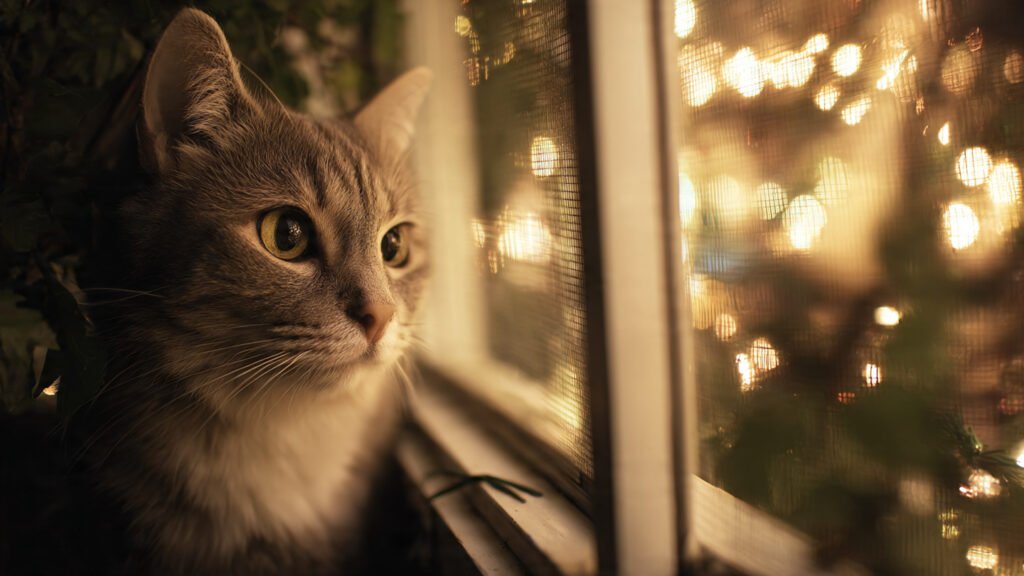
Cat looking out of a window at night

Spraying vs. Inappropriate Urination: Telling the Difference

Before you can fix the problem, you need to be sure it is actually spraying. Many owners confuse “inappropriate urination” (peeing outside the box) with “spraying” (scent marking). They require two very different approaches to solve. If you’re dealing with a cat health advice issue, the solution might be a simple trip to the vet, whereas behavioral spraying requires environmental changes.

When a cat sprays, she usually stands upright. Her tail might quiver or twitch, and she backs up against a vertical surface like a wall, a sofa, or a door frame. She releases a small amount of urine—usually much less than a full bladder—horizontally. This is specifically designed to hit “nose height” for other cats.

In contrast, inappropriate urination usually happens on horizontal surfaces like rugs, laundry, or beds. The cat squats as if she were in the litter box and empties her bladder. If your female cat is squatting on your duvet, it’s likely a litter box aversion or a medical issue. If she’s backing up to the front door at 2:00 AM, it’s a classic case of cat spraying behavior at night.

Why do female cats spray at night?

The timing of this behavior is often what drives owners crazy. Why wait until everyone is asleep? Cats are crepuscular, meaning they are most active during the twilight hours. However, many domestic cats transition this energy into the middle of the night. The silence of the house makes every outside noise—a stray cat walking past the porch or a raccoon in the trash—sound like a major territorial invasion.

At night, the “visual world” shrinks, and the “scent and sound world” expands for your cat. She might see the reflection of another cat in the window or hear the faint scratching of a neighbor’s pet through the wall. This heightens her territorial instincts. She feels the need to reinforce the “walls” of her kingdom while the “intruders” are active outside.

From what many owners notice, the spraying often happens near doors or windows. This is a huge clue. It suggests that the threat is coming from the outside. Your cat is effectively saying, “This house is occupied, don’t even think about coming in.”

So how do you know if your cat is feeling secure? If she is sleeping soundly in your bed, she likely feels safe. If she is patrolling the hallways and staring at the shadows under the door, she is on high alert, and that is when the spraying is most likely to occur.

Common reasons female cats spray indoors

While the “where and when” are important, the “why” often involves a combination of factors. If your female cat has suddenly started this habit, consider these common triggers:

  • Changes in the Household: Have you recently moved furniture, brought in a new partner, or adopted another pet? Cats thrive on routine. Even a new rug can smell “wrong” to them, prompting them to mark it with a familiar scent.
  • Inter-cat Tension: If you have multiple cats, there might be a silent war happening. You might not see them fighting, but a “stare-down” over the food bowl can be enough to make a female cat feel she needs to mark her territory.
  • Hormonal Fluctuations: If your cat is not spayed, she is almost certainly spraying to advertise her availability to males. Even spayed cats can sometimes have “ovarian remnant syndrome,” where a tiny bit of tissue continues to produce hormones.
  • Scent of “Outside” Cats: This is the most common reason for female cat spraying at night. Neighborhood strays marking your porch can be smelled through the cracks of the door.

Understanding understanding cat behavior is about looking at the world through their eyes—and noses. What seems like a minor change to us is a massive shift in their sensory environment.
Sleepy cat resting on a soft blanket

Medical triggers you shouldn’t ignore

I always tell owners: before you assume it’s “just a behavior,” talk to your vet. Cats are masters at hiding pain. Sometimes, a cat will spray because it hurts to urinate. Conditions like Feline Idiopathic Cystitis (FIC) or Urinary Tract Infections (UTIs) cause inflammation and a sense of urgency. The cat might try to go, feel a sharp pain, and associate the litter box with that pain. Consequently, she tries “going” elsewhere.

Kidney issues or diabetes can also increase the frequency of urination, which might spill over into marking behaviors. A quick urinalysis can rule out these scary possibilities. It is much easier to treat a minor infection than it is to break a months-long behavioral habit. Always check the physical before tackling the psychological.

How to stop female cat spraying at night

Stopping the spray requires a multi-pronged approach. You have to address the smell, the stress, and the trigger simultaneously. Here is a step-by-step plan that has worked for many of the pet owners I have advised over the years.

1. Block the View of the Outside

If the spraying is happening near windows or glass doors, use frosted window film or close the blinds completely at night. If she can’t see the stray cat outside, her stress levels will drop significantly. You can also use motion-activated sprinklers outside to keep stray animals away from your perimeter.

2. Use Pheromone Therapy

Products like Feliway mimic the “happy pheromones” cats rub from their cheeks onto furniture. When a cat smells these pheromones, it sends a signal to her brain that the area is safe. Plugging in a diffuser near the area she sprays can work wonders to calm her nighttime anxiety.

3. Create a “Safe Zone”

Give your cat a high-up place to sleep, like a tall cat tree. Cats feel safer when they can survey their territory from above. If she feels she “owns” the vertical space, she may feel less inclined to mark the horizontal or vertical boundaries of the room.

4. Re-evaluate the Litter Box

Even if she is spraying (and not peeing), a clean, accessible litter box reduces overall stress. The rule of thumb is one box per cat, plus one extra. Keep them in quiet, low-traffic areas where she won’t feel cornered.

A cat tree in a living room helping a cat feel safe

The right way to clean cat spray

This is where many owners make a critical mistake. They reach for the bleach or an ammonia-based cleaner. Stop! Ammonia is a component of cat urine. When you clean with it, the cat thinks, “Someone else just sprayed here!” and she will spray again to cover it up.

You must use an enzymatic cleaner specifically designed for pet messes. These cleaners contain bacteria that actually eat the uric acid crystals and proteins that cause the smell. If you don’t break down those enzymes, your cat will still smell the “target” even if you can’t.

For deep cleaning at night:

  1. Blot up as much as possible with paper towels (don’t scrub).
  2. Saturate the area with an enzymatic cleaner.
  3. Let it sit for at least 15 minutes (or as directed).
  4. Allow it to air dry naturally.

If you’re looking for more community support and tips from other owners who have been through this, feel free to visit our Facebook page for daily updates and shared experiences.

Frequently Asked Questions

Is my cat spraying because she is mad at me?

No. Cats do not have the cognitive capacity for “revenge” or spite in the way humans do. Spraying is a stress response or a biological communication. She is likely trying to self-soothe or protect her home.

Can I stop a female cat from spraying without spaying her?

It is very difficult. If she is intact, her hormones are driving her to find a mate. Spaying is the single most effective way to reduce or eliminate spraying in female cats, though it may take a few weeks for the hormones to leave her system.

How long does it take to break the habit?

Behavioral changes usually take 2 to 4 weeks to stick. You have to be consistent with cleaning and stress reduction. If you stop the interventions too early, the cat may revert to her old ways the next time she hears a noise at night.

Why does she only do it when I’m asleep?

Nighttime is when the house is quietest, making “threats” from outside more apparent. Also, if she is seeking your attention, she may have learned that the smell of spray is the only thing that gets you out of bed (even if it’s for a negative interaction).

Should I punish my cat for spraying?

Never. Punishment, like yelling or rubbing her nose in it, will only increase her anxiety. Since anxiety is often the cause of the spraying, punishment actually makes the problem worse. Focus on positive reinforcement and environmental changes instead.

Finding Peace for You and Your Cat

Dealing with reasons female cats spray indoors can be exhausting, especially when it interrupts your sleep. However, with a bit of patience and a “detective” mindset, you can solve this. Start by ruling out medical issues with your vet. Then, look at your home from your cat’s perspective. Are there strays outside? Is there tension between pets? Is the litter box clean enough?

By addressing the underlying anxiety and cleaning properly with enzymatic solutions, you can help your cat feel like she doesn’t need to “defend” her territory every night. Remember, she wants to be a happy, relaxed member of the family just as much as you want her to be. For more practical pet care tips, keep exploring our resources and stay patient with your furry friend.

Why Does My Cat Bite Me Gently? (Love Bites Explained)

Why Does My Cat Bite Me Gently? (Love Bites Explained)

Why Does My Cat Bite Me Gently? Understanding Feline Love Bites and Communication You are sitting on the couch, enjoying a quiet evening. Your cat is curled up in your lap, purring like a diesel engine, and you are absentmindedly stroking their soft fur. It feels like the perfect moment of bonding. Then, without warning—chomp. It isn’t a hard bite. It doesn’t break the skin or draw blood. It is a soft, deliberate nip on your hand or wrist. Then, just as quickly as it happened, your cat goes right back to purring or starts licking the spot they just bit. You are left sitting there, confused, wondering why your cat would bite you during such a peaceful moment. The short answer is that these are usually “love bites” or a sign of overstimulation. It is a complex form of feline communication that signals everything from deep affection to a polite request for space. Understanding these subtle cues is the key to a harmonious relationship with your house tiger.

The Phenomenon of the “Love Bite”

Let’s start with the most heartwarming reason. Sometimes, a bite really is just a sign of affection. I know it sounds counterintuitive to us—humans show love with hugs and soft words, not teeth—but for a cat, using their mouth is a primary way of interacting with the world. When a cat feels an overwhelming surge of safety, they may express it through a gentle nip.

This behavior is often rooted in their kittenhood. Mother cats frequently use their mouths to move, groom, and guide their young. When your cat gives you a soft bite, they are effectively treating you as a member of their “clowder.” They are claiming you. If your cat is purring, rubbing their face against you, and has a relaxed body, that nip is likely a “love bite.” They feel safe enough with you to be vulnerable. For more expert insights into these unique behaviors, you can check out our latest cat behavior guides.

However, the inhibited nature of the bite is what distinguishes it from aggression. The cat knows exactly how much pressure to apply to not hurt you. They learned this skill while wrestling with their littermates. If they bit too hard, the play stopped, teaching them the boundaries of social interaction.

Relaxed cat on couch
A relaxed, purring cat is most likely to give a gentle “love bite” as a sign of deep trust.

Overstimulation: The Fine Line Between Pleasure and Pain

While we like to think every nip is a kiss, the reality is often more physical. The most common reason owners ask “why does my cat bite me gently” is actually petting-induced overstimulation. Cats have incredibly sensitive hair follicles and nerve endings. What starts as a pleasant sensation can quickly become overwhelming.

Imagine someone is tickling your back. At first, it’s relaxing. But after five minutes in the exact same spot, the sensation changes. It starts to feel irritating, then sensitive, and eventually, it might even feel painful or like an electric shock. From what many owners notice, it’s not just about the behavior itself—cats seem to genuinely thrive on the predictability of our reactions, and a gentle nip is often their way of testing where they stand in our social circle while also signaling they’ve reached their petting limit.

The bite in this scenario is a polite request. It’s your cat saying, “Please stop now, I’ve had enough.” Usually, they move away immediately after the bite. If you continue to pet them, the next bite might be firmer. It is crucial to respect this boundary to maintain trust. You can find more tips on social boundaries on our Facebook community page.

Why Does My Cat Bite Me Gently
Watch for shifting ears or a twitching tail, which indicate your cat is becoming overstimulated.

Grooming and “Cobbing”: A Sign of Family

If your cat is licking you and then transitions into tiny, rapid nibbles, they are performing a behavior called “cobbing.” This looks like they are eating corn on the cob. In the feline world, this is a grooming technique used to remove tangles or debris from fur. When they do this to you, they are including you in their social grooming circle, known as allogrooming.

Allogrooming is a major bonding activity in cat colonies. By nibbling on your skin, they are strengthening the social bond and treating you as part of their family. They might even think you aren’t doing a good enough job of “cleaning” yourself! This type of biting feels more like a ticklish scrape and is a massive compliment to your relationship. For more about feline social structures, visit petscatsdogs.com.

Cat grooming another animal
Grooming nibbles are a way cats maintain social bonds within their family group.

Play Aggression and Hunting Instincts

House cats are tiny apex predators. Hunting is hardwired into their DNA. Sometimes, the answer to the biting mystery is simply that your hand has become the “prey.” This is especially common if you use your fingers to play with your cat under the covers or across the sofa. You are inadvertently training them that human skin is a toy.

If a cat is bored or has excess energy, movement triggers their prey drive. Your hand scurrying across the rug looks like a mouse. In these instances, the bite is gentle because they know you aren’t actual dinner, but they are practicing their grab-and-hold technique. This is most common in younger cats and indoor cats that lack environmental enrichment. To learn how to redirect this energy, check our cat enrichment guides.

Playful cat pouncing
Dilated pupils and a “wiggle” before the nip are classic signs of play-induced biting.

Attention Seeking: The “Hey, Look at Me” Nip

Cats are masters of operant conditioning. They learn very quickly which of their behaviors get a reaction out of you. If your cat nips your elbow while you are on your laptop, and you look at them or talk to them, they have successfully achieved their goal. To a cat, even a “No!” is a form of attention.

I have seen many cats who have trained their owners perfectly. If the food bowl is empty, they nip an ankle. If they want a door opened, they nip a hand. Because you responded to these nips in the past, you have reinforced the behavior. They aren’t trying to be mean; they are simply pushing the button that they know works. You can find more about behavior training on our Facebook page.

Teething: A Special Case for Kittens

If your cat is under six months old, the reason for the biting is almost certainly physiological. Kittens go through a teething phase just like human babies. As their adult teeth push through, their gums become sore and inflamed. Chewing on soft, fleshy fingers provides much-needed pressure relief for their aching mouths.

While this is a natural phase, it is the most important time to set boundaries. Allowing a small kitten to gnaw on you might be cute now, but it sets a dangerous precedent for when they are an adult with much stronger jaws. Always provide appropriate chew toys and redirect them immediately. Check out our kitten care section for recommended teething toys.

Kitten chewing toy
Kittens need safe, rubberized toys to soothe their gums during the teething phase.

Medical Causes: When to Worry

While most biting is behavioral, we cannot rule out physical pain. Cats are stoic animals that hide their discomfort exceptionally well. If a usually gentle cat suddenly starts biting when touched in a specific area—such as the hips or the base of the spine—it could be a pain response to arthritis or an injury.

Dental issues, skin infections, or even hyperesthesia (a condition where the skin is hypersensitive) can make a cat irritable. If the biting behavior appears suddenly and is accompanied by changes in appetite or activity levels, a veterinary exam is necessary. For help identifying pain in cats, visit petscatsdogs.com.

How to Read the Warning Signs Before the Bite

The secret to preventing the bite is catching the “Stop Signals” before the teeth make contact. Cats rarely strike without warning; we are just often too distracted to notice. Look for these subtle changes in body language:

  • The Tail Twitch: If the tip of the tail starts flicking like a whip, the cat is becoming annoyed.
  • Airplane Ears: Ears that turn sideways or flatten against the head indicate high arousal or irritation.
  • Skin Rippling: If the fur on their back seems to twitch or ripple, they are reaching their sensory threshold.
  • Stiffening: If the cat stops purring and their muscles go rigid, stop petting immediately.

By respecting these signals, you show your cat that you “speak their language,” which builds a much deeper level of trust and security. You can see more examples of these signs on our Facebook community.

How to Stop Gentle Biting (Without Ruining the Bond)

Understanding the “why” is the first step, but you still want to discourage the “how.” Even a gentle bite can be startling. Here is a proven protocol to manage the behavior gently:

1. The “Freeze” Technique

Our natural instinct is to pull our hand away. This is the worst thing you can do, as it triggers the hunting instinct. Instead, go limp. Let your hand go “dead.” When the movement stops, the “prey” becomes boring, and the cat will usually let go. Once they release you, calmly walk away.

2. Redirection is Key

Always have a toy within reach. If your cat starts to get that playful “look” in their eyes, offer a wand toy or a kicker toy before they go for your hand. This teaches them exactly what is appropriate to bite. Praise them when they interact with the toy instead of your skin.

3. Avoid Physical Punishment

Never hit, spray, or flick your cat. This only teaches them to fear you and can turn a gentle love bite into defensive, fear-based aggression. Feline training is built on positive reinforcement and the removal of attention, not force. For more training tips, visit petscatsdogs.com.

Person playing with cat toy
Using a wand toy keeps your hands safe while satisfying your cat’s hunting drive.

Frequently Asked Questions

Why does my cat bite me then lick me?

This is the classic “apology” cycle. They may have bit because of overstimulation, but they immediately lick you to say, “I still love you, I just needed that sensation to stop.” It is a mix of boundary-setting and social grooming.

Does my cat hate me if they bite me?

No. Aggressive biting involves hissing, growling, and deep punctures. A gentle bite is almost always a form of play, overstimulation, or affection. It is communication, not malice.

Why does my cat bite my nose or chin?

This is usually intense allogrooming. Your face is the most accessible part of you when you are cuddling. Gently move them away to discourage this near your eyes or mouth.

How long does the teething phase last?

Most kittens finish teething by six or seven months of age. If the biting continues past this point, it has likely become a habit that needs redirection.

What if my cat bites me when I stop petting them?

This is a demand for more attention. Do not reward it by petting them again, as this reinforces the bite. Ignore them for a few minutes and only resume petting when they are calm and polite.

Building a Deeper Connection Through Respect

Living with a cat is a constant process of learning a new language—one spoken through tail thumps, ear twitches, and occasionally, gentle nips. When you find yourself asking why your cat bites you gently, remember that they are simply trying to navigate their world and their relationship with you. By paying close attention to their unique boundaries and providing the right outlets for their instincts, you can turn those bites back into purrs.

The bond you share with your cat is built on mutual respect. When you listen to what they are telling you with their teeth and their body, you create a safe environment where they don’t feel the need to “shout” to be heard. For more resources on deepening your feline bond, keep exploring the articles at petscatsdogs.com and join our conversations on Facebook. Your house tiger will thank you for it!