

Can Dogs Eat Pork Bones? It is a scene that plays out in thousands of kitchens every night. You’ve just finished a delicious dinner of pork chops or BBQ ribs, and as you clear the table, you’re left with a pile of tempting bones. Your dog is right there at your feet, tail thumping rhythmically against the floor, looking at you with those soul-piercing “begging eyes.” It feels almost wasteful to throw those scraps away, doesn’t it? Many of us grew up in a time when giving the dog a bone was the standard way to end a meal. However, the short answer is no, dogs really shouldn’t eat pork bones. Even though it feels natural to give a dog a leftover bone, pork bones are among the riskiest options you can offer your companion. They are notorious for splintering, damaging teeth, and causing life-threatening internal injuries that can result in expensive emergency surgeries.
As an experienced pet care specialist who has worked with thousands of animals and their owners, I’ve witnessed the panic that sets in after a “scary vet visit” that started with a simple, well-intentioned treat. Many people assume pork bones are harmless because dogs are “meant to chew bones.” While that idea sounds logical in a primitive sense, modern domestic dogs and cooked pork bones simply do not mix well. In this incredibly in-depth guide, we will explore the science behind why these bones are hazardous, the biological impact on your dog’s digestive system, and how you can satisfy their natural chewing instinct without the risk. We aren’t here to use scare tactics, but to provide practical, experience-based advice for every responsible pet parent.
Table of Contents
- The Psychology of the Chew: Why Dogs Crave Bones
- The Structural Risks: Why Pork Bones Are Different
- The Science of Splintering: Shards and Perforations
- Raw vs. Cooked Pork Bones: Settling the Debate
- Internal Consequences: From Choking to Peritonitis
- Emergency Detection: Signs Your Dog Is in Trouble
- Common Mistakes and Dangerous Myths
- The Best Safer Alternatives for Power Chewers
- Emergency Protocol: What to Do If a Bone Is Ingested
- Bones and Life Stages: Puppies vs. Senior Dogs
- Deep-Dive FAQ: Every Question Answered
- A Practical Takeaway for Everyday Life
The Psychology of the Chew: Why Dogs Crave Bones
To understand why we feel so compelled to give our dogs bones, we have to look at why they want them so badly. Dogs don’t chew bones just because they’re hungry; in fact, even a dog that has just eaten a full meal will often work on a bone with absolute intensity. Chewing is deeply wired into canine biology and psychology. It is a multi-sensory experience that provides mental stimulation, stress relief, and physical exercise.
Sensory Stimulation and Instinct
For a dog, a pork bone is a jackpot of smells and tastes. The marrow inside and the bits of fat clinging to the outside are high-value rewards. But beyond the taste, the act of chewing releases endorphins in a dog’s brain. These “feel-good” hormones help calm anxious dogs and provide a productive outlet for energetic puppies. If you’ve ever noticed your dog grabbing a toy the moment you get home, they are likely using that chewing motion to self-regulate their excitement. For more on canine behavior, you can visit our dog health advice section.
The Ancestral Myth
We often hear the argument: “Wolves eat bones in the wild, so why can’t my Golden Retriever?” It’s a fair question, but it ignores two major factors: evolution and preparation. Wild canines eat raw bones that are fresh and pliable. They also have a much shorter lifespan in the wild, often succumbing to internal injuries that we never see. Our domestic dogs have different jaw structures, more sensitive digestive tracts, and most importantly, they are usually being offered cooked bones, which are a completely different chemical structure than raw ones.

The Structural Risks: Why Pork Bones Are Different
Not all bones are created equal. If you compare a beef marrow bone to a pork rib bone, the difference is startling. Beef bones from the legs are incredibly dense and heavy because they support the weight of a massive animal. Pork bones, however, come from a much smaller, lighter animal. They are more porous and significantly thinner.
Structural Weakness
The bone of a pig is designed for flexibility and lightness, not for withstanding the 300+ PSI (pounds per square inch) of pressure that a determined dog can exert. When a dog bites down on a pork bone, it doesn’t just wear down like a hard toy. Instead, it reaches a breaking point where it shatters. From what many owners notice, it’s not just about the protein—dogs seem to genuinely love the fatty flavor of pork, and it often keeps them from being quite so demanding during our own dinner time, but the physical danger the bone poses makes it a high-stakes gamble.
The Science of Splintering: Shards and Perforations
The term “splintering” is used often, but what does it actually mean for your dog’s insides? When a pork bone shatters, it creates shards that are as sharp as surgical glass. These fragments are often long, thin, and pointed. Because the bone is dry (especially if cooked), it doesn’t break into blunt chunks; it fractures along the grain into needles.
The Path of Destruction
As your dog swallows these shards, they travel down the esophagus, a delicate muscular tube. A sharp shard can easily create a “laceration” or a cut along the way. Once in the stomach, the acid tries to break the bone down, but the process is slow. If the shard moves into the small intestine, the risk of “perforation” (piercing a hole) becomes extremely high. A hole in the intestine allows bacteria to leak into the abdomen, leading to a condition called peritonitis, which is often fatal without immediate surgery. Check out our Facebook page for more visual guides on pet safety.

Raw vs. Cooked Pork Bones: Settling the Debate
One of the most frequent questions I get is whether raw pork bones are safer than cooked ones. While there is a difference, it isn’t a simple “safe vs. unsafe” scenario. Both carry unique risks that every owner should be aware of before making a choice.
The Dangers of Cooking
When you cook a bone, you remove all the moisture and denature the collagen that gives the bone its slight flexibility. This makes the bone “brittle.” A cooked pork bone is essentially a piece of ceramic. It cannot be digested effectively, and it is guaranteed to splinter. Whether it was boiled, fried, smoked, or roasted, the result is the same: a hazardous object. Even those “smoked bones” you see at the pet store are essentially cooked and carry these risks.
The Risks of Raw Pork
Raw bones are indeed softer and less likely to splinter into needles, but they aren’t without peril. Raw pork is a known carrier of Trichinella spiralis, a parasite that can cause trichinosis in both dogs and humans. Additionally, raw bones are a breeding ground for Salmonella and E. coli. If you choose to feed raw bones, you must ensure they are sourced from high-quality, human-grade meat and that you follow strict hygiene protocols. However, for most pet owners, the risk-to-reward ratio simply doesn’t add up. For deeper insights into raw feeding, visit petscatsdogs.com.
Internal Consequences: From Choking to Peritonitis
If you’re still not convinced, let’s walk through the medical reality of what happens when things go wrong. An injury from a pork bone is rarely a simple fix. It is usually a progressive emergency.
1. Esophageal Obstruction
A large piece of bone can get stuck in the throat. You will see your dog pawing at their mouth, gagging, and unable to swallow saliva. This is a terrifying experience for the dog and can lead to suffocation if not addressed within minutes.
2. Gastric Irritation and Gastritis
Even if the bone reaches the stomach, the sharp edges irritate the lining. This causes the dog to vomit repeatedly. Sometimes the bone stays in the stomach for days, acting like a “stone” that refuses to move, causing chronic pain and dehydration.
3. Intestinal Blockage
The intestines are narrow. If a bone fragment gets wedged, it creates a total blockage. Nothing can pass—no food, no water, no gas. This causes the intestines to swell, and eventually, the blood flow to that section of the gut is cut off, leading to “necrosis” or tissue death.
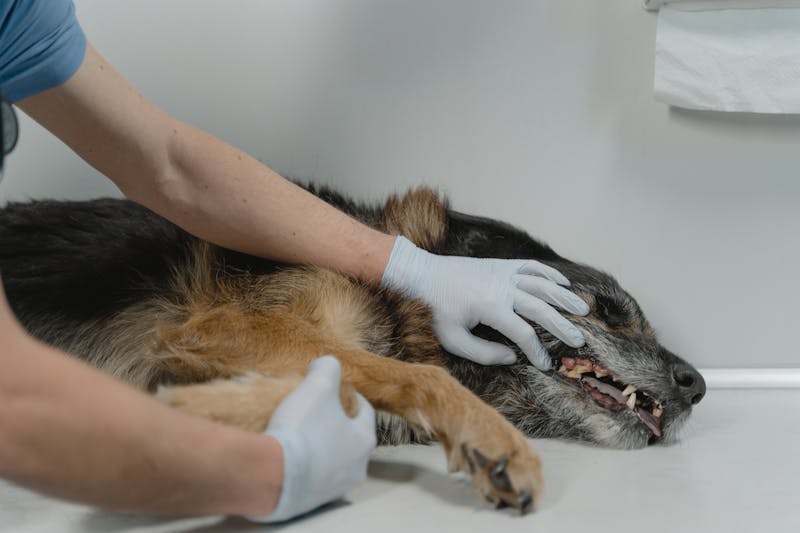
Emergency Detection: Signs Your Dog Is in Trouble
Because we can’t see what’s happening inside our dogs, we must become experts at reading their body language. If you know or suspect your dog has snatched a pork bone, the clock starts now. You need to monitor them with eagle eyes for at least 72 hours.
The “Quiet” Signs
Not all dogs will cry or whine. Many dogs become unusually quiet when they are in internal pain. They may “hunch” their back or be reluctant to jump onto the sofa. They might look at their stomach or stretch in an unusual way (the “play bow” position can sometimes be a sign of abdominal pain).
The Obvious Red Flags
- Vomiting: Especially if they can’t even keep water down.
- Lethargy: A total lack of energy or interest in treats.
- Straining: Trying to have a bowel movement but producing nothing, or only small amounts of blood.
- Bloated Abdomen: A stomach that feels hard or painful to the touch.
- Pale Gums: A sign of shock or internal bleeding.
Common Mistakes and Dangerous Myths
In the age of the internet, there is a lot of bad advice out there. I want to debunk a few of the most dangerous myths that I hear from well-meaning owners every day.
“The Bread Trick”
Some people suggest feeding your dog several slices of bread to “cushion” the bone. While this might help a tiny fragment pass, it does absolutely nothing for a large or very sharp shard. In fact, it can sometimes make the blockage worse by adding more bulk to the digestive tract. Always call a vet before trying home remedies.
“My Dog Has Always Eaten Them”
This is the most common argument. “My dog has eaten pork ribs for five years and never had a problem.” This is what we call survivor bias. Just because your dog was lucky ten times doesn’t mean the eleventh time won’t be the one that causes a perforation. Why gamble with your best friend’s life? Learn more about preventative care at petscatsdogs.com.
The Best Safer Alternatives for Power Chewers
You don’t have to be the “bad guy” who takes away all the fun. There are many ways to satisfy that deep, biological urge to chew without the risk of a trip to the ER. As a specialist, these are the items I personally recommend to my clients.
Rubber and Synthetic Toys
Durable rubber toys, like those made by Kong or West Paw, are fantastic. They provide resistance without breaking. You can fill them with wet food, peanut butter, or yogurt and freeze them to create a long-lasting, brain-teasing treat. Nylon bones are also a good option for aggressive chewers, as they are designed to flake off into tiny, harmless grains.
Safe Natural Alternatives
- Frozen Carrots: Perfect for teething puppies! They are crunchy, cold, and healthy.
- Bully Sticks: These are 100% digestible and provide a lot of flavor. However, always take them away when they get small enough to be swallowed whole.
- Beef Marrow Bones (Raw): If you must give a natural bone, a large, raw beef femur is much denser and safer than pork, provided you supervise the session.

Emergency Protocol: What to Do If a Bone Is Ingested
Accidents happen. Maybe the trash can tipped over, or a guest dropped a rib on the floor. If you catch your dog in the act, follow these steps immediately:
- Stay Calm: If you scream or chase them, they are more likely to gulp the bone down quickly to “save” it.
- Trade Up: Offer them something better, like a piece of cheese or chicken, to get them to drop the bone.
- Call the Vet: Even if they seem fine, tell your vet what happened. They may want to see the dog for an X-ray to determine the size and location of the fragment.
- Do NOT Induce Vomiting: This is vital. A sharp bone can cause more damage coming back up than it did going down.
Bones and Life Stages: Puppies vs. Senior Dogs
The risk of a pork bone isn’t the same for every dog. Age plays a huge role in how a dog handles a hard object.
Puppies
Puppies have “deciduous” or baby teeth that are incredibly brittle. A hard pork bone can easily snap a tooth, leading to a painful infection and a very expensive dental bill. Furthermore, their digestive systems are still developing and much more prone to irritation.
Seniors
As dogs age, their teeth become more porous and prone to cracking. Senior dogs also often have slower digestion, meaning a bone fragment will sit in their gut for longer, increasing the window of time for a perforation to occur. For age-specific advice, join our Facebook community.
Deep-Dive FAQ: Every Question Answered
1. Can dogs eat pork rib bones?
Absolutely not. Rib bones are among the most dangerous because they are the perfect size to be swallowed and the most likely to splinter into long, needle-like shards.
2. Are smoked pork bones from the pet store safe?
In my professional opinion, no. Smoking is a form of cooking that makes the bone brittle. Many of these products are also cured with high amounts of salt and preservatives that can upset a dog’s stomach.
3. What if the bone was small?
Small bones are actually more dangerous for large dogs because they are more likely to be swallowed whole without any chewing, leading to a direct obstruction.
4. Why does my dog’s poop look white and chalky after eating a bone?
This is a sign of “bone transition.” It means their body is struggling to digest the high amount of calcium. This can lead to severe constipation and painful impaction.
5. Can a dog digest a pork bone eventually?
A dog’s stomach acid is strong, but it cannot fully dissolve a cooked pork bone. The fragments will remain sharp as they move through the system.
A Practical Takeaway for Everyday Life
Sharing our lives—and our food—with our dogs is one of the joys of pet ownership. It’s an act of love. But true love also means protecting them from the things they don’t understand. Your dog doesn’t know that the rib bone they just found in the trash could cause a puncture in their stomach. They just know it tastes like heaven.
By choosing safer alternatives and keeping your kitchen scraps secured, you are ensuring that your best friend stays by your side for years to come. There are plenty of ways to spoil your dog without putting their life at risk. If you’re ever in doubt about a specific food or treat, remember the golden rule of pet care: When in doubt, leave it out. For more resources and community support, keep following our updates at petscatsdogs.com.