
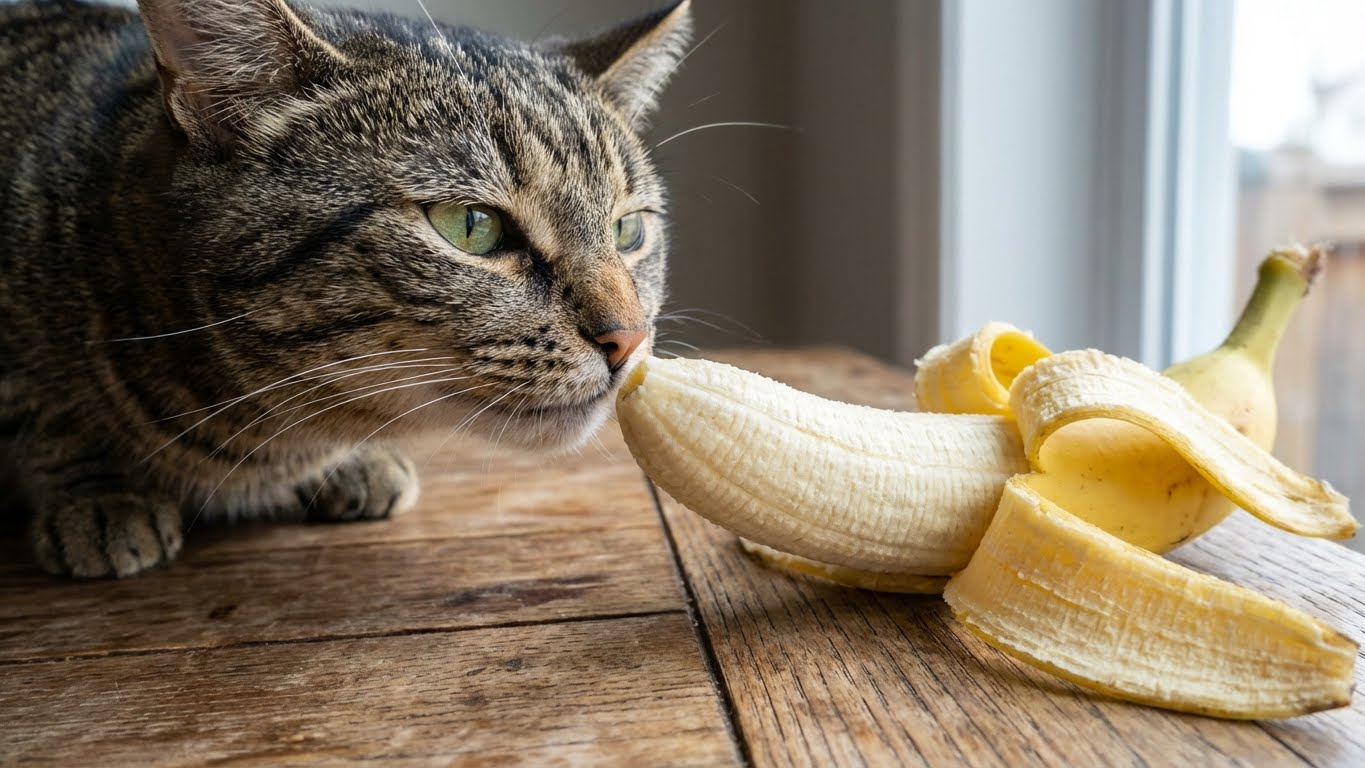
Many owners search online: can cats eat bananas safely?It was a Tuesday morning, and I was in my kitchen making my usual post-workout smoothie. As I peeled a ripe banana, I felt a familiar weight brush against my leg. I looked down to see Oliver, my tabby cat, staring up at me with wide, pleading eyes. He let out a soft meow, stretched his paws up my leg, and sniffed the air intensely.
I laughed and thought, “Really? You want this?”
We are used to dogs begging for every scrap of food that drops on the floor, but cats are usually more discerning. They are the connoisseurs of the pet world, turning their noses up at expensive paté if the texture isn’t quite right. So, why on earth was my obligate carnivore interested in a piece of tropical fruit?
As a veterinarian and a pet owner, I get asked this question constantly. You slice up a banana for your cereal, and your kitty acts like you’re holding a piece of prime salmon. It makes you wonder: Can cats eat bananas? Is it safe? Or is this another one of those hidden household toxins we need to worry about?
If you have ever caught your cat licking a banana peel or begging for a bite, don’t panic. In this comprehensive guide, we are going to peel back the layers (pun intended) of feline nutrition. We will look at the safety, the surprising science of why they want it, and the risks you need to watch out for.
The Quick Answer: Can Cats Eat Bananas?
If you are standing in your kitchen right now holding a slice of banana and wondering if you can give in to those begging eyes, here is the short answer.
🍌 Vet’s Verdict:
Yes, cats can eat bananas. They are non-toxic and generally safe in very small quantities.However: Just because they can eat them doesn’t mean they should. Bananas offer almost no nutritional benefit to a cat and are high in sugar. Think of them as “cat junk food”—safe for a rare taste, but bad for a regular diet.
Toxic? No.
Healthy? No.
Safe Serving: A slice no bigger than your thumbnail.
The Science: Cats vs. The Fruit Bowl

To understand why bananas are tricky, we have to talk about biology. I always remind my clients that cats are not small dogs. Their bodies function completely differently.
Cats are obligate carnivores. This is a fancy scientific way of saying that their digestive systems are biologically engineered to process meat, meat, and more meat. In the wild, a cat’s diet consists of high protein, moderate fat, and very low carbohydrates (usually only found in the stomach contents of their prey).
The “Sweet” Truth About Cats
Here is a fascinating fact that usually surprises my clients: Cats cannot taste sweetness.
Due to a genetic mutation in their taste receptors, felines lack the ability to perceive sugary flavors. So, when your cat begs for a banana, they aren’t craving the sugary taste. They are likely interested in:
-
The Texture: The mushy consistency might be interesting to them.
-
The Fat: If the banana is very ripe, it releases certain chemical compounds that might mimic fatty smells.
-
Curiosity: They simply want to know what you are eating.
Because they can’t process sugar efficiently, feeding them high-carb fruits like bananas is biologically unnecessary. Their pancreas just isn’t designed to handle a sugar rush the way a human (or even a dog) can.
Nutritional Breakdown: The Good, The Bad, and The Sugary
When considering can cats eat bananas, we must look at the sugar content. Let’s look at the humble banana through the eyes of a nutritionist. We know bananas are a “superfood” for humans, packed with potassium and fiber. But do those benefits translate to our feline friends?
1. Potassium
-
For Humans: Essential for heart health and muscle function.
-
For Cats: While cats need potassium, they get more than enough of it from a balanced meat-based diet. The potassium in a banana is overkill and not a valid reason to supplement their diet.
2. Fiber
-
For Humans: Keeps us regular.
-
For Cats: A little fiber is good, but too much fiber from fruit can cause the opposite effect: diarrhea. A cat’s digestive tract is short and fast; overloading it with plant fiber often leads to a messy litter box.
3. Carbohydrates & Sugar (The Problem)
-
For Humans: Energy!
-
For Cats: Fat storage.
Since cats don’t use carbs for energy efficiently, any excess sugar from fruit is quickly converted into fat. This brings us to the biggest risk of feeding bananas…
The Major Risks: Why You Should Be Careful

While I stated earlier that bananas are non-toxic, that doesn’t mean they are risk-free. As a vet, I see several issues arise when owners try to turn their cats into vegetarians or fruit-lovers.
1. Obesity and Diabetes
This is the number one health crisis facing domestic cats today. A medium banana contains about 14 grams of sugar. To a human, that’s nothing. To a 10-pound cat, that is a calorie bomb.
Regularly feeding sugary treats like bananas can lead to rapid weight gain. Even worse, it strains the pancreas, increasing the risk of Feline Diabetes. If you have an indoor cat who isn’t very active, high-sugar fruits should be kept off the menu.
2. Digestive Upset
I once treated a Siamese cat who had vomited three times in an hour. The panicked owner thought he had swallowed a toy. It turned out, he had eaten half a banana that was left on the counter.
Because cats lack the enzymes to break down plant matter efficiently, eating a large amount of banana can cause:
-
Vomiting.
-
Diarrhea.
-
Abdominal pain and gas.
3. The Choking Hazard (The Peel)
Can cats eat banana peels? Absolutely not.
Banana peels are not toxic, but they are incredibly fibrous, tough, and impossible for a cat to digest.
-
Choking: A piece of peel can easily get lodged in a cat’s small windpipe.
-
Blockage: If swallowed, the peel can cause an intestinal blockage, which is a life-threatening emergency requiring surgery.
-
Pesticides: Peels are often coated in sprays and pesticides that can be toxic.
4. Allergic Reactions
While rare, cats can be allergic to bananas. If you are trying this for the first time, you need to watch for signs of anaphylaxis (swelling, hives, difficulty breathing), though this is very uncommon compared to protein allergies.
How to Safely Serve Bananas (If You Must)
So, can cats eat bananas without getting sick? Usually yes, but watch for vomiting.Okay, so you’ve read the warnings, but your cat is still pawing at your leg, and you want to give them a tiny taste. How do you do it safely?
Follow these “Safe Snacking Rules”:
1. The Thumbnail Rule
The portion size should never be larger than your thumbnail. We are talking about 1-2 thin slices, maximum.
2. Fresh is Best
Only offer fresh, raw banana.
-
No Banana Chips: These are often fried in oil and coated in extra sugar or preservatives.
-
No Banana Bread: This is dangerous. Banana bread often contains nuts (walnuts), excessive sugar, and sometimes raisins or chocolate, both of which are highly toxic to cats.
3. Mash It Up
To prevent choking, especially with kittens or senior cats who might have dental issues, mash the small piece of banana with a fork before offering it.
4. Frozen Summer Treat
On a hot day, you can freeze a tiny slice of banana. The cold texture can be fun for them to lick and gnaw on, and it slows down their eating speed.
Better Alternatives: What Should You Give Instead?
If you are looking to bond with your cat through treats (and who isn’t?), there are much better options than fruit. We want to give them something that aligns with their biology.
I recommend checking out our guide on [Best Cat Treats for Training] for a full list, but here are some quick swaps:
-
Freeze-Dried Meat: Chicken, liver, or salmon. These are 100% protein and exactly what your cat craves.
-
Commercial Cat Grass: If your cat loves plant matter, grow some wheatgrass. It is safe, satisfies their grazing instinct, and helps with digestion.
-
Cooked Egg: A small piece of scrambled egg (no salt or butter) is a nutritional powerhouse for cats.
-
Blueberries: If you must give fruit, blueberries are lower in sugar and high in antioxidants.
Pro Tip: Always introduce new treats slowly. Even healthy treats can cause an upset stomach if introduced too quickly.
Kittens and Seniors: Special Considerations
Can Kittens Eat Bananas?
I advise against it. Kittens have very sensitive digestive systems that are still developing. They need a strict balance of nutrients for growth (calcium, taurine, protein). Filling their tiny stomachs with “empty calories” like bananas can actually cause nutritional deficiencies because they might be too full to eat their actual food. Plus, the risk of diarrhea is much higher in kittens, which can lead to dangerous dehydration.
Can Senior Cats Eat Bananas?
Proceed with caution. Senior cats are prone to kidney disease and diabetes.
-
Kidney Disease: While potassium is usually cleared by the kidneys, if your cat has advanced kidney disease, you should consult your vet before adding any potassium-rich foods to their diet.
-
Diabetes: If your senior cat is diabetic, bananas are strictly forbidden due to the sugar spike.
For more on caring for aging felines, please visit our [Senior Cat Health] section.
When to See a Vet 🚑
Most of the time, if a cat eats a piece of banana, nothing bad will happen. However, accidents happen.
Call your vet immediately if:
-
They ate the peel: As mentioned, this is a blockage risk.
-
Vomiting persists: If your cat vomits once, keep an eye on them. If they vomit multiple times or cannot keep water down, this is an emergency.
-
Signs of allergic reaction: Swelling of the face, lips, or tongue, or difficulty breathing immediately after eating.
-
Lethargy: If your cat seems unusually tired, hides, or refuses to eat their regular dinner after eating human food.
Frequently Asked Questions (FAQ)
Q: Can cats eat banana bread?
A: No. Banana bread is dangerous. It contains high amounts of added sugar, fats, and often toxic ingredients like chocolate chips, xylitol (sugar substitute), or raisins.
Q: My cat licked a banana peel, will he be okay?
A: A lick is fine. The danger with the peel is ingestion (swallowing it) or pesticides. If they just licked it, simply wipe their mouth and ensure they didn’t bite off a chunk.
Q: Why does my cat go crazy for bananas?
A: It is likely the texture or the smell of the ethylene gas released by ripening fruit. Some cats are simply “neophilic,” meaning they love trying new and strange textures.
Q: Are any fruits toxic to cats?
A: Yes! Never feed your cat Grapes, Raisins, or Cherries. Grapes and raisins can cause sudden kidney failure in cats. Citrus fruits (lemons, oranges) can also cause severe stomach upset.
Q: Can cats eat plantains?
A: Plantains are in the same family but are starchier and must be cooked. While not toxic, they are even harder for a cat to digest than sweet bananas. Avoid them.
Final Thoughts
So, finally: can cats eat bananas? Yes, but moderation is key.
While sharing a tiny slice of your morning fruit with your feline friend isn’t going to hurt them, it certainly isn’t helping them either. As loving pet owners, our goal is to provide fuel that helps our pets thrive, not just survive.
If you want to spoil your cat, skip the fruit bowl and reach for a high-protein meat treat or a good chin scratch instead. Your obligate carnivore will thank you for it!
Want to learn more about what is safe for your pantry? Check out our [Cat Nutrition & Diet] category for more expert guides on human foods safe for cats.