
You are in the kitchen, preparing a delicious seafood dinner. The smell of boiling shrimp fills the air. Suddenly, you feel a wet nose pressing against your leg. You look down to see your dog giving you “The Look”—those wide, pleading eyes that seem to say, “I see you have tiny lobsters. I, too, enjoy tiny lobsters.”
It is tempting to toss them a piece. After all, shrimp is healthy for humans, right? It’s low fat, high protein, and delicious.
But then you pause. You wonder about the cholesterol. You worry about the shell. You panic about potential allergies. You frantically pull out your phone and search: Can dogs eat shrimp?
As a canine nutrition expert, I am here to tell you that you were right to pause. While shrimp is not toxic like chocolate or grapes, it is not as simple as just tossing a prawn into their bowl. There are rules. There are dangers (specifically the shells and tails). And there are medical conditions that make shrimp a terrible idea for certain breeds.
In this massive, vet-approved guide, we are going to dissect the shrimp—literally and nutritionally. We will cover everything from cholesterol myths to the dangers of “Cocktail Sauce,” and exactly how to prepare seafood safely for your furry friend.
🦐 The Quick Verdict: Can Dogs Eat Shrimp?
Yes, but strictly in moderation and fully cooked.
Here are the Golden Rules:
- Cooked Only: Never raw (bacteria risk).
- Peeled Only: Shells, tails, and legs must be removed (choking hazard).
- Plain Only: No garlic, butter, Cajun spices, or salt.
- Portion Control: One or two shrimp is a treat; a bowlful is a stomach ache.
The Nutritional Deep Dive: Is Shrimp Actually Good for Dogs?
Before we talk about the risks, let’s look at the benefits. Why would you want to feed your dog shrimp in the first place? When we ask “can dogs eat shrimp,” we are usually asking if it has nutritional value.
The answer is yes. Shrimp is a nutritional powerhouse packed into a tiny package.
1. High Protein, Low Calorie
Shrimp is almost pure protein. For dogs who need to lose weight but still want tasty treats, shrimp is an excellent alternative to fatty biscuits. A single medium shrimp has about 7 calories but is packed with muscle-building amino acids.
2. Vitamin B12 (Energy Booster)
Shrimp is loaded with Vitamin B12. This is essential for a dog’s metabolic health. It helps with energy production and keeps their gastrointestinal tract functioning smoothly. If your dog seems lethargic, B12-rich foods can help.
3. Phosphorus (Strong Bones)
Phosphorus works hand-in-hand with calcium to keep your dog’s bones healthy and strong. It is vital for puppies and active dogs.
4. Antioxidants (Astaxanthin)
Have you ever wondered why shrimp turn pink when cooked? It’s because of an antioxidant called Astaxanthin. This powerful compound helps fight inflammation in the body and can be beneficial for brain health and joint pain in older dogs.
The Dangers: Shells, Tails, and Raw Risks
Now, let’s get to the scary part. If shrimp is so healthy, why do vets hesitate to recommend it? The danger lies in the *parts* of the shrimp and *how* it is served.
Danger #1: The Shells and Tails (Choking Hazard)
Can dogs eat shrimp tails?
NO. Absolutely not.
Shrimp shells and tails are made of Chitin. This is a hard, plastic-like material that a dog’s stomach acid cannot break down efficiently.
If your dog swallows a shrimp whole with the shell:
- Choking: The sharp tail can get stuck in the esophagus.
- Perforation: The jagged edges can scratch or cut the lining of the stomach.
- Impaction: In small dogs (like Yorkies or Chihuahuas), a pile of undigested shells can cause an intestinal blockage, which requires emergency surgery to fix.
Always, always peel the shrimp completely.
Danger #2: Raw Shrimp (Bacteria City)
Sushi is great for humans; it is risky for dogs. Raw shellfish often carries dangerous bacteria and parasites, including:
- Salmonella
- Listeria
- Vibrio (a nasty bacteria found in warm sea water)
These can cause severe food poisoning in dogs (and you, if the dog licks your face afterward). Always boil or steam the shrimp until it is pink and opaque.
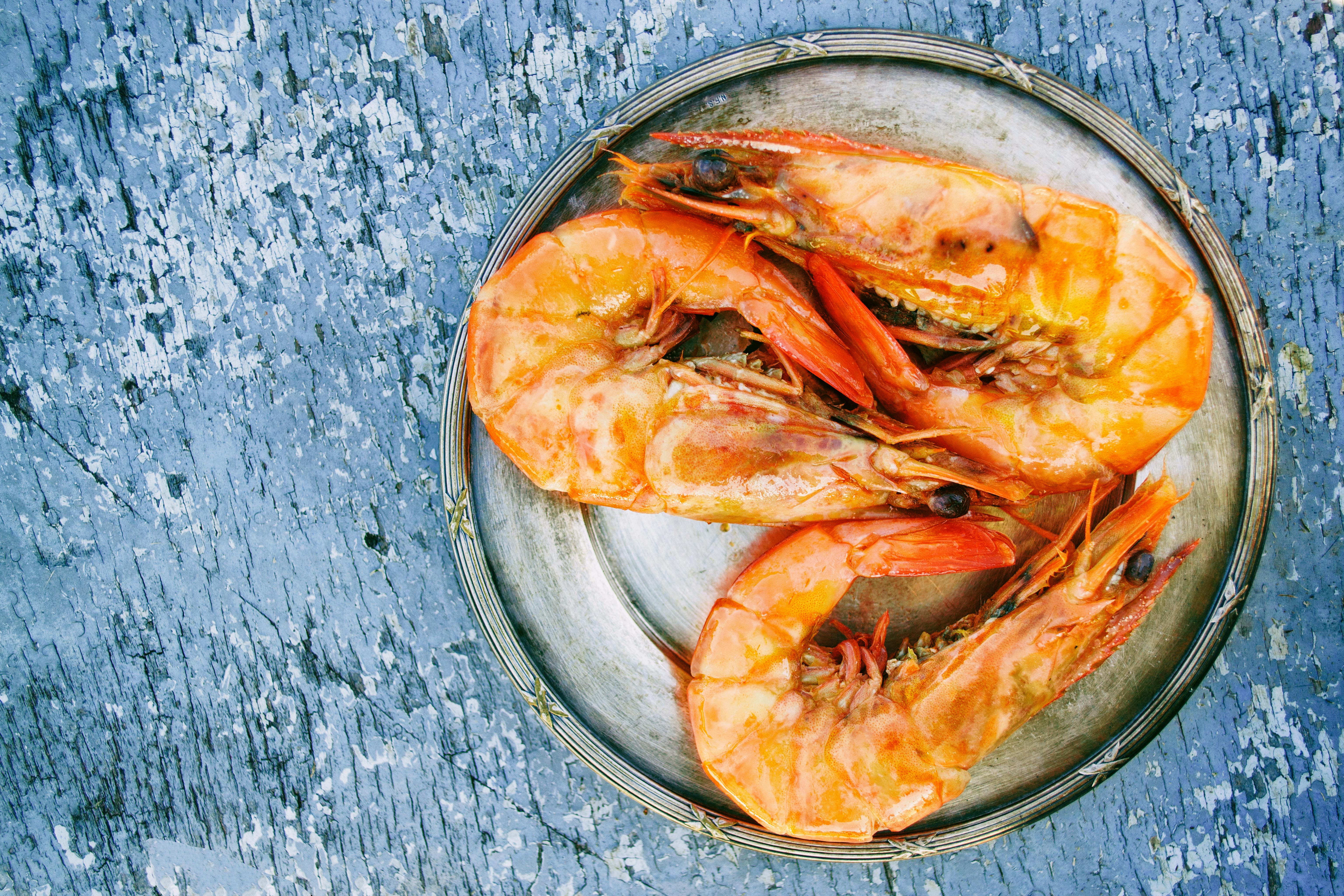
The Cholesterol Myth: Is Shrimp Bad for a Dog’s Heart?
One of the most common questions I get when people ask “can dogs eat shrimp” is about cholesterol. We know shrimp is high in cholesterol, and doctors tell humans to watch their intake.
Good news: Dogs are not humans.
Dogs do not suffer from “clogged arteries” or atherosclerosis the way people do. Their bodies handle fat and cholesterol very differently. Unless your dog has a specific metabolic disorder (like Hyperlipidemia) or Thyroid issues, the cholesterol in a few shrimp will not hurt them or cause a heart attack.
However, the FAT content in preparation is a different story.
The “Fried Shrimp” Trap (Pancreatitis)
While the shrimp itself is fine, Fried Shrimp, Breaded Shrimp, or Shrimp Scampi are dangerous.
The batter, the butter, and the oil are extremely high in fat. A sudden intake of high-fat food can trigger Pancreatitis in dogs. This is a painful, life-threatening inflammation of the pancreas.
(Learn more about Pancreatitis symptoms on the AKC website).
Can Dogs Be Allergic to Shrimp?
Yes. Just like humans can have shellfish allergies, dogs can too. It is one of the more common food allergens.
If you are feeding your dog shrimp for the first time, treat it like a science experiment. Give them one small piece and wait 20 minutes.
Watch for these signs of Anaphylaxis:
- Swelling of the face or lips.
- Hives or itchy skin.
- Vomiting immediately after eating.
- Difficulty breathing (wheezing).
If you see any of these, drive to the vet immediately.
How to Serve Shrimp Safely (Recipes)
So, you have bought fresh shrimp and you want to share. Here is the Chef’s Guide for Dogs.
Step 1: Buy Fresh
Avoid “pre-cooked” shrimp rings from the supermarket if possible, as they are often treated with preservatives or high-sodium brine. Buy raw, frozen, or fresh wild-caught shrimp.
Step 2: Clean Thoroughly
Remove the shell, the tail, and the legs.
Pro Tip: Devein it. While the black vein (the digestive tract) isn’t toxic, it contains grit and waste. It’s nicer to remove it.
Step 3: The Cooking Method
- Boiling: Drop in plain water for 2-3 minutes.
- Steaming: Best for preserving nutrients.
- Baking: On a plain sheet, no oil.
FORBIDDEN: Do not use butter, garlic powder, onion powder, or Cajun seasoning. Garlic and onion are toxic to dogs (causing anemia).
Step 4: The Cut
For a German Shepherd, a whole shrimp is fine. For a Pug, cut it into 3-4 small pieces to prevent choking.

Frequently Asked Questions (FAQ)
Q: Can dogs eat shrimp cocktail?
A: They can eat the shrimp if it’s plain, but NEVER give them the sauce. Cocktail sauce is made with horseradish, ketchup (sugar), and often lemon juice. It is too spicy and acidic for a dog’s stomach and will cause vomiting.
Q: My dog ate a shrimp tail by accident. What do I do?
A: Don’t panic. One tail will likely pass through a medium-sized dog without issue. Watch for signs of blockage (vomiting, straining to poop, loss of appetite) for the next 24-48 hours. If you have a tiny dog (under 10 lbs), call your vet to be safe.
Q: Can dogs eat lobster or crab?
A: Similar rules apply. The meat is safe (in moderation), but the shells are incredibly hard and sharp. Also, crab meat is very high in sodium, so shrimp is generally a better choice.
Q: Can dogs eat freeze-dried shrimp?
A: Yes! Freeze-dried shrimp treats found in pet stores are excellent. They are usually raw but processed to remove bacteria, or cooked then dried. They make great high-value training treats.
Final Thoughts
So, can dogs eat shrimp? The answer is a resounding “Yes,” provided you are willing to do the prep work.
Shrimp can be a fantastic, occasional treat that adds variety and nutrients to your dog’s diet. It is perfect for training or as a special topper on their boring kibble. Just remember: peel it, cook it, and keep it plain. Your dog doesn’t need the garlic butter to enjoy the taste of the ocean!
Looking for more safe human foods? Check out our Dog Nutrition & Diet section for more vet-approved guides.