
Dehydration in cats is a subtle, creeping danger that often goes unnoticed until it reaches a critical stage. As a pet care specialist who has seen hundreds of felines in clinical settings, I can tell you that a cat’s hydration level is perhaps the most vital indicator of their overall health. Because cats evolved from desert-dwelling ancestors, they possess a biological drive to hide weakness and a naturally low thirst instinct. This means that by the time you see the obvious signs of dehydration in cats—such as sunken eyes or a lingering skin tent—the animal is often already in a state of significant physiological distress. Water isn’t just a drink for them; it is the medium through which every chemical reaction in their body occurs, from filtering toxins in the kidneys to regulating heart rhythm.
In this comprehensive guide, we are going to move beyond the basic “drink more water” advice. We will explore the deep biological reasons why cats struggle with fluid balance, the precise physical checks you can perform at home, and the serious medical conditions that often masquerade as simple thirst. Understanding these nuances is the difference between a quick recovery and a life-threatening emergency. Whether you are caring for a playful kitten or a senior cat with kidney concerns, knowing exactly what to look for can save your pet’s life.
Table of Contents
- The Desert Ancestry: Why Cats Don’t Drink Enough
- The 3 Major Physical Markers of Dehydration
- Mastering the Skin Tent Test (The Pinch Test)
- Checking Gum Texture and Capillary Refill Time
- Behavioral Clues: Lethargy, Hiding, and Grooming Stops
- Hidden Causes: Why Is the Fluid Disappearing?
- Chronic Diseases Linked to Dehydration
- Expert Strategies to Increase Water Intake
- The Red Zone: When to Call the Emergency Vet
- Frequently Asked Questions
- Final Thoughts: The Fluid Balance for Life
The Desert Ancestry: Why Cats Don’t Drink Enough
To truly understand hydration, we have to travel back thousands of years to the Near Eastern wildcat. These ancestors lived in arid environments where water was scarce. They evolved to be “hyper-efficient” with water, obtaining almost all their necessary fluids from the blood and tissues of their prey. A mouse, for example, is about 70% water. When a cat eats a mouse, they are essentially eating a “water balloon” packed with protein.
Fast forward to the modern living room. Many cats are fed a diet consisting entirely of dry kibble. This kibble usually contains less than 10% moisture. If a cat doesn’t have a high enough thirst drive to make up that 60% difference at the water bowl—and most don’t—they live in a state of chronic, low-level dehydration. Their kidneys have to work double-time to concentrate urine, which is one reason why kidney disease is so prevalent in the feline population.
This biological “lag” in thirst recognition is why we can’t just trust a cat to drink when they need to. They don’t feel thirst the way we do. By the time their brain screams “I’m parched,” their body is already reaching a dangerous threshold. As owners, we have to bridge that evolutionary gap by providing moisture-rich environments and performing regular checks.
The 3 Major Physical Markers of Dehydration
Physical markers are your primary diagnostic tools. Because cats hide their feelings, the physical state of their tissues will tell the story they are trying to keep secret. I always tell my clients that a “hands-on” approach is the only way to be sure. You should be checking these three areas at least once a week during your normal petting or grooming sessions.
The first marker is skin elasticity, often called “turgor.” When a cat is hydrated, their skin is plump and elastic. The second is the mouth—the gums and saliva. The third is the eyes and the overall “hollow” look of the face. When a cat loses fluid, the volume of their blood decreases, and the body starts pulling water from the least essential areas (like the skin) to protect the heart and brain.
It’s also worth noting that dehydration affects the blood’s viscosity. Thick, sluggish blood doesn’t transport nutrients or oxygen efficiently, which is why a dehydrated cat quickly becomes weak and confused. Monitoring these physical markers isn’t just about thirst; it’s about making sure their entire internal “highway system” is functioning correctly.
Mastering the Skin Tent Test (The Pinch Test)
The skin tent test is the classic way to check for fluid loss. However, many people do it incorrectly. To perform this correctly, you should gently grasp a fold of skin between the shoulder blades or at the base of the neck. Lift it upward about an inch and then release it quickly. In a perfectly hydrated cat, that skin will “snap” back into place in less than a second.
If the skin returns slowly, or worse, stays in a “tent” shape for several seconds, your cat is likely at least 5% to 7% dehydrated. If it doesn’t move at all, they are in a critical state. One thing to keep in mind: older cats lose natural skin elasticity as they age. From what many owners notice, a senior cat might have a slightly slower snap-back even when they are healthy. This is why you need to know what is “normal” for your specific cat when they are feeling well.
So how do you know if your dog is learning correctly? I use this question in training sessions to remind people that consistency is key. Just like you monitor a dog’s progress in learning a new trick, you must monitor your cat’s skin turgor regularly to recognize the subtle shift from “normal” to “concerning.” If you only do the test once every few months, you won’t have a baseline to compare it to when things go wrong.
Checking Gum Texture and Capillary Refill Time
The mouth is a window into the cat’s hydration status. Healthy gums should be pink, slippery, and moist. If you run your finger along the gum line and it feels sticky or “tacky,” like scotch tape, the cat is losing significant amounts of moisture. In severe cases, the gums will feel completely dry to the touch, and the saliva will become thick and ropey.
You should also check the Capillary Refill Time (CRT). Press your finger firmly against the pink part of the gum until it turns white. Remove your finger and count how long it takes for the pink color to return. It should take less than two seconds. If it takes longer, it means the blood volume is low and the heart is struggling to push blood to the extremities—a classic sign of dehydration and potential shock.
Checking the gums is especially important for cats with long hair or loose skin where the skin tent test might be harder to read. It’s a quick, 5-second check that provides immediate data. For more on preventative wellness, you can explore daily feline health management on our main site.
Behavioral Clues: Lethargy, Hiding, and Grooming Stops
Behavioral shifts are often the first things an owner noticed, even if they didn’t know they were seeing dehydration. A cat that is low on fluids feels “flat.” They will often seek out cool surfaces like tile floors or bathtub basins. If your social cat suddenly disappears into the back of a closet and refuses to come out for treats, their body is likely telling them to conserve every drop of energy and water they have left.
Another big clue is the grooming habit. Grooming requires a lot of saliva. A dehydrated cat will often stop cleaning themselves entirely. This leads to a coat that looks greasy, “spiky,” or has a lot of dandruff. If you notice your cat looking unkempt, don’t just reach for the brush—reach for the water bowl and check their hydration markers. They aren’t being “lazy”; they literally don’t have the “spit” to clean themselves.
Lethargy is also a major red flag. If your cat doesn’t have the energy to jump onto their favorite perch or if they seem “wobbly” when they walk, the dehydration has reached the point where it is affecting their blood pressure and muscle function. This is a stage where at-home fixes are usually no longer enough.
Hidden Causes: Why Is the Fluid Disappearing?
Dehydration is almost always a secondary symptom of something else. It is rarely just because the cat “forgot” to drink. We need to identify if the fluid is being lost through the gut, the kidneys, or through a lack of intake. Vomiting and diarrhea are the most aggressive causes. A cat that vomits three times in a morning can lose a massive percentage of their body’s water content very quickly.
Environmental heat is another factor. While we think of cats as heat-seekers, an overheated cat will pant. Panting is a very inefficient way for cats to cool down and it results in rapid water loss through evaporation from the tongue and lungs. If a cat is trapped in a hot room without ventilation, they can reach a state of heatstroke and severe dehydration in a matter of hours.
Sometimes the cause is simply accessibility. Is there a new dog in the house that is “guarding” the water bowl? Is the water bowl slimy or dirty? Cats are incredibly fastidious. If the water tastes like “old dust” or has a biofilm on the bottom of the bowl, many cats will choose to slowly dehydrate rather than drink from a source they deem “contaminated.”
Chronic Diseases Linked to Dehydration
If you have an older cat, chronic dehydration is often the primary battle. Chronic Kidney Disease (CKD) is the most common culprit. When the kidneys are damaged, they lose the ability to concentrate urine. The cat drinks water, but it passes through them almost instantly. They are essentially a “leaky bucket.” They might spend a lot of time at the water bowl, but they are still dehydrated because they can’t hold onto the fluid.
Diabetes Mellitus also causes a similar “flushing” effect. High blood sugar pulls water into the urine, leading to excessive peeing and, consequently, excessive thirst. Hyperthyroidism, which speeds up the cat’s metabolism, also increases their water requirements significantly. If you notice your cat is suddenly “obsessed” with water, it isn’t a good sign—it usually means they are losing the battle to stay hydrated.
In these cases, medical management is required. This might involve a change to kidney-safe wet food or even learning to give subcutaneous fluids at home. Understanding these long-term links helps you move from reactive care to proactive management.
Expert Strategies to Increase Water Intake
So, what can we do to fix it? The number one rule is: Feed Wet Food. If your cat is on a 100% dry diet, the easiest way to improve their hydration is to switch at least half of their calories to canned food. You can even add a tablespoon of warm water to the wet food to create a “soup.” Most cats love the extra gravy and will lap it up readily.
Water fountains are also incredibly effective. The sound of running water is a biological trigger for cats—it tells them the water is “fresh” and moving, unlike a stagnant pond or bowl. Fountains also filter the water, removing the tastes and smells that might put a picky cat off. I’ve seen cats double their water intake simply by switching from a plastic bowl to a stainless steel fountain.
Flavoring the water is another “pro tip.” A small amount of juice from a tuna can (in water, no salt) or a low-sodium chicken broth can entice a reluctant cat to drink. Just be sure the broth contains no onions or garlic, as these are toxic to cats. We share more of these “hacks” on our Facebook community page, where owners exchange tips for picky eaters.
The Red Zone: When to Call the Emergency Vet
There is a point where home care is no longer an option. If your cat is “unresponsive,” meaning they don’t react to their name or loud noises, they are in a critical state. If their gums are white or extremely pale, their blood pressure has dropped to dangerous levels. This is a medical emergency that requires IV fluids immediately.
If your cat is panting, has a high fever, or hasn’t produced urine in more than 12 hours, don’t wait until the morning. Dehydration can lead to acute renal failure very quickly. Once the kidneys “shut down” due to lack of blood flow, the damage can be permanent. Seeking professional emergency feline care is the only responsible path when the physical markers hit the “red zone.”
Frequently Asked Questions
Can I give my cat Pedialyte?
Only under veterinary supervision. While Pedialyte is used for human infants, the electrolyte balance (especially the sodium and sugar levels) can be incorrect for a cat’s small body. There are feline-specific rehydration fluids like Hydra Care that are much safer and more effective.
How much water should my cat drink every day?
A general rule is about 4 ounces (half a cup) of water per 5 pounds of body weight. However, this varies wildly based on whether they eat wet or dry food. A cat eating only wet food might barely touch their water bowl, and that’s usually okay.
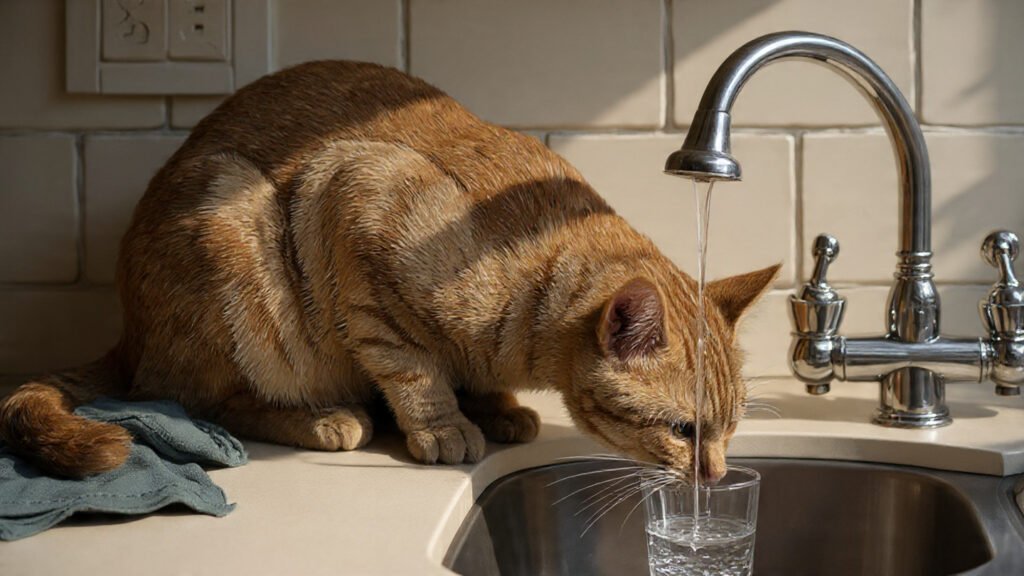
Why is my cat suddenly drinking from the toilet or sink?
Cats often seek out fresh, cold water. If their bowl is stagnant or near their food, they will look for better sources. However, a sudden obsession with new water sources often indicates an underlying disease like diabetes or kidney issues.
Is milk good for a dehydrated cat?
No. Most adult cats are lactose intolerant. Giving them milk will cause diarrhea, which will make their dehydration significantly worse. Stick to fresh water or feline-safe broths.
My cat is drinking a lot, does that mean they aren’t dehydrated?
Not necessarily. As mentioned with CKD and Diabetes, “drinking a lot” is often the body’s frantic attempt to fix a dehydration issue it can’t solve. It’s a symptom, not a sign of success.
Can dehydration cause a cat to stop eating?
Yes. Dehydration causes nausea and a general feeling of malaise. When a cat feels sick to their stomach, they will avoid the food bowl, which further complicates the situation since they aren’t getting any moisture from their food.
Final Thoughts: The Fluid Balance for Life
Maintaining the fluid balance of your cat is a lifelong commitment. It isn’t just about making sure the bowl is full; it’s about understanding the unique desert-born biology of your companion. By performing regular skin and gum checks, transitioning to a moisture-rich diet, and being alert to behavioral shifts like lethargy or greasy fur, you are acting as your cat’s primary health advocate.
Our cats rely on us to notice the things they are too proud or too “wild” to show. A few extra ounces of water a day can prevent years of kidney struggle and thousands of dollars in medical bills. Trust your hands—check their skin, check their gums, and never ignore that “gut feeling” that something is off. A hydrated cat is a resilient cat, ready for many more years of purring and play.